
CAPE CANAVERAL, APRIL 2, 2026 —
Key Takeaways
- Artemis II launched Wednesday evening at 6:35 PM ET from Kennedy Space Center — sending four astronauts on a 10-day mission around the Moon and back, the first crewed lunar mission since Apollo 17 in December 1972
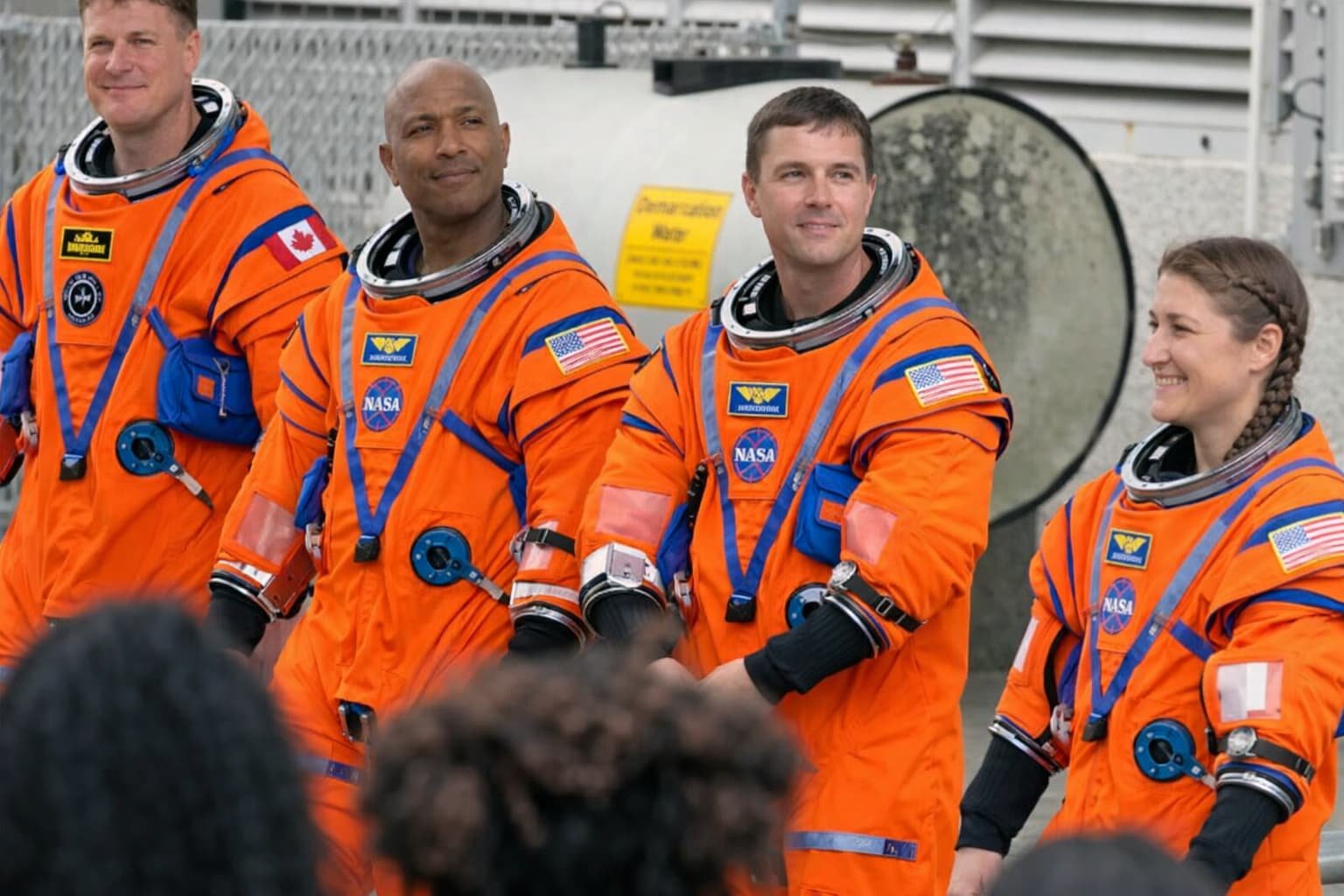
- The crew includes NASA’s Reid Wiseman, Victor Glover, and Christina Koch, plus Canadian astronaut Jeremy Hansen — making Glover the first person of color, Koch the first woman, and Hansen the first non-American to travel beyond low Earth orbit
- The crew is expected to fly within 6,000 miles of the lunar surface on April 6 and set a new human spaceflight record of 252,000 miles from Earth — before splashing down in the Pacific Ocean on April 10
For 53 years, no human being has gone beyond low Earth orbit. Every astronaut since Apollo 17 — the 96 humans who have flown to the International Space Station, every spacewalk, every orbit — has stayed within roughly 250 miles of Earth’s surface. Last night, that ended.
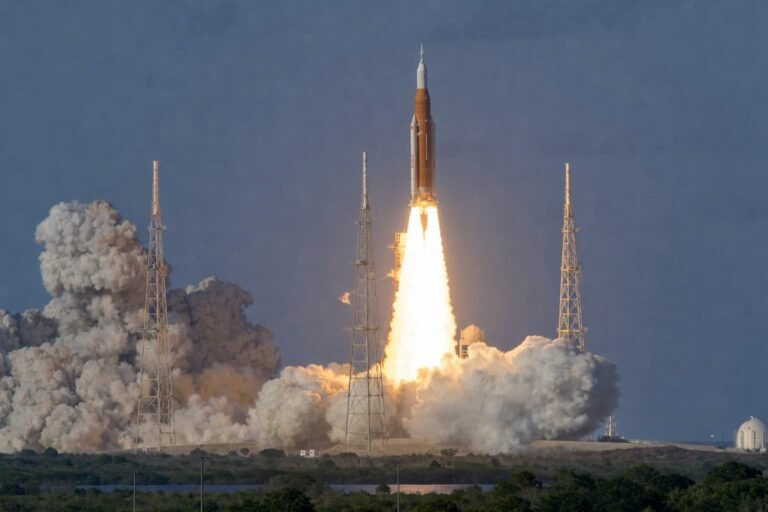
NASA’s Artemis II mission lifted off from Kennedy Space Center’s Launch Complex 39B at 6:35 PM ET on April 1 — carrying four astronauts on the most ambitious American spaceflight since the Apollo era. The 322-foot Space Launch System rocket cleared the tower cleanly. The Orion capsule separated successfully. The crew — commander Reid Wiseman, pilot Victor Glover, and mission specialists Christina Koch and Jeremy Hansen — are now in high Earth orbit preparing for the translunar injection burn that will send them toward the Moon.
For anyone who grew up watching space launches and wondering if they would live to see humans return to the Moon — the answer, as of last night, is yes.
What Artemis II Is — and What It Is Not
Artemis II is not a moon landing. The crew will not touch lunar soil. That milestone is reserved for Artemis III, currently targeted for 2028. What Artemis II is — and why it matters enormously — is the critical test flight that makes everything else possible.
The mission is designed to prove that the Orion spacecraft’s life support systems work with humans aboard in deep space, that communications and navigation function far beyond Earth orbit, and that a crew can safely travel to the Moon and return. NASA has to know these systems work before it sends astronauts to the surface.
The trajectory is a free-return loop — the crew will swing around the Moon using lunar gravity to bend their path back toward Earth, similar to what Apollo 13 did in 1970. The spacecraft will come within approximately 6,000 miles of the lunar surface on April 6, giving the crew an unprecedented view. During the lunar flyby, the astronauts will become the first humans to see portions of the Moon’s far side up close and in person.
The Artemis II Mission — Everything You Need to Know
Artemis II Timeline — April 2026
| Date | Event |
|---|---|
| April 1 — 6:35 PM ET | Launch from Kennedy Space Center |
| April 2 | Translunar injection burn — crew leaves Earth orbit |
| April 2–5 | Four-day coast to the Moon |
| April 6 | Lunar flyby — within 6,000 miles of surface |
| April 6 | Record set — 252,000 miles from Earth |
| April 6–9 | Coast back toward Earth |
| April 10 | Pacific Ocean splashdown near San Diego |
The Four Astronauts — and What Makes This Crew Historic
Commander Reid Wiseman is a Navy test pilot and former ISS commander making his second spaceflight. He was selected to lead Artemis II for his depth of mission experience and his calm under pressure — qualities NASA considers essential for the unknowns of deep space travel.
Pilot Victor Glover is a Navy pilot who served as pilot on the SpaceX Crew Dragon mission that took him to the ISS in 2020. When Orion crosses beyond low Earth orbit on Thursday, Glover will become the first person of color in history to travel beyond Earth orbit — a milestone that arrives more than six decades after the first American orbital flights.
Mission Specialist Christina Koch holds the record for the longest single spaceflight by a woman — spending 328 consecutive days on the ISS in 2019 and 2020. When she crosses the orbital boundary Thursday, she will become the first woman in history to travel to the vicinity of the Moon.
Mission Specialist Jeremy Hansen of the Canadian Space Agency has never flown to space before. When he makes the crossing, he will become the first non-American citizen to travel beyond low Earth orbit — a milestone that carries significant symbolic weight for Canada’s partnership with NASA and for the international character of the Artemis program.
Why This Mission Matters Beyond the Records
The Artemis program represents more than nostalgia for Apollo. It is NASA’s strategic response to China’s announced goal of landing astronauts on the Moon by 2030. The United States returned to active lunar planning partly because it could not afford to cede the Moon — and its potential strategic and scientific resources — to a competitor.
The Moon contains water ice at its south pole, confirmed by orbiting spacecraft, that could be extracted to make rocket fuel — potentially making the lunar surface a refueling depot for missions deeper into the solar system. It contains helium-3, a potential fusion energy fuel. And it offers a platform for astronomical observation and Earth monitoring from a location outside our planet’s atmosphere.
Artemis II proves the transportation system works. Artemis III will prove humans can work on the surface. Everything after that builds toward what NASA calls a “sustained lunar presence” — a permanent human foothold on another world for the first time in history.
The crew is expected to cross beyond low Earth orbit Thursday, breaking a 53-year barrier that no human being has crossed since the last Apollo astronauts came home in December 1972. The next milestone — lunar flyby on April 6 — will be one of the most watched events of 2026.