
By Harshit
SAN FRANCISCO, Nov. 6 / 9:05 AM EDT
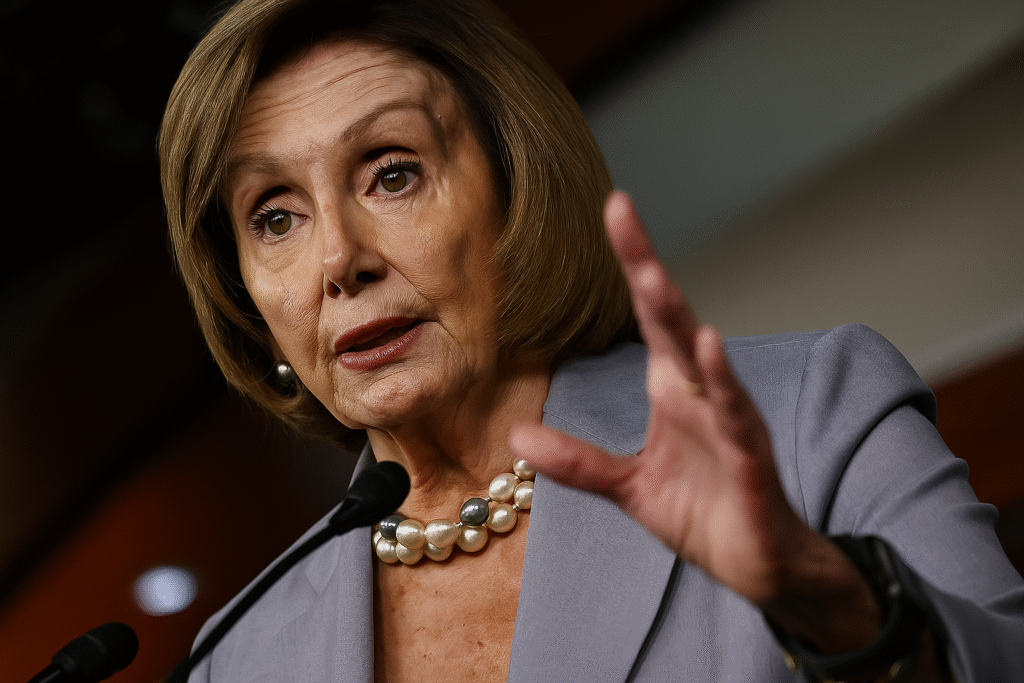
Nancy Pelosi, the trailblazing Democrat who became the first and only woman to serve as Speaker of the U.S. House of Representatives, announced on Thursday that she will not seek reelection in 2026, closing the chapter on one of the most consequential congressional careers in modern American history.
Pelosi, now 85, shared the news in a reflective video message addressed directly to the people of San Francisco — the city she has represented in Congress since 1987. Her remarks blended political legacy with deeply personal sentiment.
“No matter what title they gave me — speaker, leader, whip — there has been no greater honor for me than to stand on the House floor and say: ‘I speak for the people of San Francisco,’” Pelosi said. “I have truly loved serving as your voice in Congress. But this will be my final year in the House. San Francisco, know your power. We have made history — and we will continue to lead.”
Her decision, while widely anticipated, still marks the end of an era. Few lawmakers in U.S. history have exercised power as durably or as strategically as Pelosi. Her nearly four decades in the House spanned seven presidencies, two impeachments, wars, social upheaval, a financial crisis, and a global pandemic. At her height, Pelosi was considered the most formidable vote-counter in Washington — a speaker who rarely lost on the floor, and a strategist who kept her caucus united when unity seemed impossible.
A Transformative Figure in American Politics
Pelosi rose to prominence not by compromising her values, but by mastering the mechanics of political power. She first served as Speaker in 2007, after Democrats regained the House in the wave election opposed to the Iraq War. That speakership would eventually lay the groundwork for the Affordable Care Act — a landmark expansion of health care coverage that remains a defining Democratic achievement. Pelosi was widely described as the “chief architect” of its passage, managing ideological divides within her caucus to secure the votes needed for the bill.
Her second tenure as speaker, beginning in 2019, thrust her into direct confrontation with President Donald Trump. During those years, she presided over dramatic oversight battles that led to two historic impeachments. Her decision to tear up Trump’s State of the Union address in 2020 became an enduring symbol of resistance during a deeply polarizing political era.
Yet for Pelosi, power was not only responsibility but resilience. The January 6, 2021, attack on the U.S. Capitol saw rioters break into her office while her staff hid in barricaded rooms. And in 2022, her husband, Paul Pelosi, was brutally attacked in their San Francisco home by a man motivated by political conspiracy theories. The violence left Pelosi balancing personal trauma with public duty — and raised national alarms about rising political extremism.
A Career Rooted in Family, Strategy, and Unwavering Party Discipline
Pelosi’s political instincts were shaped early. Raised in an Italian-American political family in Baltimore, she watched her father, a congressman and later mayor, build alliances through constant community engagement — a style she blended with her own methodical approach.
Colleagues often described her style as direct, unsentimental, and deeply disciplined. Rivals viewed her as tough and unyielding; allies saw her as unmatched in her ability to unite Democrats across factions. She maintained power by rewarding loyalty and isolating those who challenged her — a calculated strategy that allowed her to steer the party through social and ideological transformation.
Under her leadership, House Democrats shifted into a more consistently progressive party — one that today stands united on issues like LGBTQ+ rights, reproductive rights, and immigration reform.
A Victory Before the Exit
Pelosi’s announcement comes just two days after a ballot measure she championed — designed to reshape California’s congressional districts in ways expected to benefit Democrats — won overwhelmingly with 63% support statewide. She raised tens of millions of dollars for the effort, reminding allies and opponents alike that even outside formal leadership, she remained a dominant force.
A Final Message to Her City
In her closing remarks, Pelosi looked not backward, but forward.
“We have always led,” she said. “And now, we must continue to do so — by participating, by voting, and by fighting for the American ideals we cherish.”
Her successor — both in San Francisco’s 11th District and within the Democratic Party’s power structure — remains unclear. But Pelosi’s impact is already cemented: she shattered the highest congressional glass ceiling, reshaped national policy, and defined the Democratic Party in the 21st century.
Whether admired or criticized, Nancy Pelosi leaves Congress as one of the most influential lawmakers in American history.