
By Harshit
CHICAGO, NOVEMBER 26, 2025
A new study presented at the Radiological Society of North America (RSNA) annual meeting has found that people with more muscle and lower levels of hidden belly fat — known as visceral fat — tend to have younger biological brain ages, suggesting a strong link between body composition and brain longevity. The findings, drawn from MRI scans and artificial intelligence analysis of more than 1,100 adults, offer fresh insight into how maintaining lean muscle and reducing visceral fat could help protect against age-related cognitive decline and diseases like Alzheimer’s.
Researchers say the study adds powerful evidence that the brain benefits from the same physical habits known to support cardiovascular and metabolic health.
Muscle Mass vs. Hidden Belly Fat: The Key Difference
Visceral fat is stored deep around internal organs and is known to drive inflammation, diabetes risk, and heart disease. Now, it appears that it also correlates with how “old” the brain looks.
“Healthier bodies with more muscle mass and less hidden belly fat are more likely to have healthier, youthful brains,” said senior study author Dr. Cyrus Raji, associate professor of radiology and neurology at Washington University School of Medicine in St. Louis.
“Better brain health, in turn, lowers the risk for future brain diseases, such as Alzheimer’s.”
Using whole-body MRI scans, scientists measured muscle mass, visceral fat, and subcutaneous fat (fat under the skin). None of the skin-level fat showed any connection to brain aging — only the deeper visceral fat mattered.
How the Team Measured Brain Aging
The study analyzed 1,164 healthy adults, average age 55, across four medical centers. Researchers used:
- Whole-body MRI to measure muscle and fat composition
- T1-weighted MRI brain imaging to assess brain structure
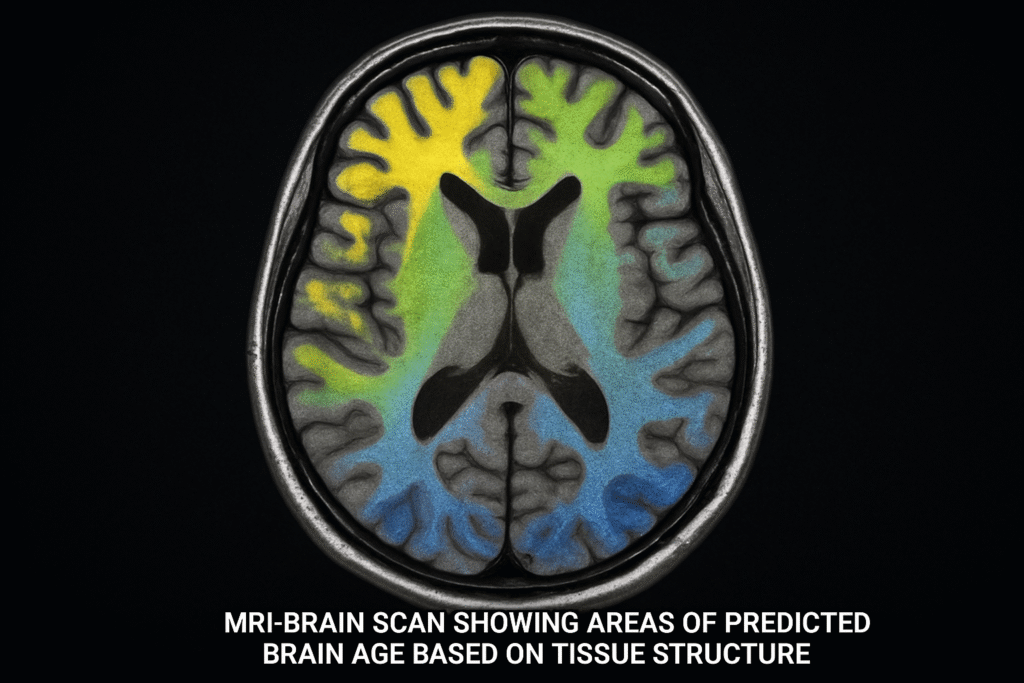
- AI-driven algorithms to estimate biological “brain age”
- Comparisons between predicted brain age and chronological age
Participants with higher muscle volume showed younger-looking brains, while those with a higher visceral fat–to–muscle ratio had older-looking brains.
The results held true regardless of weight — meaning even people who appear “thin” may have older brains if they carry excess hidden belly fat.
Why Muscle Protects the Brain
Muscle mass is increasingly recognized as a key factor in healthy aging. Muscle tissue improves:
- Insulin sensitivity
- Anti-inflammatory signaling
- Circulation to the brain
- Hormone balance
- Metabolic stability
These processes help reduce pathways linked to brain aging and dementia.
“Muscle and fat mass quantified in the body are key reflectors of brain health,” Dr. Raji said. “This study shows that brain aging closely follows these body biomarkers.”
Hidden Belly Fat Accelerates Brain Aging
AI analysis revealed that visceral fat — unlike subcutaneous fat — was tightly linked to:
- Older biological brain age
- Higher risk of neurodegenerative processes
- Structural changes associated with Alzheimer’s risk
Researchers say visceral fat produces harmful inflammatory molecules that can damage blood vessels and brain tissue over time.
What the Results Mean for the Future of Weight-Loss Drugs
The study offers timely insights considering the rapid rise of GLP-1 weight loss medications such as Ozempic and Wegovy.
These drugs can cause rapid fat loss — but often at the cost of significant muscle loss.
Dr. Raji cautions that future therapies should focus on reducing visceral fat while preserving muscle.
“Losing visceral fat while maintaining muscle mass would provide the greatest benefit for brain aging,” he said. “Our findings can help guide dosing and treatment strategies for next-generation metabolic therapies.”
A Wake-Up Call for Midlife Health
The findings suggest that maintaining muscle — through strength training, high-protein diets, and physical activity — may be just as important for brain health as it is for physical health.
Researchers also say MRI-based biomarkers could eventually help identify individuals at heightened risk for cognitive decline long before symptoms appear.
“This research validates long-held ideas about body composition and brain health and provides a foundation for future trials of metabolic treatments,” Dr. Raji said.