
By Harshit
WASHINGTON, MARCH 12, 2026 — Ten days after U.S. and Israeli bombs killed Iran’s supreme leader and wiped out his family, Iran did the one thing Washington had explicitly warned it not to do. It named Ayatollah Ali Khamenei’s own son as his successor — and in doing so, may have just handed America and Israel their next target.
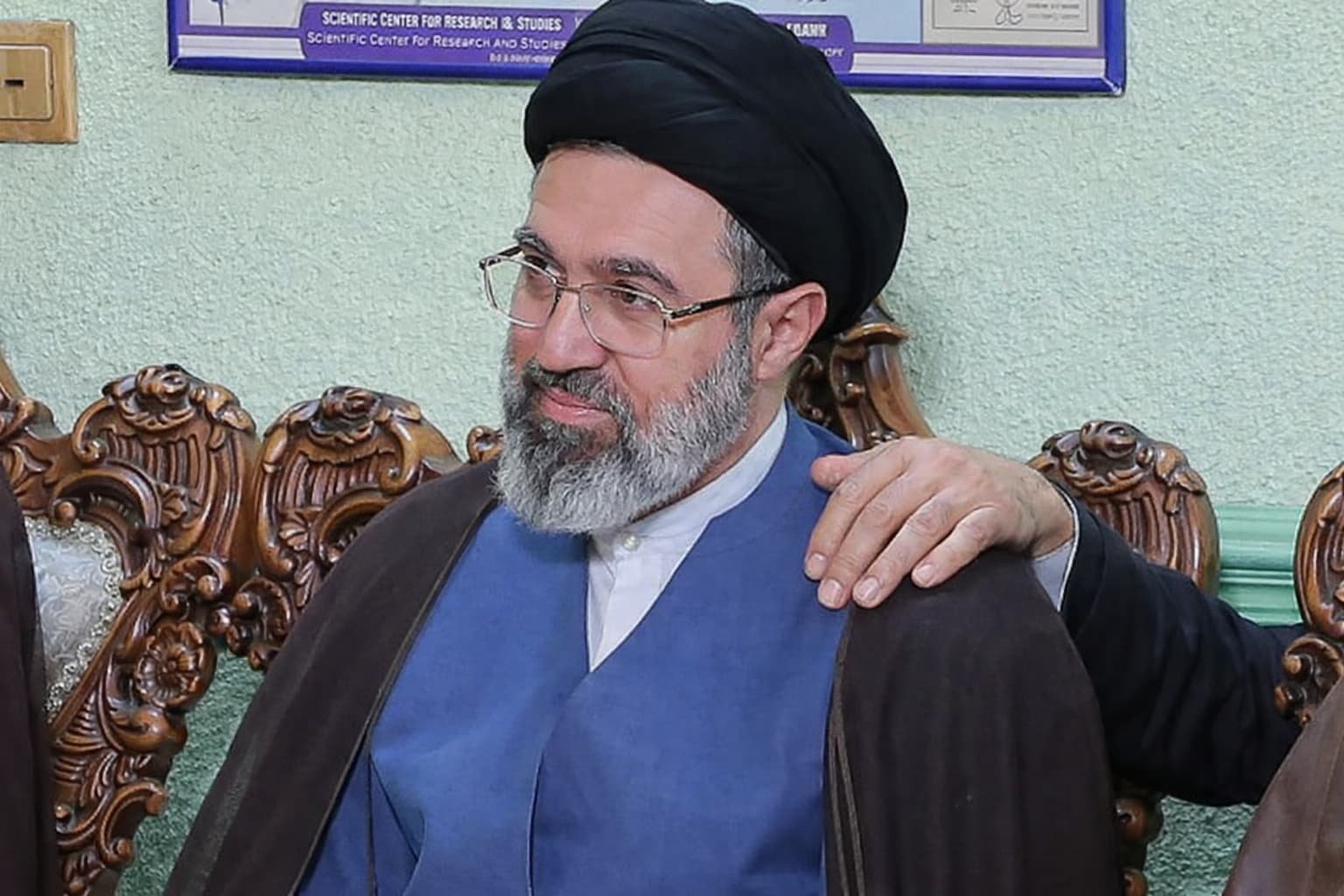
Mojtaba Khamenei, 56, was formally announced as Iran’s third supreme leader on March 8 by the Assembly of Experts, the clerical body responsible under Iranian law for selecting the country’s highest authority. The announcement came nine days after his father was assassinated in the opening strikes of Operation Epic Fury — the same attack that also killed his mother, his wife, and his sister.
Trump’s Reaction: “He’s Going to Need Our Approval”
The White House made no attempt to disguise its fury. President Trump, who had publicly declared the younger Khamenei “unacceptable” even before the appointment was confirmed, went further after the announcement. “He’s going to have to get approval from us,” Trump told ABC News. “If he doesn’t get approval from us, he’s not going to last long.”
Israel was equally blunt. The Israeli military had already threatened to target any successor to Khamenei and to pursue those who participated in the selection process. Prime Minister Netanyahu said at a press conference that Israel’s goal was to “destabilize the regime and enable change.” Senator Lindsey Graham put it most starkly, saying on social media that he believed it was “just a matter of time” before Mojtaba met the same fate as his father.
Who Is Mojtaba Khamenei?
For most of his life, Mojtaba Khamenei operated entirely in the shadows. He never ran for office, never delivered public sermons, and kept such a low profile that many Iranians had never heard his voice — despite knowing for years that he was one of the most powerful figures in the Islamic Republic.
Born in 1969 in the holy city of Mashhad, he joined the Islamic Revolutionary Guard Corps in his late teens and served during the final years of the Iran-Iraq War. That service forged the deep ties to the IRGC that would define the rest of his career. Over the following decades, he built an extensive network within Iran’s security and intelligence apparatus, cultivating relationships with IRGC commanders, Basij leaders, and conservative clerical circles.
U.S. diplomatic cables published by WikiLeaks years ago described him as “the power behind the robes” — the invisible hand steering decisions from behind his father’s throne. American intelligence agencies sanctioned him in 2019 during Trump’s first term for advancing his father’s destabilizing regional agenda.
A Succession Wrapped in Controversy
The appointment itself was anything but clean. The IRGC applied what multiple Assembly members described as heavy and sustained pressure to force the vote in Mojtaba’s favor. An online Assembly meeting on March 3 saw those opposing his candidacy given “limited time” to speak before the discussion was cut off and a vote held. The atmosphere was described by members as “unnatural.”
Even his father had reportedly opposed the idea of his son’s succession, viewing hereditary transfer of power as dangerously reminiscent of the monarchy the 1979 revolution had overthrown.
Despite the controversy, the key power centers rallied quickly. The IRGC, the armed forces, and Iran’s President Masoud Pezeshkian all pledged loyalty to the new leader. Russia’s Vladimir Putin offered “unwavering” support. China said it opposed any attempt to target the new supreme leader.
An Act of Defiance — With Consequences
Analysts watching the appointment were struck less by who was chosen than by what the choice represented. One Assembly member framed it with unusual candor — saying the selection criteria was simple: Iran needed a leader who would be “hated by the enemy.” The fact that Trump had named Mojtaba unacceptable was, in that framing, not a warning. It was a qualification.
Former Israeli Ambassador to the United States Michael Herzog told CNBC that Iran was sending a deliberate message of defiance. “The Iranians are showing defiance by choosing the son of Khamenei,” he said. Oil markets responded immediately — prices surged back above $120 per barrel on the day of the announcement before retreating as U.S. military operations resumed.
Mojtaba Khamenei has reportedly been wounded in the conflict and has not been heard from publicly since the war began. An elite black-clad counterterrorism unit known as NOPO has been deployed to protect him as U.S. and Israeli strikes continue across Iran.
Whether he survives long enough to actually govern the country he has just been handed remains, at this moment, an open question.