
By Harshit, Oct. 21, 2025
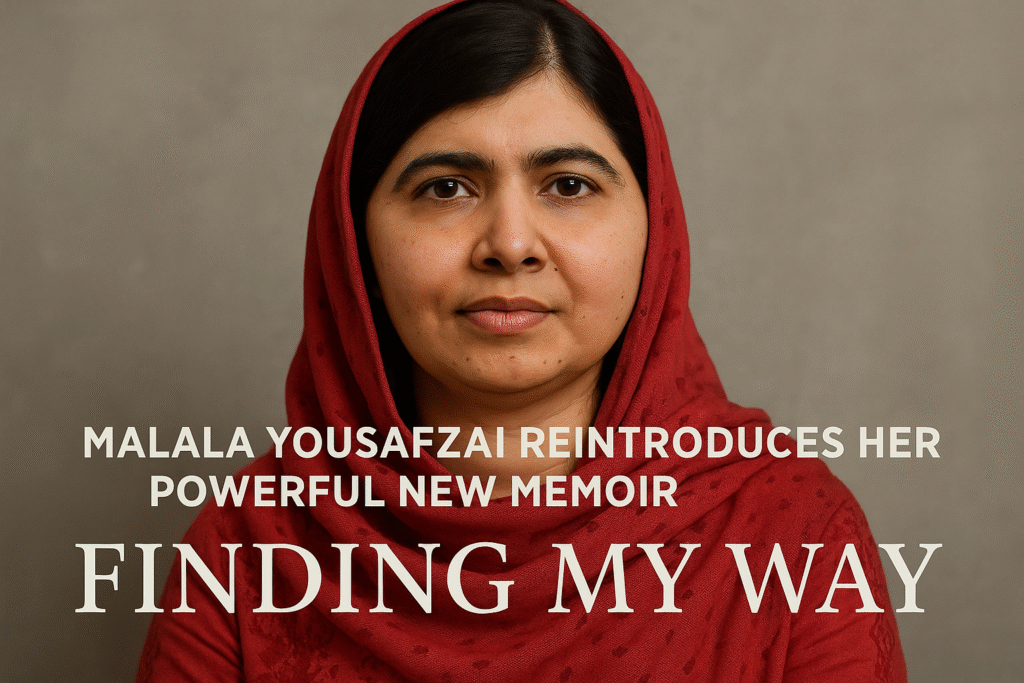
Malala Yousafzai, the Nobel Peace Prize-winning activist who became a global symbol of courage after surviving a Taliban assassination attempt, is now reclaiming her story — and her humanity. In her new memoir, Finding My Way (Atria Books, 2025), the 28-year-old opens up about the years since her near-fatal shooting, exploring identity, mental health, love, and the challenges of living up to a legacy forged in tragedy.
From Survivor to Storyteller
At just 15, Yousafzai was shot in the head by Taliban gunmen for advocating girls’ education in Pakistan’s Swat Valley. She survived the attack and was airlifted to the U.K. for medical treatment, awakening from a coma to find herself transformed from a spirited schoolgirl into a global icon. By 17, she became the youngest recipient of the Nobel Peace Prize.
But as Yousafzai reveals in her new memoir and in an interview with USA TODAY, the years that followed were marked by internal struggles — between activism and normalcy, bravery and vulnerability. “I want to introduce the real me, the funny me, the messy me, the sad and annoying me,” she says. “I know people see me as brave and serious, but I am also human. I need love, friendships, and mental health support — just like everyone else.”
Image alt text: Malala Yousafzai smiles during a New York interview promoting Finding My Way (2025).
Rediscovering Youth: College Life and Self-Expression
Yousafzai’s time at Oxford University marked a turning point. Long accustomed to being the face of a global cause, she admits she initially believed that “activists don’t get to have fun.” That changed when she immersed herself in campus life — climbing rooftops, attending 1980s-themed dance parties, and joining student clubs.
For perhaps the first time, she allowed herself to simply be a young woman. “I had friends who made me feel safe and helped me dress for parties,” she writes. But her college experience also came with unusual circumstances: two Metropolitan Police officers — “middle-aged dads in blazers and earpieces” — shadowed her everywhere, even attending parties and staying in her dorm hall.
Academically, she struggled to balance her studies with the global responsibilities of the Malala Fund. She often missed classes to travel across continents advocating for girls’ education. “If I failed, I could be kicked out of college,” she recalls. “There was always this debate — do I go help millions of girls, or do I stay and focus on myself?”
Her tutor’s warning that she might lose her place at Oxford forced her to seek help, and she slowly learned to prioritize both her education and her advocacy.
Facing Trauma: When the Past Returned
In one of the book’s most personal revelations, Yousafzai writes about an evening when she smoked weed with friends — an attempt to unwind that unexpectedly led to her reliving the Taliban shooting. “It took a sharp, dark turn,” she recalls. “I was reliving it — every sound, every feeling.”
For days, she was unable to sleep, gripped by flashbacks and panic attacks. Her friends took turns sleeping beside her on the dorm floor until she felt safe again. “I thought I had forgotten the incident, but it came back with force,” she says. The episode made her realize how untreated her psychological wounds were, even after years of surgeries and physical rehabilitation.
Seven years after the attack, she was diagnosed with post-traumatic stress disorder (PTSD) and anxiety. The diagnosis, she says, transformed her understanding of mental health and informed her work with children growing up amid war and violence.
Image alt text: Malala Yousafzai during a Malala Fund visit to a refugee school in Jordan, 2025.
Love, Insecurity, and Learning to Trust
For years, Yousafzai believed romance wasn’t an option. She struggled with insecurities about her appearance after nerve damage from the shooting and felt marriage was incompatible with her ideals. “I didn’t think I could be loved,” she confesses.
That changed during her college years when she met what she describes as her “first crush” — a mysterious, unavailable boy rumored to be a campus drug dealer. “I didn’t realize I was attracted to bad boys,” she jokes. The brief romance ended when he ghosted her, but it sparked an important realization: she was capable of love and heartbreak like anyone else.
Her eventual partner was Asser Malik, a Pakistani cricket executive she met while go-karting with friends. After a minor crash, he encouraged her to keep racing. She later learned he was thoughtful, grounded, and funny — and, as she puts it, “the one.”
Despite their growing bond, Yousafzai wrestled with the concept of marriage, shaped by her childhood memories of forced unions and lost opportunities for women. “I had seen girls married off too young,” she says. “Even in developed countries, marriage often means compromise for women.”
She turned to literature — reading Virginia Woolf and bell hooks — and spoke with friends and her mother. But it was her candid conversations with Malik that changed her mind. “He said, ‘I want to be with you however you want,’” she recalls. “That’s when I knew.”
Now married for four years, Yousafzai describes marriage as “a beautiful friendship.” She credits Malik for introducing her to new hobbies like weightlifting and golf, while she brings her curiosity and humor into their relationship.
Healing, Humor, and Humanity
Finding My Way marks a tonal shift from Yousafzai’s earlier works, like her 2013 bestseller I Am Malala. This time, the activist writes with candor and levity, reflecting on both trauma and joy. She jokes about being the subject of “study motivation” memes and admits to watching TikToks about herself. “I can laugh at it now,” she says.
More importantly, the memoir underscores her evolution from survivor to self-aware woman. Her story no longer ends with the attack — it begins there. Through humor, honesty, and vulnerability, Yousafzai reframes her image from untouchable symbol to relatable human being.
“People still see me as that 15-year-old girl,” she says, “but I want them to see me as I am now — someone still learning, still feeling, still trying to find her way.”