
By Harshit
SÃO PAULO–LISBON, FEBRUARY 7 —
Researchers from Brazil and Portugal have developed a new magnetic nanomaterial that could change how bone cancer is treated by combining tumor destruction with bone regeneration in a single therapeutic platform.
The study, published in Magnetic Medicine, describes a nanocomposite made of iron oxide nanoparticles coated with a thin layer of bioactive glass. This core–shell structure allows the material to heat up under a magnetic field—damaging cancer cells—while also encouraging new bone growth at the treatment site.
Scientists say uniting these two functions has been a persistent challenge in cancer biomaterials research. Until now, materials that were effective for magnetic hyperthermia often lacked strong compatibility with bone tissue, while bioactive materials typically did not generate sufficient magnetic response.
A Dual-Function Approach to Bone Cancer Therapy
Bone cancers present a unique clinical challenge. In addition to eliminating malignant cells, treatment often leaves behind weakened or damaged bone that must be repaired to restore mobility and structural integrity.
The newly developed nanocomposite addresses both problems at once.
“Magnetic bioactive nanocomposites are highly promising for bone cancer therapy because they can destroy tumor tissue through magnetic hyperthermia while simultaneously promoting bone regeneration,” said lead author Dr. Ângela Andrade. “Achieving strong magnetic properties and high bioactivity in the same material has been a long-standing hurdle, and this work shows it can be done.”
At the heart of the design is an iron oxide core, responsible for the material’s magnetic behavior. Surrounding it is a shell of bioactive glass, a material already known for its ability to bond with bone and stimulate mineral formation.
Strong Performance in Bone-Like Environments
To evaluate how the nanocomposite might behave inside the body, the research team immersed the particles in simulated body fluid—a laboratory solution that mimics the chemical conditions of human blood plasma.
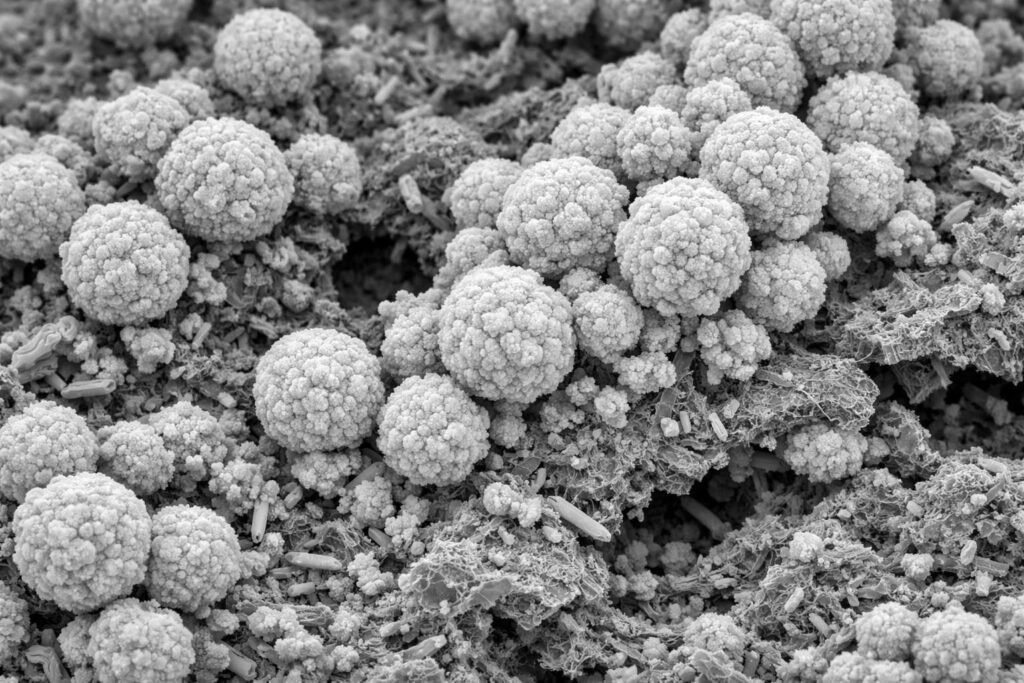
Under these conditions, the nanocomposites rapidly formed a layer of apatite, a calcium-rich mineral that closely resembles the inorganic structure of natural bone. This rapid mineralization suggests the material could integrate tightly with bone tissue after implantation.
The researchers tested several versions of the nanocomposite, adjusting the chemical composition of the bioactive glass coating. One formulation, enriched with higher calcium content, showed especially strong results.
“Among the formulations we studied, the calcium-rich version exhibited both the fastest mineral formation and the strongest magnetic response,” Andrade noted. “This combination makes it particularly attractive for biomedical use.”
Targeted Heating to Destroy Cancer Cells
The therapeutic power of the nanocomposite lies in its response to an alternating magnetic field. When exposed to such a field, the iron oxide core generates localized heat—a process known as magnetic hyperthermia.
This heat can raise temperatures in tumor tissue high enough to damage or kill cancer cells, while limiting exposure to surrounding healthy bone. Because the heating can be controlled externally, clinicians could precisely target the affected area.
Unlike conventional treatments such as radiation or systemic chemotherapy, magnetic hyperthermia offers the possibility of localized cancer control with fewer side effects.
Supporting Bone Regrowth After Treatment
While the magnetic core focuses on tumor ablation, the bioactive glass shell supports healing. As it interacts with body fluids, the coating releases ions that stimulate bone-forming cells and encourage new tissue growth.
This dual action could be particularly valuable after surgical removal of bone tumors, where large defects often remain. A material that both eliminates residual cancer cells and helps rebuild bone could reduce recovery time and improve long-term outcomes.
“This work highlights how surface chemistry and nanostructure strongly influence the biological and magnetic performance of these materials,” Andrade said. “It opens new directions for designing multifunctional biomaterials that are both safe and clinically effective.”
Looking Ahead to Clinical Applications
Although the findings are based on laboratory testing, the results suggest strong potential for future medical use. Further studies will be needed to assess long-term safety, effectiveness in living organisms, and optimal magnetic field conditions.
If successful, the technology could form the basis of new implantable therapies for bone cancers, offering a more integrated approach to treatment and recovery.