
WASHINGTON, MARCH 31, 2026 —
What You Need To Know
- Nearly half of all American adults — approximately 120 million people — have high blood pressure, and nearly half of those don’t know it because the condition produces no symptoms until it causes a heart attack, stroke, or kidney failure
- Lifestyle changes alone can lower blood pressure by 5 to 14 points — enough to eliminate the need for medication in many Stage 1 hypertension cases, according to Mayo Clinic, Johns Hopkins, and Mass General Brigham cardiologists
- The DASH diet — Dietary Approaches to Stop Hypertension — has the strongest clinical evidence base of any non-pharmaceutical intervention for high blood pressure, with studies showing reductions of 8 to 14 mm Hg from diet changes alone
Your blood pressure is a number your doctor checks every visit, notes in your chart, and rarely explains in detail unless it is already dangerously high. For nearly half of American adults, that number is too high right now — and most of them have no idea, because high blood pressure produces no pain, no symptoms, and no warning until it causes the kind of catastrophic cardiovascular event that leaves no second chances.
The good news — genuinely — is that blood pressure is one of the most responsive medical conditions to lifestyle intervention. The lifestyle changes that lower blood pressure are not exotic, expensive, or time-consuming. Most of them cost nothing. And the evidence behind them, accumulated across decades of clinical research published by the American Heart Association, Mayo Clinic, Johns Hopkins, and Mass General Brigham, is as solid as any in medicine. Here is exactly what works, how much it works, and how to start.
Understanding What Your Numbers Actually Mean
Blood pressure is expressed as two numbers: systolic pressure over diastolic pressure, measured in millimeters of mercury. The systolic number — the top number — measures the force against your artery walls when your heart beats. The diastolic number measures that force between beats, when your heart is resting. Together they tell your doctor how hard your heart is working to push blood through your body.
| Blood Pressure Category | Systolic | Diastolic | What It Means |
|---|---|---|---|
| Normal | Under 120 | Under 80 | Healthy — maintain lifestyle |
| Mildly elevated | 120-129 | Under 80 | Lifestyle changes recommended |
| Stage 1 hypertension | 130-139 | 80-89 | Lifestyle changes — possible medication |
| Stage 2 hypertension | 140+ | 90+ | Medication likely plus lifestyle |
| Hypertensive crisis | 180+ | 120+ | Emergency — seek care immediately |
If your blood pressure has never been checked — or has not been checked in more than a year — that is the first step. High blood pressure earns its name as the “silent killer” precisely because it produces no symptoms. The only way to know your numbers is to measure them.
The DASH Diet — The Most Evidence-Based Intervention Available
No lifestyle change has stronger clinical backing for blood pressure reduction than the DASH diet — Dietary Approaches to Stop Hypertension — developed by researchers with support from the National Heart, Lung and Blood Institute. Studies consistently show that following DASH can lower blood pressure by 8 to 14 mm Hg — a reduction comparable to what many first-line medications achieve.
The diet does not require counting calories or eliminating entire food groups. It emphasizes fruits and vegetables — 4 to 5 daily servings of each — whole grains, lean proteins including fish, poultry, and legumes, low-fat dairy, and limited sodium, saturated fat, and added sugar. The single most impactful individual change within the DASH framework is sodium reduction. The American Heart Association recommends limiting sodium to 1,500 mg per day for most adults with hypertension — roughly the amount in a single teaspoon of salt. Studies show this change alone can lower blood pressure by 5 to 8 mm Hg.
Two nutrients within the DASH framework deserve specific attention. Potassium — found in bananas, sweet potatoes, avocados, leafy greens, and beans — counteracts sodium’s blood pressure-raising effects by helping the kidneys excrete excess sodium. Magnesium, found in whole grains, nuts, and seeds, helps regulate muscle contraction in artery walls. Most Americans are deficient in both.
Exercise — The Most Powerful Single Intervention
Regular aerobic exercise is as powerful a blood pressure treatment as many medications — and unlike medications, it improves every other aspect of cardiovascular health simultaneously. The evidence is consistent across dozens of clinical trials: 150 minutes of moderate aerobic activity per week — 30 minutes on five days — lowers blood pressure by 5 to 8 mm Hg in people with hypertension. The key word is consistent. Stop exercising and blood pressure returns to its previous level within weeks.
The most accessible form of exercise for blood pressure management is walking. A 2022 study from Vanderbilt University Medical Center found that reaching 8,200 daily steps was associated with meaningfully lower rates of hypertension — a number achievable for most adults without a gym membership or structured workout plan.
For those who prefer structured exercise, high-intensity interval training — alternating short bursts of intense activity with recovery periods — produces equivalent blood pressure reductions in less total time than steady-state cardio. Two days per week of resistance training adds to those benefits. The combination of aerobic and resistance training is consistently more effective than either alone.
One intervention that consistently surprises patients and physicians alike is tai chi. A randomized controlled trial published in JAMA Network Open found that adults with prehypertension who practiced tai chi for three months reduced their blood pressure more than those who engaged in conventional aerobic exercise. For older adults or those with mobility limitations, tai chi represents a high-evidence, low-impact alternative.
Weight Loss — The Fastest Route to Lower Numbers
Blood pressure rises consistently with body weight — and falls consistently when weight is lost. The clinical relationship is precise: every 2.2 pounds of weight lost corresponds to approximately a 1 mm Hg reduction in systolic blood pressure. For someone 20 pounds overweight, achieving a healthy weight could lower blood pressure by nearly 10 mm Hg — before any other lifestyle change is made.
Waist circumference matters as much as overall weight. Abdominal fat — the kind that accumulates around the midsection — raises blood pressure through mechanisms that include hormonal signaling, inflammation, and mechanical pressure on the kidneys. Men with waists above 40 inches and women with waists above 35 inches face elevated blood pressure risk regardless of their overall BMI.
Stress — The Factor Most Americans Underestimate
Chronic stress raises blood pressure through sustained activation of the sympathetic nervous system — the fight-or-flight response that evolved to handle short-term threats, not the persistent low-grade stressors of modern working and financial life. The Iran war — now in its 31st day, with gas above $3.98 per gallon, a stock market in correction territory, and TSA lines stretching through airport terminals — has measurably elevated stress levels for millions of Americans. That stress is landing directly on cardiovascular systems that were already under pressure.
Meditation and deep breathing activate the parasympathetic nervous system — the physiological counterweight to the stress response — and can produce measurable short-term reductions in blood pressure within minutes. The effect is temporary but real, and regular practice builds cumulative benefit. Studies consistently show that people who practice mindfulness meditation regularly have lower baseline blood pressure than matched controls who do not.
Sleep deserves equal emphasis. Blood pressure dips naturally during sleep — a process called nocturnal dipping that is essential for cardiovascular recovery. People who sleep fewer than six hours per night consistently show higher blood pressure than those who sleep seven to eight hours, independent of other lifestyle factors. Sleep apnea — which interrupts this dipping process repeatedly through the night — is one of the most common and most underdiagnosed causes of treatment-resistant hypertension.
What Most Americans Miss
Point 1: Breathing exercises specifically targeting the respiratory muscles — using a device called a PowerBreathe or similar products — have been shown in clinical studies to lower systolic blood pressure by an average of 9 mm Hg after six weeks of daily five-minute sessions. This is comparable to the effect of some blood pressure medications, and it takes five minutes a day. Most cardiologists never mention it.
Point 2: Probiotics — live bacteria found in yogurt, kefir, kimchi, sauerkraut, and supplements — have been linked in multiple studies to modest but measurable blood pressure reductions. The mechanism involves gut bacteria producing compounds called short-chain fatty acids that relax blood vessel walls. Adding a daily serving of fermented food costs nothing and has no downsides.
Point 3: Caffeine sensitivity varies enormously between individuals. For people who are caffeine-sensitive, a cup of coffee can raise systolic blood pressure by 5 to 10 mm Hg within 30 minutes. The easy test is to check your blood pressure before and 30 minutes after your morning coffee. If the number rises by more than 5 points consistently, reducing caffeine intake may produce a meaningful long-term benefit.
Your Next Move
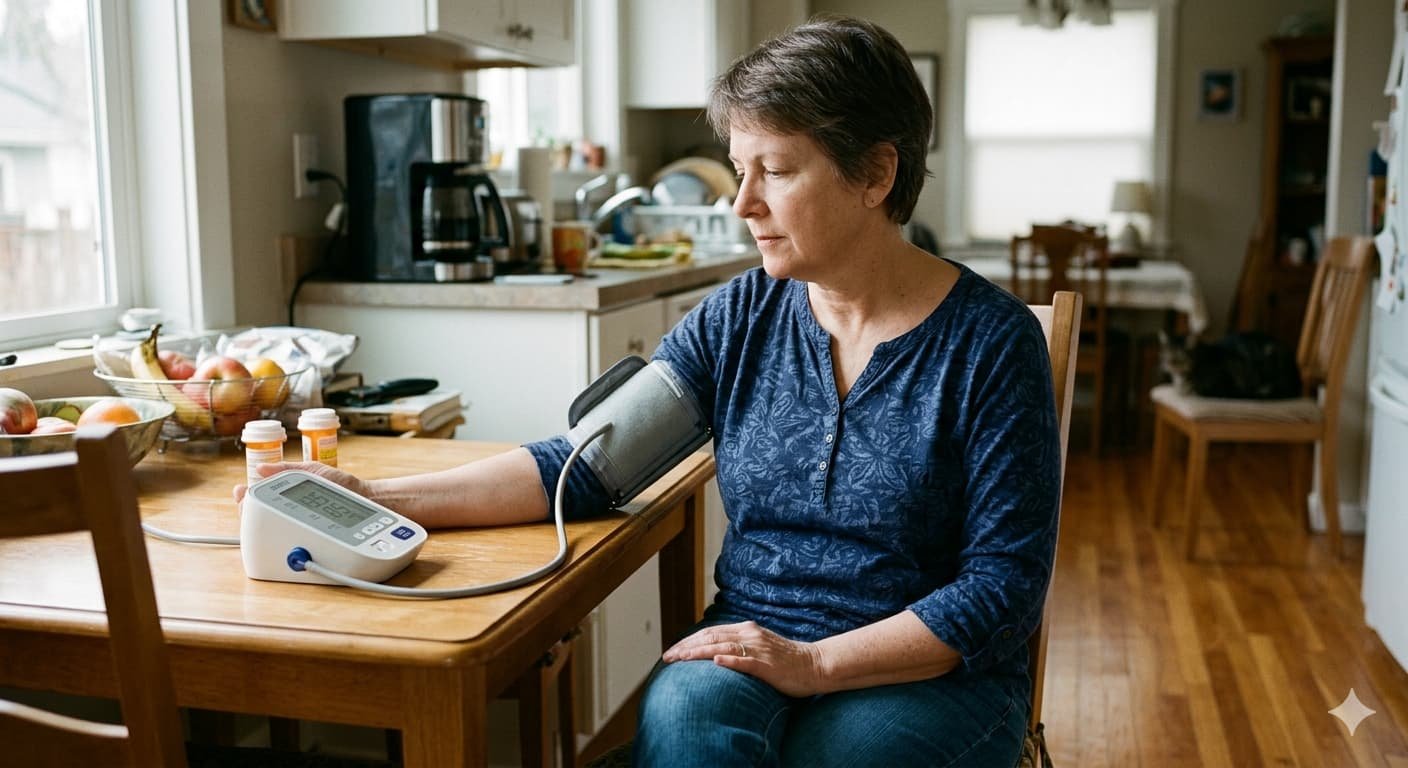
Start with the number. If you do not know your blood pressure, find out today — most pharmacies offer free blood pressure checks, and home monitors cost less than $30. If your number is above 130/80, commit to three months of the lifestyle changes described here before concluding that medication is your only option. Add the DASH principles to your grocery shopping. Add 30 minutes of walking to your daily routine. Reduce sodium in your diet by cutting processed foods. Prioritize sleep.
Most importantly: track your blood pressure regularly during those three months. Blood pressure responds to lifestyle changes within weeks — and watching those numbers fall is one of the most motivating experiences in medicine.
For Stage 1 hypertension, lifestyle changes are often sufficient. For Stage 2, medication is typically necessary — but lifestyle changes make medication more effective and may eventually reduce the dose required. At every stage, the changes described here are worth making. Your heart is working too hard. These are the things that help it work less hard.