
NEW YORK, MARCH 25, 2026 —
Twenty seconds. That is how long stood between a cleared runway crossing and the deadliest crash at LaGuardia Airport in thirty years. On Tuesday, the National Transportation Safety Board laid out exactly what happened in those final moments — and the picture that emerged raised urgent questions about airport safety systems that failed to prevent a collision that should never have occurred.
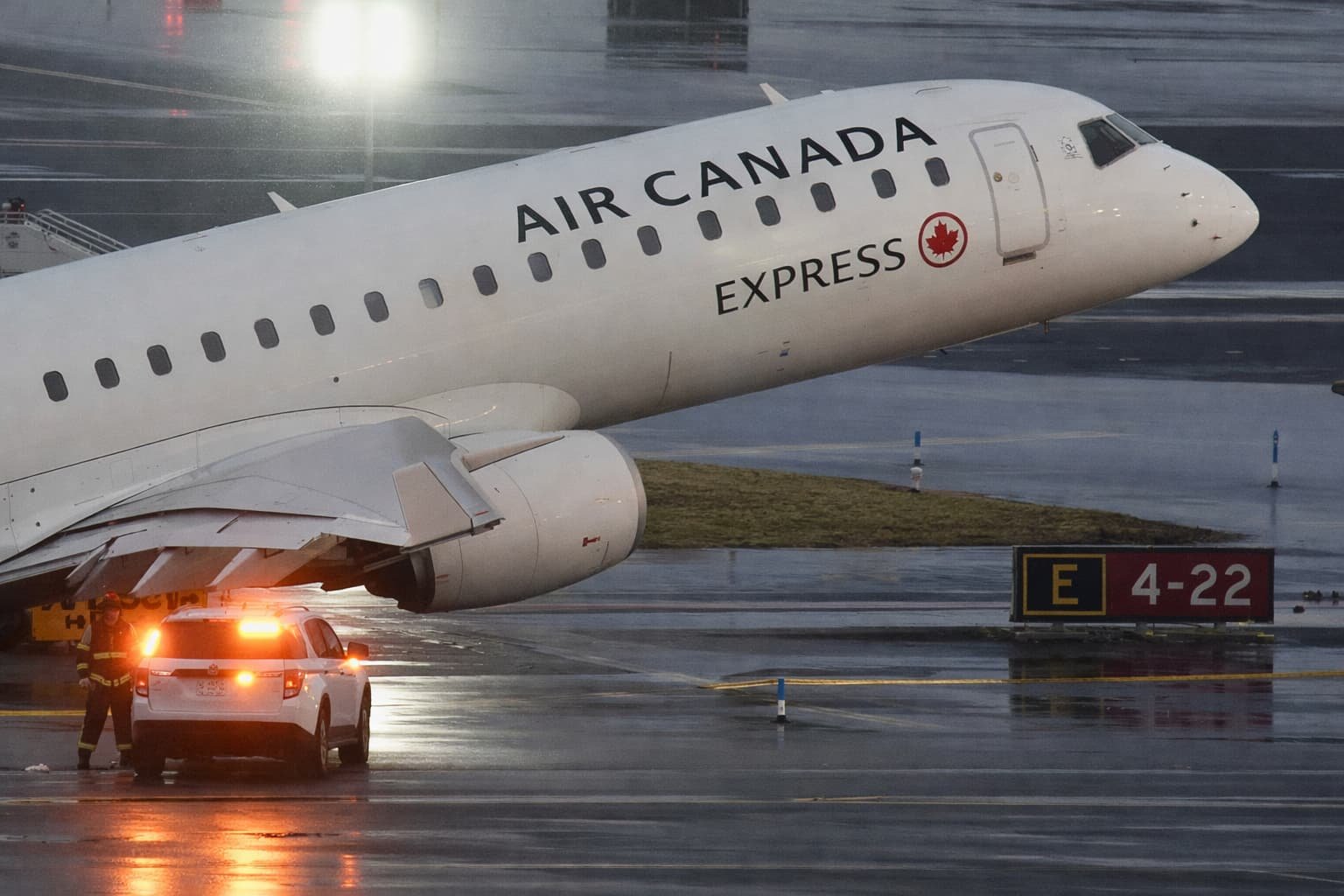
An Air Canada Express regional jet collided with a Port Authority fire truck on Runway 4 at LaGuardia Airport late Sunday night, killing both pilots — Captain Antoine Forest, 38, of Montreal, and First Officer Mackenzie Gunther, 24, a recent aviation graduate who had been described by his college as a young man who would be deeply missed. Forty passengers and crew members were hospitalized. LaGuardia’s first fatal crash in three decades shut down one of the world’s busiest airports for hours.
The Timeline — Second by Second
NTSB senior aviation investigator Doug Brazy walked reporters through the final three minutes of the cockpit voice recorder Tuesday afternoon. The sequence of events it revealed was precise, chilling, and deeply troubling.
At two minutes and 22 seconds before impact, the Air Canada flight crew checked in with LaGuardia tower on approach. At 54 seconds, the tower confirmed the aircraft was on stable approach for Runway 4. At 40 seconds, the tower asked which vehicle needed to cross the runway. The Port Authority fire truck — responding to a report of an odor on another aircraft — made its transmission.
At 25 seconds, the fire truck requested permission to cross Runway 4. At 20 seconds, the tower cleared it to cross. At 17 seconds, the truck read back the clearance. Then, at nine seconds before impact, the tower told the fire truck to stop. It was too late. The Air Canada jet, already committed to its landing, struck the truck as it crossed the runway. The force of the collision demolished the front of the aircraft. Both pilots were killed instantly.
The Safety System That Did Not Alert
NTSB Chairwoman Jennifer Homendy revealed a detail that immediately became the focus of the investigation. LaGuardia has a runway safety system designed to track the surface movement of aircraft and vehicles and alert controllers when conflicts arise. On Sunday night, that system did not alert.
The reason, Homendy said, is that none of the vehicles rushing to the tarmac — including the Port Authority fire truck that was struck — had tracking transponders installed. Without a transponder, the safety system could not detect the truck’s presence on the runway. A safety technology that existed specifically to prevent this kind of collision was rendered useless by a single missing piece of equipment on a single vehicle.
The NTSB also identified a communications failure in the final minutes. At one minute and three seconds before impact, an airport vehicle made a radio transmission to the tower — but the transmission was “stepped on” by another simultaneous radio call, creating interference that may have obscured critical information. Homendy said investigators are examining that overlap carefully.
The Staffing Question
Transportation Secretary Sean Duffy initially moved to address rumors circulating online that only one air traffic controller had been in the tower at the time of the crash. “That rumor is not accurate,” he said — but declined to provide the actual staffing number, saying it would be shared first with the NTSB.
NTSB Chairwoman Homendy provided the answer Tuesday: two controllers were in the tower at the time of the collision — a local controller and a controller in charge. Two controllers is the standard operating procedure for LaGuardia’s midnight shift, she confirmed. She noted that the NTSB has raised concerns about midnight shift fatigue in past investigations but stressed that there is no evidence of fatigue in this case at this stage of the investigation.
The Pilots Who Saved Lives
Amid the tragedy, passenger Rebecca Liquori of Baldwin, New York offered a testament to the two men who died. “They hit the brakes to slow the impact,” she told reporters. “I’m forever indebted to the pilots.” The deceleration they managed in those final seconds almost certainly reduced the severity of injuries to the 40 passengers and crew who survived.
Antoine Forest’s brother wrote online that his sibling had left “in a whirlwind too soon to say goodbye” — but that he could “leave with his head held high.” Mackenzie Gunther’s alma mater, Seneca Polytechnic College in Canada, lowered its flags to half-staff in his memory.
The NTSB investigation is expected to take up to two years to complete. The black boxes are already in Washington. The questions they may answer — about why a runway safety system failed to alert, why a fire truck had no transponder, and what those 20 seconds of cleared crossing actually looked like from inside the cockpit — will shape aviation safety policy for years to come.