
By Harshit
GAZA CITY — 20 November 2025
At least 25 Palestinians were killed on Wednesday after Israeli air, drone, and artillery strikes hit multiple areas of the Gaza Strip, according to the Hamas-run health ministry. The attacks mark one of the deadliest days since the ceasefire took effect more than five weeks ago, sharply raising fears that the truce could collapse.
Deaths Reported in Zeitoun After Strike on Ministry Building
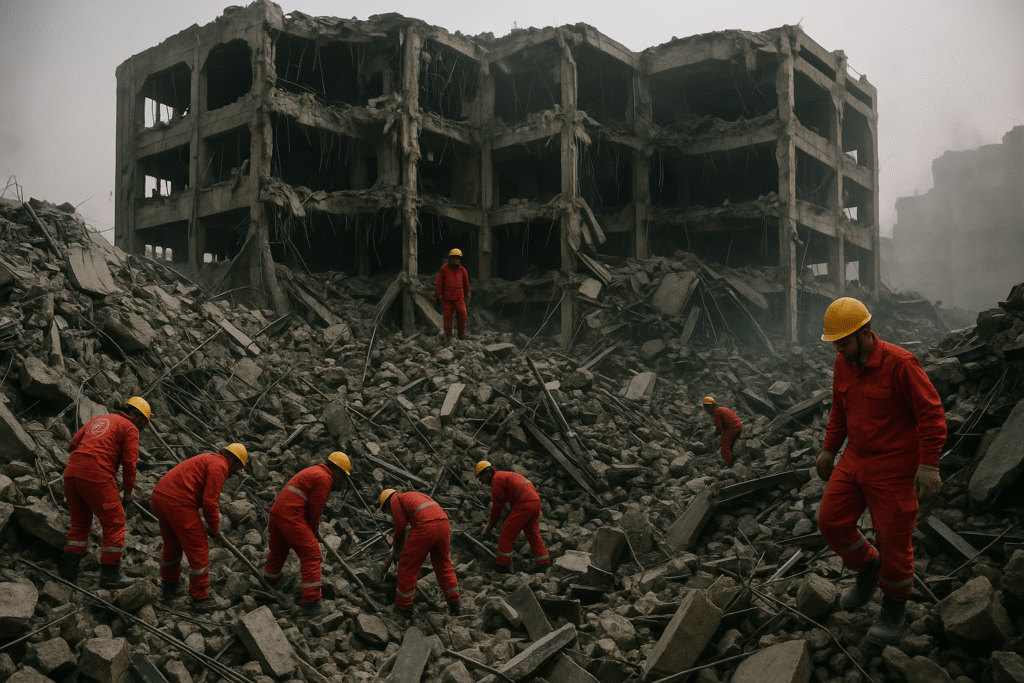
The heaviest casualties were reported in the Zeitoun neighbourhood of Gaza City, where ten people died after a strike hit a building belonging to the Ministry of Religious Endowments. Gaza’s Civil Defence said rescue teams recovered bodies — including those of children — from beneath the rubble, describing the scene as “severe and catastrophic.”
The Civil Defence confirmed the strike caused widespread structural damage to nearby homes and businesses in the densely populated area.
Separate Strikes Hit Shejaiya and Main Gaza Route
In another incident in Shejaiya, one civilian was killed and several others were seriously injured when a drone targeted a group of people near Salah al-Din Street, Gaza’s primary north–south road.
A short distance away, a tank shell struck the Balboul family home, killing one person and injuring others. Civil Defence officials said repeated strikes in eastern Gaza City have made rescue operations increasingly dangerous.
Khan Younis Suffers Heavy Casualties
In Khan Younis, at least 13 Palestinians were killed in a series of evening strikes. Three of them were inside a UNRWA-run sports club when it was hit. Local responders said several structures were completely destroyed.
The Israel Defense Forces (IDF) said it launched the strikes after gunmen opened fire on Israeli soldiers operating in Khan Younis — an act Israel described as a violation of the ceasefire agreement. No Israeli soldiers were reported injured.
Israel Says Strikes Targeted Hamas Commanders
Israeli media, citing security officials, reported that two high-ranking Hamas figures were targeted:
- The commander of Hamas’s Zeitoun Battalion, and
- The commander of its naval force.
The IDF described the operations as “precision strikes against Hamas terrorist infrastructure.”
Hamas Denounces Strikes as Ceasefire Violation
Hamas rejected Israel’s claims, calling the attacks a “dangerous escalation” intended to undermine the U.S.-backed ceasefire. The group said Israel was attempting to restart “aggression against the Palestinian people” and demanded international pressure to enforce the ceasefire terms.
Ceasefire Showing Signs of Collapse
The ceasefire has been in place since 10 October, part of a broader effort supported by the United Nations and regional mediators to stabilize the Gaza Strip after two years of intense conflict.
However, humanitarian agencies warn the agreement is under mounting strain, with repeated violations making the situation increasingly volatile. Nearly 280 Palestinians have been killed since the truce began, according to Gaza health officials, while Israel reports three soldiers killed during the same period.
Humanitarian Conditions Deteriorating
The renewed violence comes at a time when Gaza’s civilian population faces worsening humanitarian conditions. Winter rains have already flooded overcrowded shelters, increasing the risk of disease, while damaged infrastructure has left many areas without reliable electricity or clean water.
UN officials warn that any further escalation could halt aid delivery, which is already limited and heavily reliant on fragile daily coordination.
Regional Spillover: Israeli Strikes in Southern Lebanon
Separately, Israeli forces carried out strikes in southern Lebanon, targeting what Israel described as Hezbollah weapons storage sites. Israel says Hezbollah has been attempting to rebuild its military capabilities following the conflict that ended last year.
Ceasefire at a Turning Point
With both sides exchanging accusations of violations, diplomats fear the ceasefire is approaching its breaking point. International mediators are expected to intensify talks in the coming days to prevent a return to full-scale war.