
WASHINGTON, MARCH 20, 2026 — The Iran war crossed boundaries on Thursday that nobody anticipated when the first bombs fell twenty days ago. Oil hit $118 a barrel. Israel carried out the first-ever military strike on Iranian targets in the Caspian Sea. Two commercial vessels were hit by unknown projectiles in the Persian Gulf. A 19-year-old Iranian wrestler was publicly hanged. And the regional death toll surpassed 2,300 people — with no ceasefire in sight and no country willing to step in and stop it.
Day 20 of the U.S. and Israeli war on Iran is no longer a story about nuclear facilities and missile sites. It is a story about the world’s energy supply, the world’s shipping lanes, and the question of how much further this conflict can escalate before the global economy breaks.
Oil at $118 — The Number That Is Changing Everything
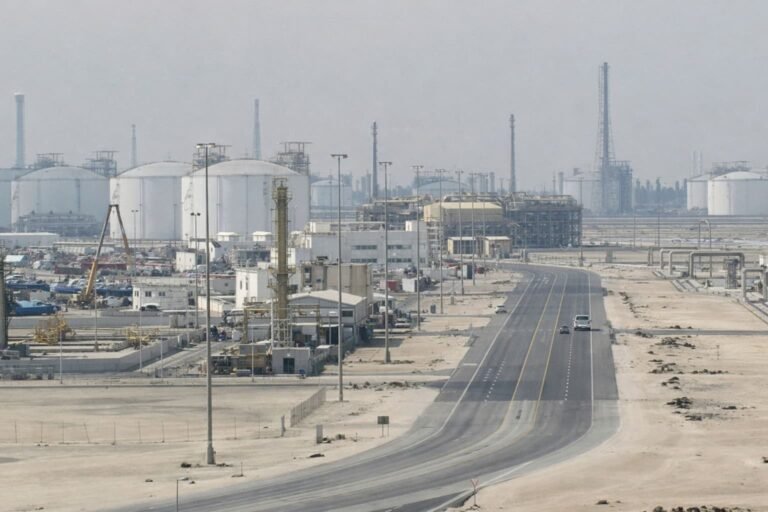
Brent crude — the global oil benchmark — hit $118 a barrel Thursday morning, its highest level since the 2022 energy crisis. The trigger was Israel’s overnight strike on Iran’s South Pars gas field, which sent Tehran firing back at energy infrastructure across the Persian Gulf — Qatar’s LNG hub, Saudi refineries, UAE gas facilities — in a chain of tit-for-tat attacks that markets have now decided may not stop anytime soon.
The math for American consumers is straightforward and brutal. Every $10 rise in oil prices adds roughly 25 cents per gallon at the pump over a period of weeks. Oil has risen more than $46 a barrel since the war began on February 28 — from around $72 to $118. That translates to a potential $1.15 per gallon increase at American gas stations by the time the full shock works through the supply chain. The national average was already at $3.54 heading into this week.
Energy analysts warned Thursday that $5 per gallon gasoline is no longer a worst-case scenario. It is a realistic outcome if Gulf energy attacks continue through April.
Israel Strikes Iran in the Caspian Sea — A First in the War
The single most significant military development of Day 20 was not a missile strike or a drone attack. It was geography. Israeli forces carried out strikes against Iranian naval targets in the Caspian Sea — the landlocked body of water bordering Iran’s northern coast, roughly 1,500 miles from Tel Aviv — marking the first time Israel has struck Iranian targets in the Caspian in the entire history of the conflict.
The strike represents a massive expansion of the war’s geographic footprint. Until Thursday, the conflict had been concentrated in Iran’s western and southern regions, the Persian Gulf, and Lebanon. The Caspian strike signals that no part of Iran’s military infrastructure is beyond Israel’s reach — including naval assets that Iran had presumably considered safe from the main theater of conflict.
Israel separately said it struck 200 targets across western and central Iran on Wednesday — including military infrastructure, command posts, and weapons storage facilities. Iranian air defenses intercepted Israeli missiles over Tehran early Thursday morning.
War’s Reach — Day 20 At a Glance
| Location | What Happened | Impact |
|---|---|---|
| Caspian Sea | Israel strikes Iranian naval targets | First-ever strike — major escalation |
| Qatar — Ras Laffan | Iranian missiles hit LNG hub again | Extensive damage — 2nd strike |
| Persian Gulf | Two commercial ships hit by projectiles | Global shipping on alert |
| West Bank | Iranian cluster munitions kill 3 women | Conflict spreading to new fronts |
| Tehran | Israel strikes 200 targets overnight | Heaviest single-day bombing |
| Baghdad | Drones hit U.S. Embassy area and oil field | Iran proxies expanding attacks |
| Lebanon | Death toll passes 1,000 | One million displaced |
Two Ships Hit. Twenty Have Been Attacked Since the War Began.
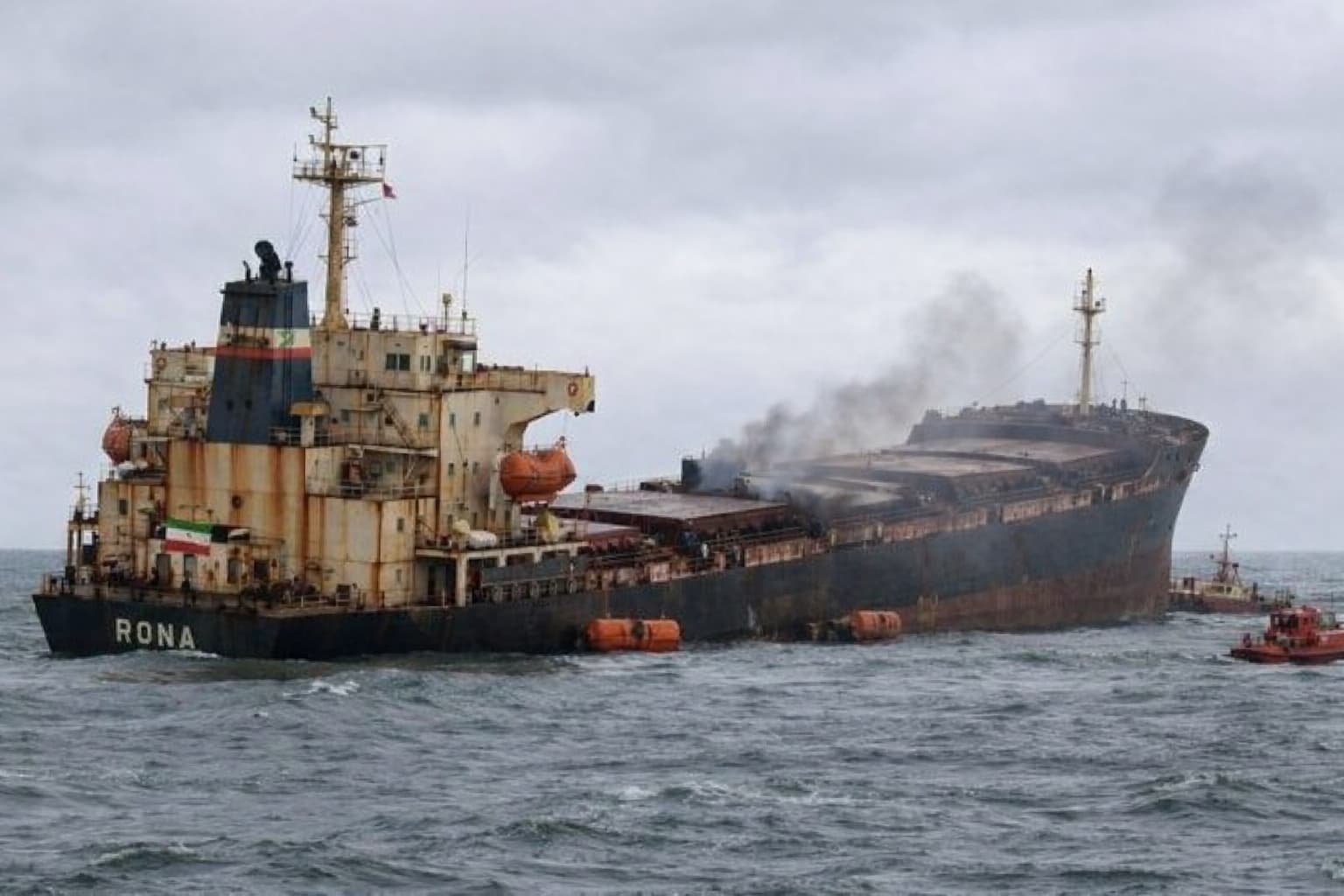
The United Kingdom’s maritime agency reported Thursday that two vessels were struck by unknown projectiles in separate incidents in and around the Persian Gulf early in the morning. Neither ship was identified by name. No casualties were immediately reported.
The incidents bring the total number of vessels attacked in the Persian Gulf, Strait of Hormuz, and Gulf of Oman since the war began to more than 20 ships. The strait — through which 20% of the world’s seaborne oil normally flows — remains largely blocked. The UK maritime agency described the threat level as “critical.”
A proposal from Bahrain, Japan, Panama, Singapore, and the UAE at a United Nations International Maritime Organization meeting outlined plans for a safe maritime corridor to evacuate roughly 20,000 seafarers currently stranded in the Gulf. The proposal is the first concrete international step toward addressing the humanitarian crisis building inside the shipping lanes.
Trump Says the U.S. Knew Nothing. U.S. Officials Say Otherwise.
President Trump spent Thursday managing a significant credibility problem. After Israel struck Iran’s South Pars gas field Wednesday — triggering the chain of energy attacks that sent oil to $118 — Trump publicly stated the United States “knew nothing” about the Israeli operation in advance.
Within hours, Israeli and U.S. officials told reporters that the South Pars strike had in fact been coordinated with and approved by the White House before it happened. Trump simultaneously told reporters there would be no more Israeli attacks on South Pars — while vowing to “massively blow up the entirety of the field” if Iran attacked Qatar’s energy infrastructure again.
Trump also delayed his planned trip to China by one month, saying he needed to remain in Washington while the conflict remained active. He acknowledged that U.S. and Israeli military goals in the war are “largely aligned” but may “not be identical” — the clearest public signal yet that Washington and Tel Aviv are not operating from a single unified strategy.
Iran Executes a 19-Year-Old Wrestler. The World Barely Noticed.
Lost inside the energy war and the military escalation was a development that, in any other week, would have dominated global headlines. Iran publicly hanged three men Thursday in connection with nationwide protests that took place in January 2026 — including a 19-year-old wrestler whose execution drew immediate international condemnation from human rights organizations.
The executions signal that Iran’s government — under pressure from daily bombing, an economic collapse, and a new supreme leader still consolidating power — is responding to internal dissent with maximum force rather than concession. Human rights groups warned the executions are likely the beginning of a broader crackdown on Iranians who protested during the war.
Twenty days in, the Iran war has killed more than 2,300 people, displaced over one million Lebanese, blocked the world’s most important oil shipping lane, sent energy prices to their highest level in years, and pushed the global economy toward a breaking point. The question is no longer whether this war will have lasting consequences. It is how many more lines will be crossed before someone finds a way to stop it.