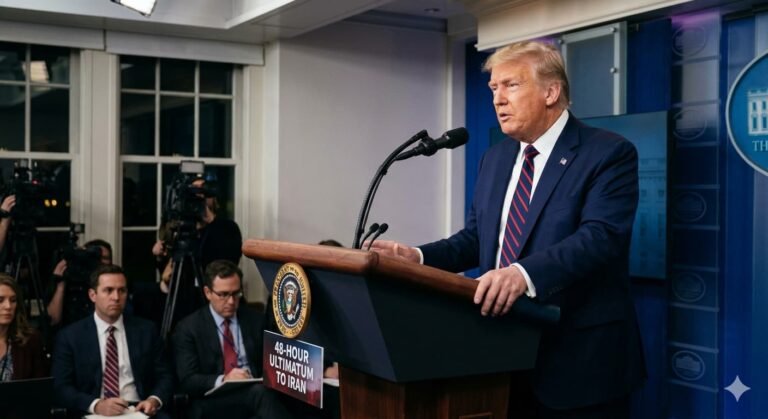

WASHINGTON, MARCH 23, 2026 — The most consequential deadline of the Iran war expires tonight. President Trump gave Iran 48 hours to fully reopen the Strait of Hormuz — or face the destruction of its power plants. That deadline expires Monday evening, March 23. Iran’s answer, delivered through its military on Sunday, was unambiguous: not only will Tehran not reopen the strait, it is now threatening to close it indefinitely and refuse to reopen it until any destroyed power plants are rebuilt.
Brent crude climbed to $114 a barrel Sunday as markets priced in the near certainty that tonight will not pass quietly. Goldman Sachs warned Friday that elevated oil prices could persist through 2027 regardless of how the next 24 hours unfold — a projection that sent a chill through financial markets already unnerved by four weeks of escalating conflict.
Iran’s Response to the Ultimatum — A Defiant Escalation
Iran did not wait for Trump’s deadline to respond. Its military declared Sunday it is “ready to close the Strait of Hormuz indefinitely” — not just maintaining the current partial blockade but sealing the waterway completely and permanently — if the United States follows through on the power plant threat.
Tehran went further. Iranian officials announced they would target U.S. and Israeli energy and communications infrastructure across the region in retaliation for any strike on Iranian power plants. A senior Iranian source told reporters that Tehran is also moving forward with “monetizing control” of the strait — a phrase that suggested Iran may be preparing to formally charge tolls or impose conditions on vessels seeking to pass through the waterway it currently controls.
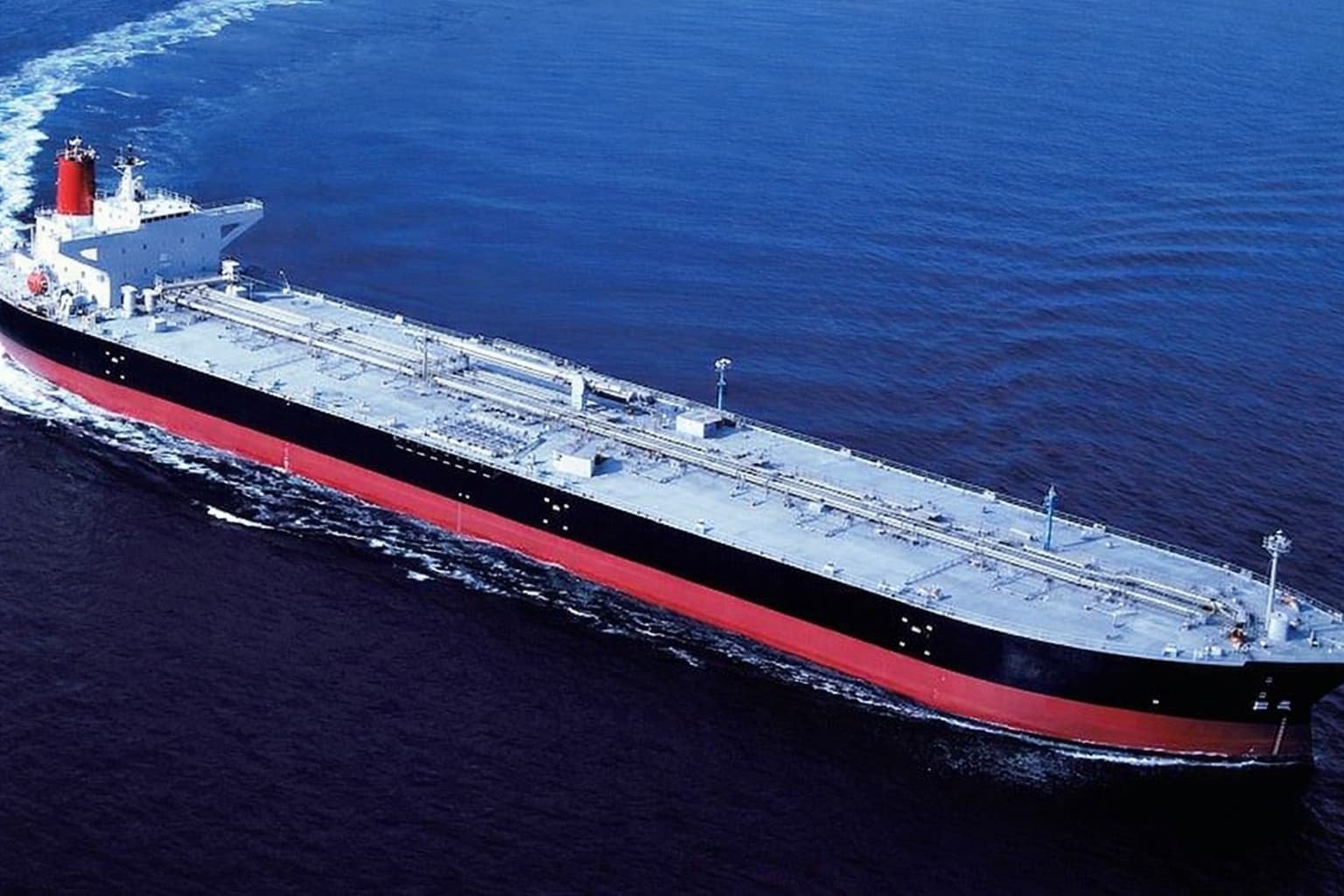
The UAE, Bahrain, the United Kingdom, France, and Germany issued a joint statement Sunday condemning what they described as Iran’s attacks on commercial vessels and civilian infrastructure, calling for an immediate halt to mine-laying, drone attacks, and missile strikes on Gulf shipping. The statement accused Iran of the “de facto closure” of the Strait of Hormuz — the waterway through which 20% of the world’s seaborne oil normally flows.
What a Full Strait Closure Would Mean for America
A permanent or indefinite closure of the Strait of Hormuz would be the most severe energy shock the global economy has experienced since the 1973 oil embargo. The strait is not just an important shipping lane. It is the single most critical chokepoint in the global energy system — the only sea passage connecting the Persian Gulf to the open ocean.
Iran War Energy Impact — Current vs. Worst Case
| Scenario | Oil Price | U.S. Gas Price | Economic Impact |
|---|---|---|---|
| Before war (Feb 28) | ~$72/barrel | ~$2.92/gallon | Stable |
| Current (March 23) | ~$114/barrel | ~$3.80/gallon | Stagflation risk |
| Partial closure continues | $120–130/barrel | $4.50+/gallon | Recession risk |
| Full indefinite closure | $150–200/barrel | $6.00+/gallon | Severe recession |
The Defense Intelligence Agency assessed in a recent internal report — circulating inside the Pentagon — that Iran could potentially keep the strait shut for anywhere from one to six months. U.S. officials privately acknowledged to reporters that reopening the Strait of Hormuz is “a problem without a clear solution” — dependent entirely on what lengths Trump is willing to go to force Iran’s hand.
Congress Pushes Back — Republicans Break With Trump
The 48-hour ultimatum has triggered a rare moment of Republican dissent on Capitol Hill. Senator Lisa Murkowski of Alaska — a moderate Republican — said Sunday she is considering pushing for Congress to vote on a formal Authorization for Use of Military Force if Trump decides to put U.S. ground troops inside Iran.
“It raises it to a completely different level than what had been advertised to us as members of Congress when we first went into Iran,” Murkowski told reporters. “Congress deserves and should demand greater engagement with the administration on the plans. We haven’t received that to date.”
The senator added that while Congress has already voted on resolutions to rein in Trump’s war powers, she now believes it is time to consider what an AUMF — a formal congressional authorization of the conflict — might look like. Her position represents the clearest signal yet that Republican patience with the administration’s war management is not unlimited.
U.S. Ambassador to the United Nations Mike Waltz added a new dimension to the escalation Sunday, refusing to rule out potential strikes on an Iranian nuclear power plant — a step that would cross a threshold no administration has previously crossed and that would almost certainly trigger an international response far beyond the current conflict.
Oil at $114. Goldman Says It Could Last Until 2027.
The market’s verdict on tonight’s deadline is already in. Brent crude rose 1.69% to $114.09 a barrel Sunday as traders priced in the likelihood of further escalation. U.S. WTI crude rose 2% to $100.29.
Goldman Sachs issued a stark warning Friday: even in a scenario where the conflict begins to de-escalate, elevated oil prices are likely to persist through 2027 — because the physical damage to Gulf energy infrastructure, the disruption to global shipping routes, and the uncertainty premium now baked into energy markets will not disappear quickly regardless of what happens tonight.
For the average American, that projection means higher gas prices, higher grocery bills, and higher heating costs are not a temporary inconvenience tied to a short war. They may be the new normal for the next two years.
Tonight, as Trump’s deadline expires and the world waits to see whether American bombers head toward Iranian power plants or whether some form of back-channel communication produces a last-minute off-ramp, one fact is not in dispute: the Iran war has reached the most dangerous moment of its 25 days. Whatever happens in the next 24 hours will determine whether it gets worse — or finally begins to find its way toward an end.