
By Harshit
LOS ANGELES, Nov. 15, 2025
A Rapid Exoneration Sparks National Concern
The federal government’s handling of a recent Immigration and Customs Enforcement (ICE) shooting in Los Angeles has ignited a national debate about accountability, excessive force, and the growing perception that immigration agents operate with near-total immunity under President Donald Trump’s second term.
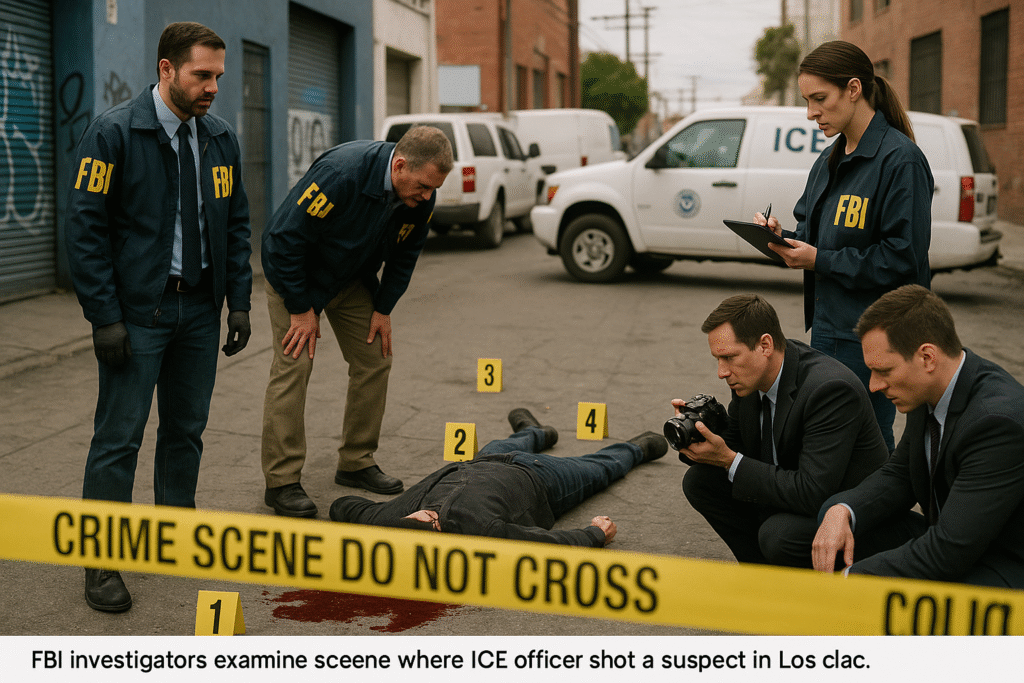
The controversy began only hours after an ICE officer opened fire during an arrest operation last month, injuring a suspect and unintentionally wounding a deputy U.S. marshal. Instead of a lengthy investigation—long considered standard protocol in federal use-of-force cases—Los Angeles’ top federal prosecutor issued what amounted to a public declaration of innocence for the shooter.
“PSA: A vehicle is a deadly weapon,” First Assistant U.S. Attorney Bill Essayli posted online shortly after the incident. “Using it against law enforcement justifies their use of deadly force in self-defense.”
Essayli alleged that the suspect had rammed his car into ICE vehicles, prompting the agent to shoot. But civil rights groups, legal scholars, and even some career federal employees say the government’s immediate defense of the officer signals a deeper erosion of independent oversight.
A Shift Away from Traditional Investigations
Historically, both the Department of Justice (DOJ) and the FBI have spent weeks—sometimes months—conducting exhaustive investigations into shootings involving federal officers. These probes typically include interviews, forensic analysis, and internal reviews meant to ensure federal agents operate within constitutional limits.
But multiple DOJ insiders told CNN that such safeguards have been quietly dismantled.
“Unless it’s beyond egregious and on film, they are basically untouchable,” one federal law enforcement source said. “If it’s purely the ICE agent’s word against someone else, game over.”
Compounding these concerns is the fact that many ICE agents do not wear body cameras—a longstanding gap that legal experts say deprives investigators and the public of critical evidence in contested encounters.
‘Allowed To Do Whatever the Hell They Want’
Trump’s own rhetoric has further fueled scrutiny of his administration’s posture on law enforcement accountability.
In August, while announcing a federal takeover of the Washington, D.C., police department, he recounted his proposed policy for handling anti-police protesters:
“You spit, and we hit,” Trump said. “And now they are allowed to do whatever the hell they want.”
Experts say statements like this send a dangerous signal throughout federal policing agencies—particularly those engaged in Trump’s aggressive immigration crackdown.
“There is a zero chance of an immigration agent being criminally charged with this administration,” a senior DOJ lawyer said anonymously.
Following a purge of career DOJ officials, many fear political appointees now dominate key internal review committees, making objective scrutiny nearly impossible.
Local and State Pushback Grows
Despite the federal government’s position, local and state officials across the country say they will not allow ICE agents to operate above the law.
Democratic congresswoman Nancy Pelosi warned last month:
“Our state and local authorities may arrest federal agents if they break California law.”
San Francisco District Attorney Brooke Jenkins reinforced that message:
“If a federal agent breaks the law, they must be held accountable.”
Elsewhere, public clashes with ICE and Border Patrol have escalated:
- In Chicago, a Presbyterian minister was struck in the head by pepper balls during a protest. Officials dispute federal claims that protesters attacked agents first.
- Text messages surfaced showing a Border Patrol agent bragging about shooting a driver multiple times.
- In Evanston, Illinois, federal agents were filmed striking a suspect during an arrest, prompting two separate investigations.
- Colorado’s state authorities are investigating a federal officer who was caught on video putting a protester in a chokehold before throwing her down an embankment.
Colorado Police Chief Brice Current said the footage appeared to show “an out-of-policy and possibly illegal use of force.”
How Much Immunity Do Federal Agents Actually Have?
White House Deputy Chief of Staff Stephen Miller has insisted publicly that immigration agents bear no legal exposure for their actions.
“You have federal immunity in the conduct of your duties,” Miller said. “Anybody who tries to stop you is committing a felony.”
Legal experts, however, say this is flatly wrong.
“It’s ludicrous to suggest that a federal officer who breaks state or federal law can’t ever be held accountable,” said CNN analyst and former federal prosecutor Elliot Williams.
Professor Steve Vladeck of Georgetown Law added:
“The federal government retains the power to prosecute federal officers, even if the Trump administration is wholly uninterested in doing so.”
States also have the authority to bring charges when agents violate local laws—though political and logistical challenges often complicate such cases.
Body Camera Conflicts Increase Tensions
One of the most alarming aspects of the controversy is the limited use of body cameras among ICE agents.
The FBI requires its agents to wear body cameras during joint operations. But ICE agents have resisted this policy, citing concerns that their tactics would be captured on video.
This disagreement has already led to operational breakdowns. In one instance, ICE agents refused to allow FBI officers to join a raid rather than risk being recorded.
Meanwhile, a federal judge in Chicago has ordered agents to use body cameras in immigration encounters—an order the Trump administration is appealing.
Judge Sara Ellis expressed frustration during recent hearings, saying officials appeared to downplay or misrepresent the dangers of protests to justify avoiding oversight.
A Cultural Shift in Federal Enforcement
At the heart of the current controversy is a shifting culture—one where immigration agents believe they have total immunity and unconditional support from Washington.
DHS claims there has been a 1,000% increase in assaults on ICE officers. But critics argue that the administration conflates legitimate threats with routine public resistance, then uses those numbers to justify increasingly aggressive behavior.
If agents are told repeatedly that they “can do whatever the hell they want,” analysts warn, the consequences will be far-reaching.
Walter Olson of the Cato Institute wrote that agents may feel empowered to grab bystanders’ phones, detain reporters, or use disproportionate force—acts that could later be quietly dropped or ignored.
“If the agents are hearing a persistent message from their higher-ups of ‘you’re immune no matter what you do,’” Olson said, “it’s up to the rest of us to disabuse them of that error.”
A Test of Federal Accountability
The ICE–Los Angeles shooting has become the flashpoint in a broader national confrontation over policing, transparency, and federal power under Trump’s administration.
With conflicting narratives about the shooting, a lack of body camera evidence, and the DOJ’s rapid public defense of the officer, critics say the case epitomizes a dangerous new era in federal law enforcement—one where political loyalty outweighs public accountability.
As states prepare independent investigations and civil rights groups mobilize, the question now is whether any mechanism remains capable of restraining federal agencies operating under the president’s explicit blessing.
For many, the answer will shape not only immigration enforcement—but the future of American policing itself.