
By Harshit, MIAMI, Oct. 29, 2025 6AM EDT
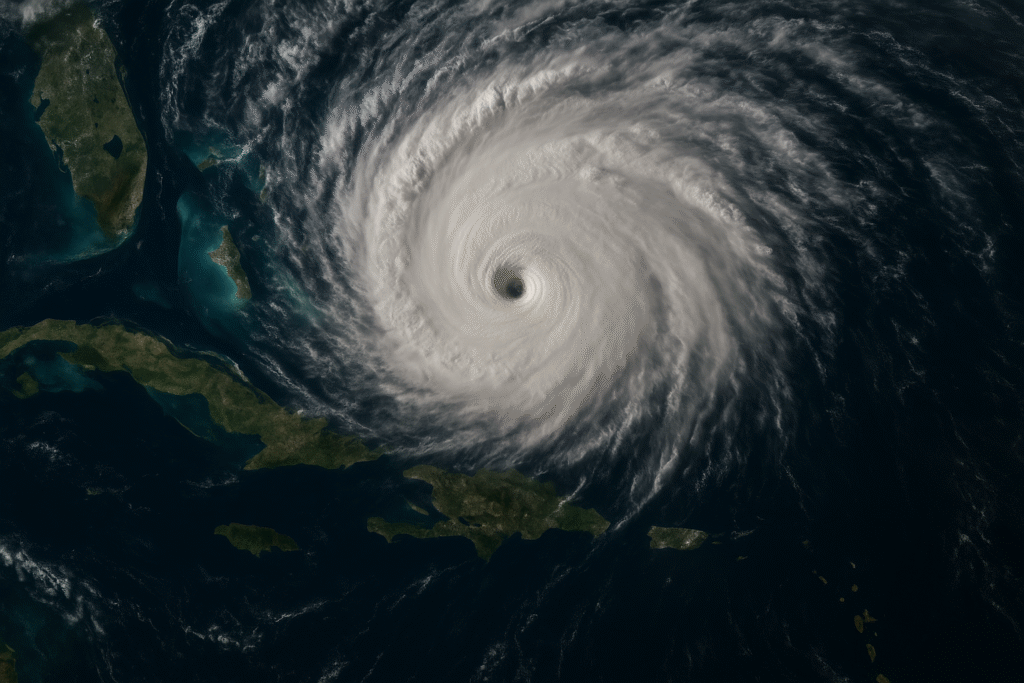
Hurricane Melissa — one of the most powerful Atlantic storms on record — has battered Jamaica with catastrophic winds and flooding, leaving widespread devastation before strengthening again into a Category 4 hurricane as it barrels toward eastern Cuba and the Bahamas.
Record-Breaking Impact on Jamaica
Melissa made landfall Tuesday near the southwestern Jamaican town of New Hope, unleashing sustained winds of 185 mph (295 km/h) — well above the Category 5 threshold — according to the U.S. National Hurricane Center (NHC). The storm’s force made it the strongest hurricane ever to hit Jamaica since records began in 1851.
Entire communities in the parishes of St. Elizabeth, Manchester, and Westmoreland were submerged under several feet of water. Jamaica’s Prime Minister Andrew Holness described the damage as “historic,” citing destruction to homes, hospitals, and key transport links.
“The reports we have indicate extensive damage to housing, hospitals, and major road networks,” Holness told CNN. “Entire areas are under water, and we are working to restore power and communication.”
Over 500,000 residents lost electricity, and rescue teams struggled to reach flood-hit towns amid debris-blocked roads and washed-out bridges. The Jamaican Meteorological Service confirmed that Melissa’s torrential rains caused flash floods and landslides in multiple regions, particularly along the southern coast.
Cuba Braces for ‘Very Difficult Night’
As Melissa crossed Jamaica’s mountainous interior, it temporarily weakened to a Category 3 storm. But by late Tuesday night, the NHC warned it had re-strengthened to Category 4 as it approached Cuba’s eastern provinces.
At 11 p.m. ET, the NHC issued an urgent bulletin stating Melissa was “re-strengthening as it approaches eastern Cuba” and that landfall was expected “within the next few hours.”
Cuban President Miguel Díaz-Canel said more than 735,000 people had been evacuated from vulnerable coastal and mountainous regions in anticipation of what he called “the strongest storm ever to hit national territory.”
“We are in for a very difficult night,” Díaz-Canel wrote on X (formerly Twitter). “There will be significant damage, but saving lives is the priority. No one should leave evacuation centers until the all-clear is given.”
Authorities warned of storm surges reaching 12 feet (3.6 meters) and rainfall totals up to 20 inches (51 cm) across eastern Cuba, raising fears of landslides and flash floods in the provinces of Guantánamo, Granma, Santiago de Cuba, and Holguín.
Warnings Across the Caribbean
The NHC has issued hurricane warnings for eastern Cuba and parts of the Bahamas, urging residents to complete final preparations. Tropical storm warnings remain in effect for Jamaica, Haiti, the Turks and Caicos Islands, and parts of central Cuba.
Meanwhile, Bermuda has been placed under a hurricane watch, typically issued 48 hours before the arrival of tropical-storm-force winds.
In Jamaica, the government downgraded its hurricane warning to a tropical storm warning late Tuesday as winds began to subside, though officials cautioned that residual flooding and landslides remained a severe threat.
Meteorologist Rohan Brown warned of “dangerous storm surges” on Jamaica’s northern coast due to the hurricane’s counterclockwise rotation.
U.S. Pledges Aid for Caribbean Nations
Speaking aboard Air Force One, U.S. President Donald Trump confirmed that Washington was prepared to assist Jamaica in recovery operations once conditions stabilize.
“We’re watching it closely, and we’re prepared to move,” Trump said. “We’ve seen the destruction, and the United States stands ready to help our Caribbean partners.”
Jamaican Prime Minister Holness said his government has already launched a national relief platform to coordinate donations, mobilize recovery efforts, and manage post-storm logistics. “We’re confident that our partnership with the U.S. will ensure swift recovery support,” he added.
A Symptom of a Warming Planet
Meteorologists say Melissa’s rapid intensification — from Category 1 to Category 5 within just 36 hours — highlights the growing influence of climate change and ocean warming on tropical cyclone behavior. The storm is the fourth Atlantic hurricane in 2025 to undergo rapid strengthening, a phenomenon linked to rising sea-surface temperatures.
Michael Brennan, Director of the NHC, cautioned that “warmer waters are acting as fuel,” allowing hurricanes like Melissa to gain strength at unprecedented speeds. Climate scientists warn that such “supercharged storms” could become increasingly frequent in coming decades.
The Hours Ahead
Cuba’s government has suspended classes nationwide and mobilized emergency personnel in every province. Relief agencies, including the Red Cross and World Food Programme, are on standby to deploy aid once conditions allow.
As of the latest advisory, Melissa was moving northeast toward the Bahamas at 10 mph, with maximum sustained winds of 145 mph (233 km/h). The NHC projects the hurricane will continue on this path before gradually weakening later in the week.
Officials across the Caribbean remain on high alert as the region braces for another night of destructive winds and torrential rain.