
By Harshit, WASHINGTON, NOV. 12 —
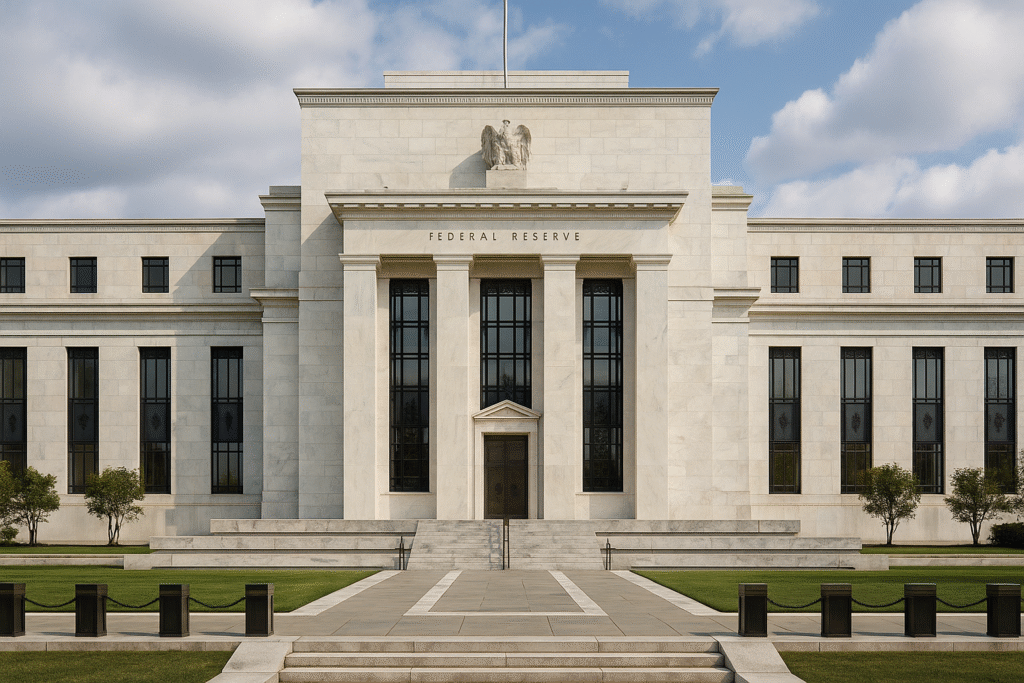
Inflation — the rate at which prices for goods and services rise — is one of the most closely watched indicators of economic stability. When prices increase too quickly, the purchasing power of money declines, eroding savings and creating uncertainty for businesses and consumers alike. In the United States, the institution primarily responsible for maintaining price stability is the Federal Reserve, or “the Fed.”
The Fed’s ability to control inflation is not absolute, but through a combination of monetary policy tools, data analysis, and forward guidance, it can influence the supply of money, the cost of borrowing, and overall demand in the economy.
This article explains — in clear, factual terms — exactly how the Federal Reserve manages inflation, the mechanisms it uses, and the economic effects of those decisions.
Understanding Inflation and the Fed’s Dual Mandate
The Federal Reserve’s responsibilities are defined by Congress under what’s known as the dual mandate:
- Price stability — keeping inflation low and stable.
- Maximum employment — promoting conditions that allow as many Americans as possible to have jobs.
To measure inflation, the Fed primarily tracks the Personal Consumption Expenditures (PCE) price index, produced by the Bureau of Economic Analysis. The central bank targets a 2% annual inflation rate over the long term — a level it considers consistent with economic stability and sustainable growth.
When inflation rises above 2%, the Fed generally tightens monetary policy to cool demand. When inflation falls below 2%, signaling weak demand or deflation risks, the Fed eases policy to encourage borrowing and spending.
The Primary Tool: Interest Rate Policy
The Federal Reserve’s most powerful weapon against inflation is its control over short-term interest rates, specifically the federal funds rate — the rate banks charge each other for overnight loans.
When the Fed raises this benchmark rate, borrowing becomes more expensive for banks, which in turn pass those costs to consumers and businesses. Higher interest rates mean:
- Mortgage and loan payments rise.
- Credit card rates increase.
- Corporate borrowing costs grow.
This cascade effect reduces spending and investment, slowing demand and ultimately easing inflationary pressure.
Conversely, lowering interest rates encourages borrowing and stimulates demand — a strategy used during recessions or periods of low inflation.
Example:
Between March 2022 and July 2023, the Fed raised interest rates 11 times, bringing the federal funds rate from near zero to above 5%. This aggressive tightening cycle — the steepest since the early 1980s — successfully slowed consumer spending and reduced inflation from over 9% in June 2022 to roughly 3% by late 2023, according to the Bureau of Labor Statistics.
Quantitative Tightening (QT): Reducing the Money Supply
Beyond rate hikes, the Fed also uses balance sheet adjustments — the buying and selling of U.S. government and mortgage-backed securities — to control liquidity in the financial system.
During periods of economic stress, such as the 2008 financial crisis or the COVID-19 pandemic, the Fed engaged in quantitative easing (QE), purchasing trillions of dollars in bonds to inject liquidity and keep long-term borrowing costs low.
To fight inflation, it reverses this process through quantitative tightening (QT) — allowing bonds to mature or selling them outright, effectively reducing the money supply.
By shrinking its balance sheet, the Fed draws liquidity out of the system, putting upward pressure on interest rates and further cooling demand.
As of late 2025, the Fed’s balance sheet stood near $7.2 trillion, down from its pandemic-era peak of $9 trillion, reflecting two years of QT that have complemented rate hikes in the fight against inflation.
The Reserve Requirement and Bank Lending
Historically, the Fed could influence inflation by adjusting the reserve requirement — the percentage of deposits banks are required to hold rather than lend out. Lowering the reserve ratio increases available credit; raising it restricts lending and slows the money supply.
However, since March 2020, the Fed has maintained a 0% reserve requirement for most institutions, relying instead on interest rate policy and open market operations to steer credit conditions.
Even without the reserve tool, the central bank continues to shape lending behavior through the discount rate (the rate at which banks borrow directly from the Fed) and interest paid on reserve balances (IORB) — both of which anchor short-term interest rates.
Open Market Operations (OMO): Day-to-Day Rate Control
The Fed’s Open Market Operations — the buying and selling of Treasury securities in the secondary market — are its most frequent and flexible method of controlling inflation.
When the Fed sells securities, it drains cash from the banking system, tightening liquidity and pushing short-term interest rates higher.
When it buys securities, it adds cash, lowering rates and stimulating spending.
These operations, managed by the Federal Reserve Bank of New York, ensure that the effective federal funds rate stays within the Fed’s target range.
Through precise and continuous adjustments, OMO helps the Fed fine-tune credit conditions to maintain stability and prevent inflation from spiraling.
Forward Guidance: Managing Expectations
Inflation isn’t driven solely by current monetary conditions — it’s also shaped by expectations of future inflation. If consumers and businesses believe prices will keep rising, they often act in ways that make inflation self-fulfilling — such as demanding higher wages or accelerating purchases before costs increase further.
To prevent this, the Fed uses forward guidance — public communication about future policy intentions.
For example, when the Fed signals that it will keep rates high for longer, it discourages excessive borrowing and spending, even before policy changes take effect.
Chair Jerome Powell and other officials frequently deliver speeches, press conferences, and policy statements designed to anchor market expectations and reinforce confidence in the Fed’s commitment to price stability.
Inflation and Employment: The Balancing Act
The relationship between inflation and unemployment is traditionally illustrated by the Phillips Curve, which suggests that inflation tends to rise when unemployment falls, as a tight labor market pushes up wages.
However, this relationship has weakened over time. In the post-pandemic era, inflation has often remained high even as unemployment hovered near record lows.
The Fed must balance the risk of overtightening — raising rates so much that it triggers a recession — against the danger of undertightening, which could allow inflation to become entrenched.
The institution’s dual mandate often creates tension: policies that reduce inflation can increase unemployment, while those that boost hiring may stoke inflation. Achieving both goals simultaneously is the Fed’s constant challenge.
Inflation Expectations and Credibility
One reason the Fed’s policies are effective is its credibility. Since the early 1980s, when then-Chair Paul Volcker crushed double-digit inflation through severe rate hikes, the public has largely trusted the Fed’s ability to maintain stable prices.
When expectations are well-anchored, even temporary price spikes — from oil shocks or supply disruptions — don’t spiral into runaway inflation, because people believe the Fed will act decisively to restore balance.
This credibility, however, must be maintained through consistent policy and transparent communication. A loss of confidence could make monetary policy less effective, forcing sharper interventions and deeper economic pain.
The Lag Effect: Why Inflation Doesn’t Respond Instantly
Monetary policy operates with time lags — often six to eighteen months between a policy action and its full economic impact.
When the Fed raises rates, businesses and consumers take time to adjust their borrowing and spending habits. Similarly, changes in asset prices, employment, and wages filter gradually through the economy.
Because of these lags, the Fed must act preemptively, often tightening policy before inflation fully materializes and easing before a downturn becomes severe. This predictive balancing act makes timing one of the most difficult aspects of inflation control.
External Factors: What the Fed Can’t Control
While the Fed wields powerful tools, it cannot directly control many inflation drivers, such as:
- Global oil prices affected by geopolitical tensions.
- Supply chain disruptions due to natural disasters or trade conflicts.
- Fiscal policy, including government spending and taxation decisions.
- Technological changes that influence productivity and prices.
These external shocks can temporarily push inflation higher or lower regardless of monetary policy. In such cases, the Fed must distinguish between temporary (transitory) and persistent (structural) inflation to calibrate its response appropriately.
Recent Context: Post-Pandemic Inflation and the 2025 Outlook
After the COVID-19 pandemic, the U.S. faced its highest inflation in four decades. Massive fiscal stimulus, pent-up consumer demand, and supply shortages combined to send prices surging in 2022.
The Fed’s rapid tightening cycle, initiated under Chair Jerome Powell, successfully slowed inflation through 2024. By early 2025, the headline Consumer Price Index (CPI) had stabilized around 3%, while core PCE inflation — the Fed’s preferred gauge — hovered near 2.9%.
As of November 2025, markets expect the Fed to begin gradual rate cuts in early 2026, signaling confidence that inflation is returning to target without derailing job growth.
Conclusion: Maintaining Stability Through Vigilance
The Federal Reserve controls inflation primarily by managing interest rates, liquidity, and expectations — using a combination of traditional monetary tools and modern communication strategies.
While it cannot eliminate inflation entirely, its policy framework aims to keep price increases moderate, predictable, and consistent with long-term economic growth.
The Fed’s credibility, independence, and data-driven approach are key to its success. However, as global shocks, digital finance, and political pressures reshape the economic landscape, maintaining that delicate balance between growth and price stability will remain an ongoing challenge.