
By Harshit, HOUSTON, Texas — October 28, 2025 7 AM EDT
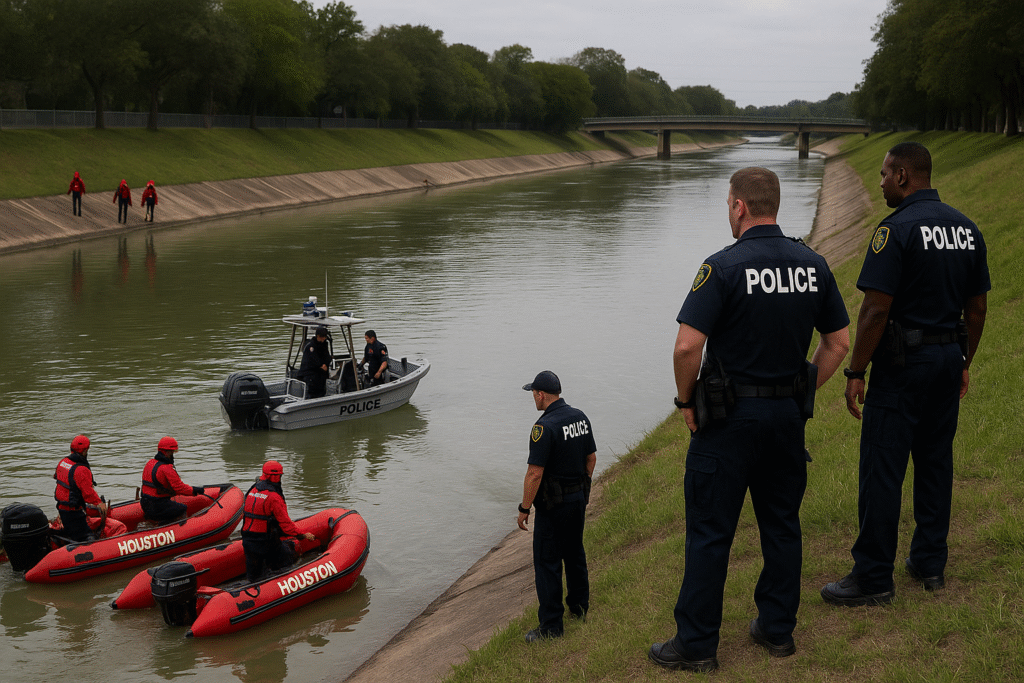
A wave of fear has swept through Houston after a series of mysterious deaths in the city’s vast network of bayous, prompting viral speculation that a serial killer may be on the loose. City officials, however, are pushing back hard against the rumor, insisting there’s no evidence linking the deaths — despite the rising number of bodies found and growing public anxiety.
A City Gripped by Fear
The concern reached a fever pitch in mid-September when 20-year-old University of Houston honors student Jade McKissic was found dead in Brays Bayou. Her disappearance — after leaving a bar without her phone and making a stop at a nearby gas station — shocked students and residents alike.
Her autopsy showed no signs of trauma or foul play, yet the cause of death remains undetermined. McKissic’s death was one of seven reported in Houston’s bayous in September alone, fueling widespread fear that something sinister might be unfolding.
“That was probably the biggest deal… that’s when college students started getting really worried,” said City Council Member Letitia Plummer, who represents part of the area near Brays Bayou.
Social media quickly became a breeding ground for speculation, with TikTok and Reddit users alleging a serial killer was dumping bodies into Houston’s waterways. Videos with titles like “Bayou Killer in Houston?” and “Bodies Keep Showing Up” received thousands of views, fanning the flames of panic.
Officials Push Back: ‘No Serial Killer’
Standing before reporters, Mayor John Whitmire and Police Chief J. Noe Diaz sought to shut down the rumors.
“There is no evidence that there is a serial killer loose on the streets of Houston,” Whitmire said. “Unfortunately, drowning in our bayous is not a new phenomenon. We have 2,500 miles of bayous, and people are exposed to them — sometimes foul play, often not.”
Police Captain Salam Zia added that investigations revealed no common pattern among the victims. “It runs the gamut — genders, ethnicities, and ages,” he said.
Data from the Harris County Institute of Forensic Sciences supports that assessment: the victims ranged from 14 to 69 years old, with varying causes of death including accidental drownings, suicide, drug toxicity, and cardiovascular disease. None have been ruled homicides.
A Surge in Bayou Deaths
Even without confirmed foul play, the numbers are worrying. At least 25 bayou deaths have been recorded this year — more than double the figure from 2023. Sixteen remain classified as undetermined or pending investigation, leaving families desperate for answers.
The uncertainty has compounded grief for people like Kenneth Cutting Sr., whose 22-year-old son was found dead in Buffalo Bayou last year. “He did not fall in that bayou,” Cutting told KHOU, accusing authorities of mishandling the cases. “I don’t know if there’s a serial killer, but the way they’re dealing with these bodies is ridiculous.”
Why the Rumors Spread So Quickly
Experts say the serial killer theory thrives because it offers a simple explanation for something inherently disturbing — multiple unexplained deaths.
“It’s a typical human response,” said Robert Spicer, a communications professor who studies conspiracy theories. “When faced with uncertainty, people search for patterns, even where none exist.”
Criminal justice professors Krista Gehring (University of Houston) and Jay Coons (Sam Houston State University) agree. They point out that bodies recovered from water often show little evidence due to rapid decomposition in Houston’s hot, humid climate.
“When you put a body in water, evidence can be washed away. Within days, it can putrefy to the extent you’re left with very little,” Coons explained. “That makes ruling out foul play difficult, but it doesn’t automatically mean there’s a serial killer.”
Community Pressure Mounts
Despite police assurances, City Council Members Letitia Plummer and Carolyn Evans-Shabazz are demanding greater transparency. Plummer criticized city leaders for being slow to respond to public fears.
“It was a misstep not to take the fear and comments of our community to heart sooner,” she said. “The less information you give to people, the more people make assumptions.”
At a separate news conference, Plummer and Evans-Shabazz proposed a new task force to review bayou safety and improve communication between the police and public. They also suggested better lighting, emergency call boxes, and security patrols along the bayous.
“Until we get clear answers, my job is to keep people calm,” Evans-Shabazz added. “We don’t want panic; we want progress.”
The Role of the Homeless and Other Theories
Mayor Whitmire speculated that some deaths might involve homeless residents who often seek shelter under bridges near bayous — an explanation that angered some council members who saw it as dismissive.
However, criminologists say the theory is plausible. The city’s ongoing efforts to move homeless individuals from downtown could be pushing them toward the waterways, where risks of drowning, illness, or assault increase.
“If you have a body of water, you’re going to have deaths related to it,” Gehring said, citing potential links to substance abuse and mental health crises.
Conspiracy Theories Thrive Online
The rise in misinformation about the bayou deaths also reflects a broader trend of true crime fascination and mistrust of authority.
“It’s easier to blame a ‘boogeyman’ serial killer than to confront deeper social issues like mental health, housing instability, and drug abuse,” Gehring noted.
Videos claiming “Houston’s Bayou Killer” exist have amassed thousands of views on TikTok and YouTube, with users asserting — without evidence — that “once a body is in the bayou, most evidence will be destroyed.”
Experts warn that sensational online narratives can distort real investigations and create unnecessary fear.
Families Demand Answers
As Houston officials and experts continue to battle misinformation, grief remains raw among families of the deceased.
Vigils have been held for Jade McKissic, remembered by classmates as “a friend to many” and “a bright light” at the University of Houston. Another victim, Rodney Chatman, was found dead the same day as McKissic, his cause of death also pending.
“Something has to be done,” said his sister, Xzaviere Chatman. “We will never see our loved ones again.”
For now, Mayor Whitmire maintains there’s no “fail-safe” way to prevent deaths in Houston’s sprawling bayou system — only vigilance, communication, and patience as investigators work through the backlog of cases.