
By Harshit | New York, USA | 6 December 2025
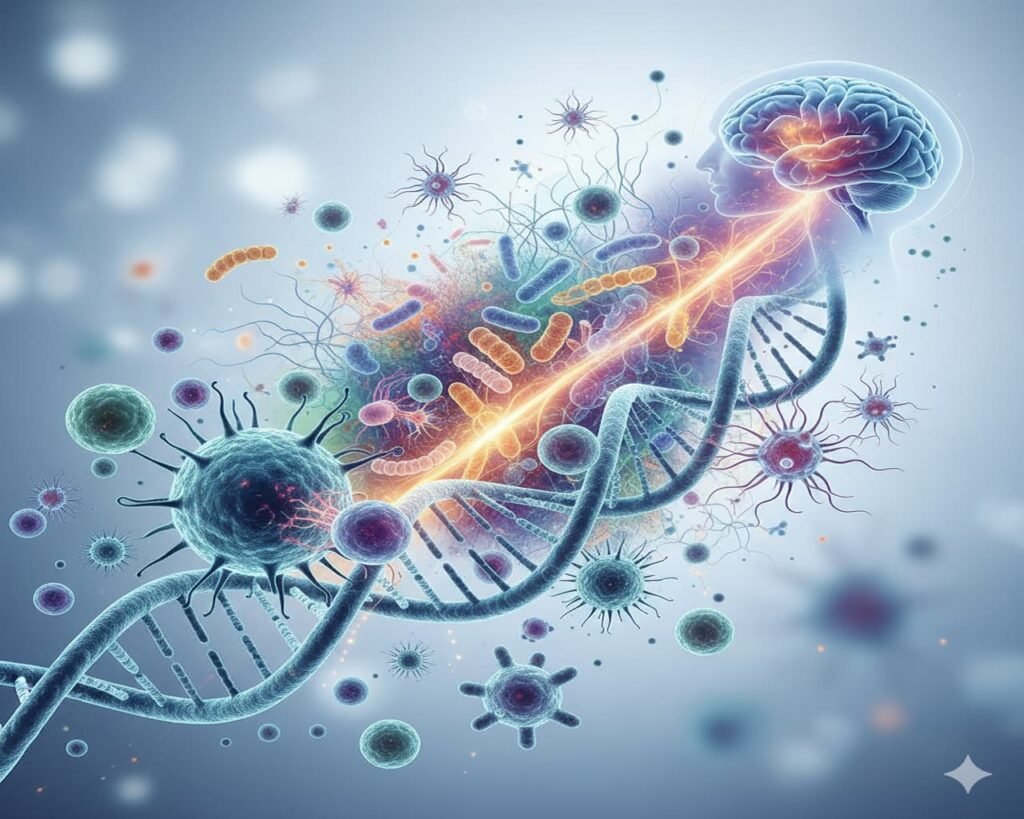
Health and medicine remain the most enduringly relevant areas of scientific inquiry in the United States, driven by relentless research, rising public health challenges, and the promise of longer, healthier lives. As the nation continues to lead global innovation in biotechnology, genomics, neuroscience, and epidemiology, the scientific breakthroughs emerging from American labs continually reshape how diseases are diagnosed, treated, and prevented. This article examines three pillars that make health and medicine an evergreen scientific topic: New Medical Discoveries and Cures, Genetics and Personalized Medicine, and The Human Body and Microbiome—all grounded in factual, peer-reviewed research and current U.S. clinical progress.
New Medical Discoveries and Cures
Cancer Research: Precision Over Trial-and-Error
Cancer remains a leading cause of death in the United States, ensuring continuous investment in innovative therapies. Traditional chemotherapy—once the backbone of oncology—is steadily being augmented by targeted precision treatments.
Immunotherapy has been one of the most transformative scientific advancements. Drugs targeting immune checkpoints (such as PD-1 and PD-L1 inhibitors) unleash T-cells to detect and destroy cancer cells once invisible to the immune system. These therapies now form first-line treatment for melanoma, lung cancer, and several difficult-to-treat malignancies.
Another revolutionary approach, CAR T-cell therapy, modifies a patient’s own immune cells to attack blood cancers such as acute lymphoblastic leukemia and non-Hodgkin lymphoma. Its success demonstrates how engineering the immune system itself may ultimately shift the cancer landscape.
Chronic Diseases: Diabetes and Alzheimer’s
The U.S. faces accelerating rates of diabetes, particularly Type 2. Continuous glucose monitors (CGMs), once optional, are becoming standard care, offering real-time metabolic insights. Meanwhile, GLP-1 agonists—originally diabetes drugs—have become a central tool in America’s weight-loss and metabolic-health strategy.
Alzheimer’s research, after decades of stagnation, achieved a milestone with FDA-approved monoclonal antibodies such as lecanemab. These therapies slow early cognitive decline by targeting amyloid plaques, offering the first clinically demonstrated disease-modifying effect.
Pandemic Preparedness and Infectious Disease Innovation
The COVID-19 era documented the unprecedented flexibility of mRNA vaccine platforms. This technology, which instructs human cells to produce harmless antigens, is now being tested for influenza, HIV, respiratory syncytial virus (RSV), malaria, and even cancer neoantigen vaccines—marking a transformation in immunology and public health readiness.
Genetics and Personalized Medicine
Gene Therapy and Gene Editing
For decades, gene therapy was a future promise. Today, it is a clinical reality.
Treatments like Zolgensma, which replaces the defective gene causing spinal muscular atrophy, and Luxturna, which corrects a mutation causing hereditary blindness, demonstrate how altering genetic information can cure previously fatal or untreatable diseases.
CRISPR-Cas9, the “molecular scissors” of genetic engineering, is now being used in clinical trials for sickle cell disease and β-thalassemia, with several patients already demonstrating durable remission. Its precision and efficiency place gene editing at the center of future U.S. biomedicine.
Pharmacogenomics: Matching Drugs to DNA
Genetic differences in liver enzymes—particularly CYP2D6, CYP2C19, and CYP2C9—determine how individuals metabolize medications. Pharmacogenomic testing now guides therapy selection for antidepressants, blood thinners like clopidogrel, certain chemotherapies, and pain medications, reducing adverse reactions and improving outcomes.
Polygenic Risk Scores (PRS)
PRS models estimate a person’s genetic risk for common diseases such as diabetes, coronary artery disease, and breast cancer. Although still emerging, these tools show strong potential for early screening and preventative medicine in the U.S.
The Human Body and Microbiome
The Gut as a Second Brain
The gut microbiome—home to trillions of microorganisms—affects digestion, immunity, metabolism, and even mental health. U.S. research continues to reveal the profound impact of:
- Short-chain fatty acids (SCFAs)
- Neurotransmitter-producing bacteria
- Inflammatory pathways linked to dysbiosis
The gut–brain axis is now implicated in depression, anxiety, Parkinson’s disease, and multiple sclerosis.
Therapeutic Microbiome Modulation
Fecal Microbiota Transplantation (FMT) is already a highly effective treatment for recurrent C. difficile infection, with research exploring its potential for metabolic disorders and autoimmune conditions.
Anti-Aging and Regeneration Research
Cellular senescence—aging cells that refuse to die—drives chronic inflammation. Pharmaceutical companies are now exploring senolytics, drugs that selectively eliminate senescent cells to improve longevity.
Meanwhile, U.S. labs continue advancing induced pluripotent stem cell (iPSC) technology and organoid development, offering blueprints for future tissue regeneration and transplant solutions.
Conclusion
Health and Medicine persist as America’s most evergreen scientific topics because they address the most fundamental aspects of human existence: disease, longevity, and the quest for healthier lives. As U.S. research merges biotechnology, genomics, neuroscience, and computational science, the country remains at the forefront of global biomedical innovation—ensuring that these topics will continue to dominate public interest, funding priorities, and scientific discovery for decades to come.