
By Harshit
SAN FRANCISCO, NOVEMBER 26, 2025 —
For decades, the tech industry has dreamed of a single operating system that could seamlessly follow users from their smartphones to their laptops and desktops. Many have attempted to achieve this “holy grail” of personal computing. Most have failed spectacularly.
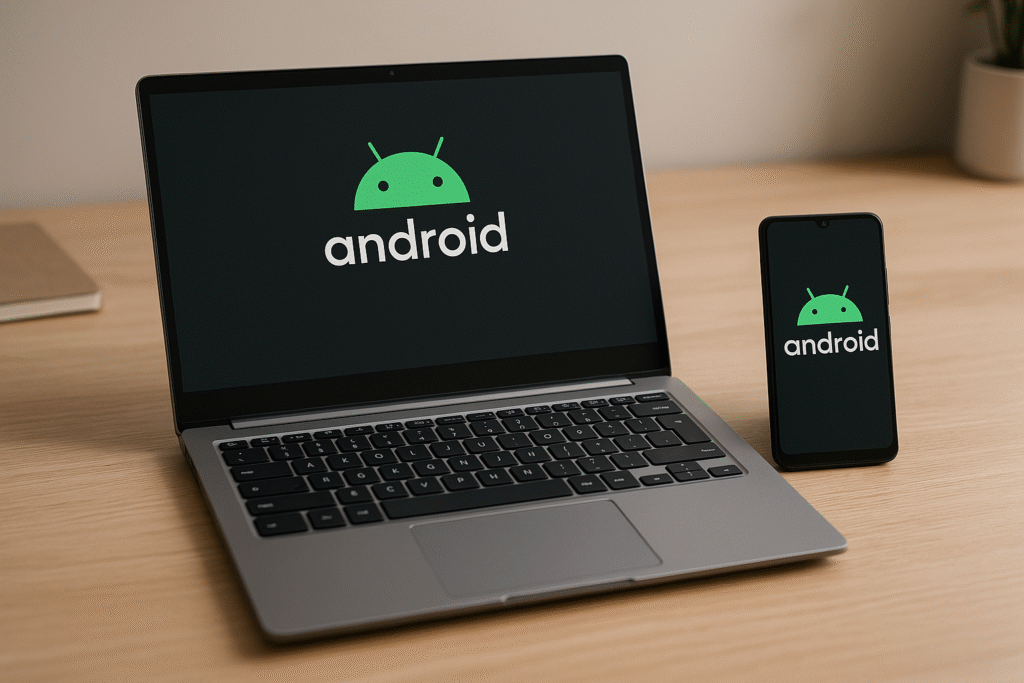
Now, in late 2025, Google is preparing the most credible attempt yet. In partnership with Qualcomm, the company is moving to scale Android — the world’s most widely used mobile operating system — into fully fledged laptops. This is not another Chromebook experiment. It is a direct challenge to Windows PCs and a strategic strike at Apple’s closed ecosystem.
But as promising as the strategy is, the ghosts of past failures — especially Microsoft’s Windows 8 — loom tall. For Google to succeed, it must learn from history and avoid the marketing and user-experience missteps that doomed earlier efforts.
The Ghost of Windows 8: A Cautionary Tale
To understand why Google’s Android PC initiative has traction, it’s important to look back at why Microsoft’s unified OS effort with Windows 8 collapsed.
Microsoft approached the problem from the top down. It stretched a desktop operating system onto phones while forcing a touch interface — the Metro UI — on desktop users who relied on keyboards and mice. At the same time, developers had little incentive to build apps for the tiny Windows Phone user base. The result was a devastating “app gap”: missing everyday essentials like Snapchat, Gmail, and countless popular mobile services.
Without apps, hardware didn’t matter. And without a coherent user experience, Windows 8 alienated core users.
Google has adopted the opposite approach — and that may be its strongest advantage.
A Smartphone-First Strategy With Built-In Strengths
Instead of shrinking a desktop OS, Google is scaling up a mobile one. Android already enjoys an enormous global user base and a mature ecosystem of millions of apps. The challenge now is persuading developers to optimize existing apps for a landscape display, keyboard, and mouse — a far smaller lift than building new software from scratch.
Just as importantly, billions of people already understand how Android works. They know its gestures, notifications, settings, and system logic. That familiarity eliminates the steep learning curve that hindered Windows 8’s adoption.
If executed correctly, Android PCs may feel like a natural extension of the phones consumers use daily.
Google’s Persistent Weakness: Marketing
Despite Google’s engineering achievements, the company has long struggled with consumer messaging. Products like Stadia, Allo, Google+, and early Pixel phones stumbled not because of poor technology, but because Google failed to explain why they mattered.
This is where Google’s Android PC push faces its greatest risk.
Why should a consumer buy a $700 Android PC instead of a Windows laptop at the same price? Why choose it over a Chromebook that costs half as much?
Unless Google delivers a clear value proposition — such as seamless phone-to-PC continuity no competitor can match — Android laptops could simply get lost in the crowd.
The Dockable Smartphone Future
Beyond laptops, Google’s real long-term strategy may involve turning the smartphone into a user’s primary computer.
Under such a model, the phone becomes the “brain,” capable of docking into a monitor, laptop shell, or desktop hub. Samsung’s DeX already hints at this concept, but Google’s involvement would elevate it to a true industry standard.
If successful, this could reshape the PC market entirely. The standalone laptop could become a peripheral rather than a core device.
What’s at Stake for Apple and Microsoft
For Apple, Android PCs highlight a growing strategic tension. Apple maintains three operating systems — iOS, iPadOS, macOS — despite increasingly unified hardware. This fragmentation supports Apple’s business model but creates friction for users who want a seamless experience across devices.
For Microsoft, the threat is more direct. Android PCs powered by efficient Qualcomm chips strike at the midrange Windows laptop market. Microsoft must refine Windows-on-Arm performance, ensure legacy compatibility, and double down on enterprise strengths.
If Google succeeds, both rivals may be forced to rethink long-standing assumptions about personal computing.
Tech Product of the Week: Wacom MovinkPad 11
The Wacom MovinkPad 11 is a dedicated OLED tablet designed for artists who value precision over general-purpose functionality. With a textured surface, Wacom’s Pro Pen 3, and excellent color accuracy, it delivers a premium drawing experience that outshines consumer tablets. At $449.95, it’s built for serious creatives — offering a portable, uncompromising digital canvas unlike anything else on the market.