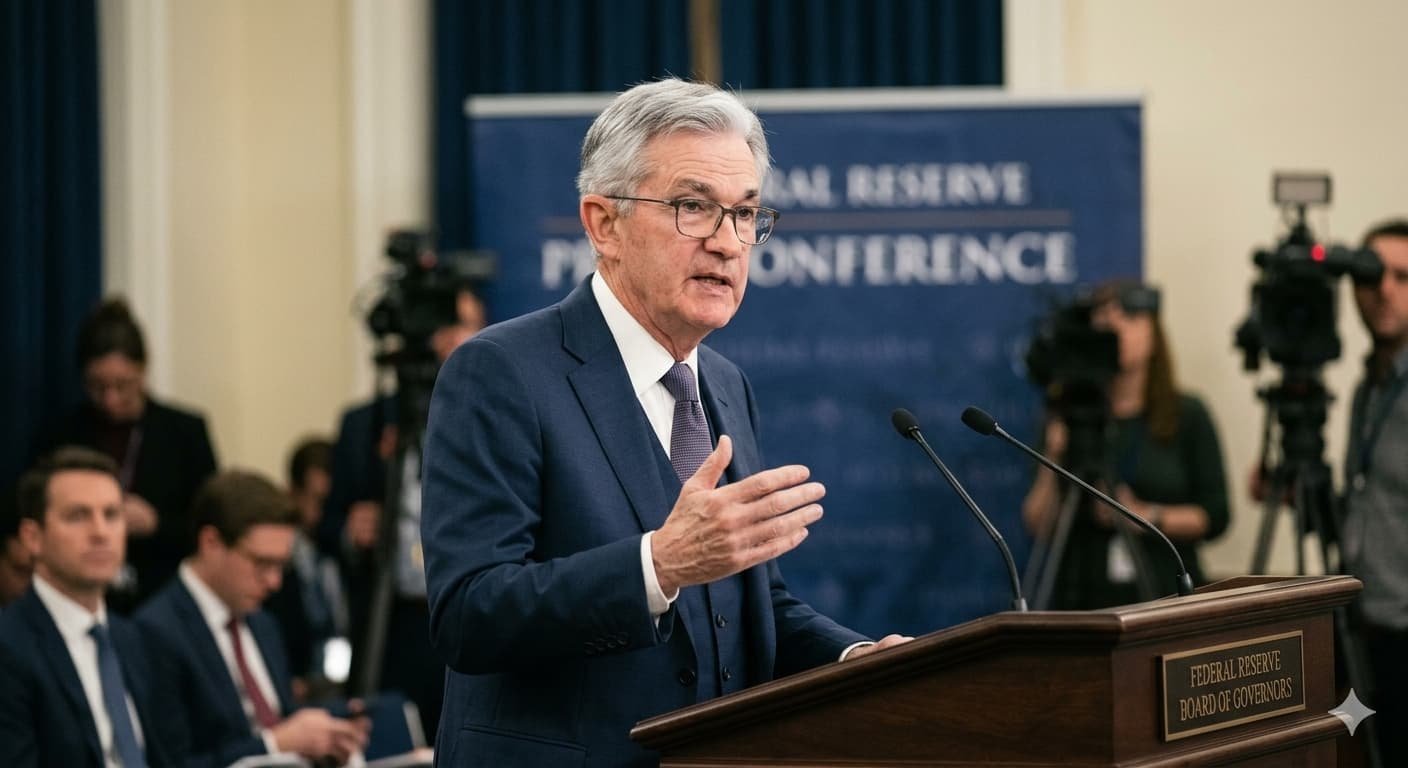

WASHINGTON, MARCH 16, 2026 — Jerome Powell walks into the most complicated Federal Reserve meeting in recent memory on Monday morning. When he walks out on Wednesday afternoon, he will have to explain to the American public how the central bank plans to fight an oil-driven inflation surge and a weakening job market at the same time — using the same tool, pointed in only one direction.
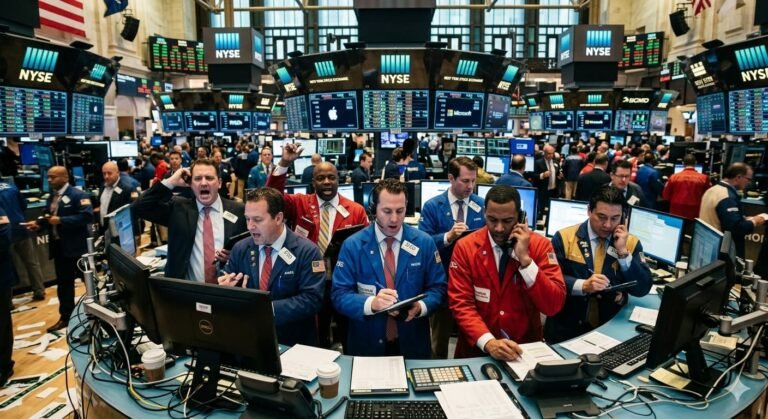
The Federal Open Market Committee begins its two-day March meeting on Tuesday, March 17, with the policy decision and Powell’s press conference scheduled for Wednesday, March 18 at 2:00 PM Eastern Time. Markets have already priced the outcome with near certainty: the Fed will hold interest rates steady at 3.50% to 3.75% for the second consecutive meeting. CME FedWatch data shows a 92% probability of a hold. That part is not the story.
The story is everything else.
A Meeting Unlike Any Other in 2026
This is the first FOMC meeting where the Federal Reserve must formally incorporate the economic consequences of the Iran war into its official projections. On Wednesday, alongside the rate decision, the Fed will release its Summary of Economic Projections — the quarterly document that maps where each committee member expects interest rates, inflation, unemployment, and economic growth to go over the next two years. That document, known colloquially as the dot plot, will reveal whether Fed officials believe the war’s oil shock is a temporary disruption or a persistent threat to price stability.
The answer matters enormously for every American with a mortgage, a car loan, a credit card, or a savings account.
The Numbers the Fed Is Staring At
The data confronting the FOMC is genuinely contradictory, and that contradiction is precisely what makes Wednesday so consequential.
On the inflation side, the picture is deteriorating. Oil crossed $100 a barrel last week after Iran’s new Supreme Leader Mojtaba Khamenei declared the Strait of Hormuz would remain closed. Gas prices have surged 21% in a single month to a national average of $3.54 per gallon. The February CPI came in at 2.4% — but that number was compiled entirely before the oil shock hit, making it almost immediately obsolete. Economists broadly expect March inflation data, when it arrives next month, to show a sharp reversal.
On the growth and employment side, the picture is equally troubling. The economy shed 92,000 jobs in February. Fourth quarter GDP grew at just 0.7% — the weakest quarterly performance since 2020. Consumer confidence has dropped sharply. Lower and middle income Americans are already pulling back on spending, making fewer purchases per store visit and trading down to lower-cost goods.
Both problems — rising inflation and slowing growth — are arriving simultaneously. That combination is the scenario the Fed is least equipped to handle.
The Rate Hike Conversation Nobody Wants to Have
For most of 2025, the debate was about when the Fed would cut rates. Three quarter-point cuts in the final months of last year brought the federal funds rate down from its peak to the current 3.50% to 3.75% range. As recently as February, markets were pricing in at least one more cut by June.
The Iran war has flipped that conversation on its head. High Frequency Economics chief economist Carl Weinberg went public last week arguing that the Fed should consider raising rates at this meeting — not cutting them — to get ahead of the oil-shock inflation surge he projects could push headline inflation to 3.5% by summer. No major bank has endorsed a hike, and the probability remains near zero. But the fact that a credible economist is making the case publicly tells you everything about how much the calculus has shifted in three weeks.
The more mainstream debate is now between a hold and a very distant cut. Goldman Sachs, which had previously forecast two cuts in 2026, quietly removed both from its baseline projection last week. The earliest realistic window for a cut, according to the majority of analysts, is now June — and that is contingent on the Iran war ending soon and oil prices retreating below $80 a barrel. Neither condition currently appears likely.
Powell’s Last Press Conference?
Wednesday carries one additional dimension that makes it unlike any other Fed meeting in recent years: it may be one of Jerome Powell’s final press conferences as chair. His term as Federal Reserve chair expires on May 23. President Trump — who has publicly demanded Powell cut rates to 1% or lower and posted on Truth Social asking where Powell was and why he wasn’t acting — is expected to announce his replacement in the coming weeks.
Kevin Warsh, a former Fed governor viewed as more hawkish on monetary policy, leads the field of candidates. The transition itself is not expected to change the Fed’s immediate policy stance — any new chair would inherit the same inflation pressures and the same tool set. But markets are watching closely, knowing that the composition of the FOMC’s voting bloc could shift as Trump fills additional governor vacancies alongside the chair appointment.
At 2:30 PM Eastern Time on Wednesday, Jerome Powell will step to the microphone and take questions. The American economy — battered by war, energy shocks, job losses, and slowing growth — will be listening for something it has not heard recently: clarity.