
By Harshit
WASHINGTON, November 11, 2025 — 1:30 AM EDT
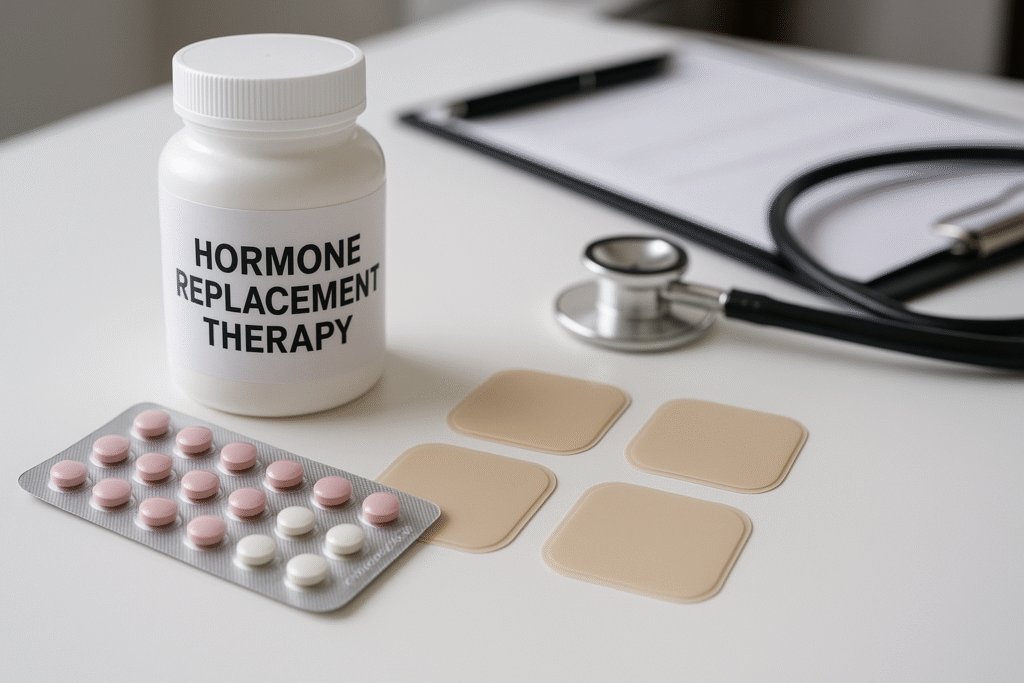
In a landmark decision reshaping decades of women’s health policy, the U.S. Food and Drug Administration (FDA) announced Monday that it will remove the “black box” warning from many hormone treatments prescribed for menopause symptoms. The move, hailed by women’s health experts as long overdue, could restore confidence in hormone therapy and lead to millions of new prescriptions nationwide.
The black box — the FDA’s strongest cautionary label — was added more than two decades ago after a large federal study linked hormone therapy to higher risks of heart disease, breast cancer, and stroke. The warning dramatically reduced hormone prescriptions, leaving generations of women undertreated for severe menopausal symptoms such as hot flashes, mood swings, and sleep disturbances.
“After 23 years of dogma, the FDA today is announcing that we are going to stop the fear machine steering women away from this life-changing, even life-saving, treatment,” said Dr. Marty Makary, FDA Commissioner, in a televised statement from the agency’s headquarters in Silver Spring, Maryland.
A Historic Reversal
Hormone therapy, first approved in the 1940s, was once widely prescribed to manage menopause symptoms and protect against osteoporosis and heart disease. By the late 1990s, about 25% of postmenopausal women in the U.S. were on hormone therapy. But that changed dramatically after 2002, when the Women’s Health Initiative (WHI) reported that women taking estrogen pills faced slightly higher risks of certain diseases.
The 2003 black box warning led to a 70% decline in prescriptions, and by 2020, only 1 in 25 women in menopause used hormone therapy.
Dr. JoAnn Manson, chief of preventive medicine at Brigham and Women’s Hospital, who worked on the original WHI study, said the reversal is long overdue.
“After more than 20 years of class-wide labeling, it’s time to get the science right,” Manson said. “The blanket warning ignored the nuances — age, dosage, delivery method — that determine real risk.”
The new FDA guidance clarifies that hormone therapy is safest and most beneficial when started before age 60 or within 10 years of menopause, emphasizing that treatment duration can now be tailored to the individual rather than restricted to “the shortest time possible.”
Updated Labeling and New Clinical Guidance
Under the revised policy, drugmakers will soon begin updating packaging to reflect the new evidence. The updates will remove the outdated directive urging physicians to use “the lowest effective dose for the shortest duration.”
Instead, FDA officials will recommend that women and clinicians weigh benefits and risks based on individual health profiles — especially regarding prior cancer history or risk of blood clots.
“The new language will allow women to remain on therapy safely for years if clinically indicated,” Makary explained. “We want women and their doctors to have nuanced conversations, not be guided by fear.”
The FDA’s shift also reflects emerging scientific consensus: when started early, hormone therapy can reduce risks of heart disease, osteoporosis, and dementia, contrary to earlier fears.
“With the exception of vaccines or antibiotics, there’s no medication that can improve women’s health on a population level more than hormone therapy,” Makary posted on X (formerly Twitter).
Reevaluating Decades of Fear
Women’s health advocates and physicians say the old label contributed to what they describe as a “two-decade public health failure.”
“It’s been a tragedy that millions of women were deprived of treatment,” said Dr. Erika Schwartz, a New York-based internist and author of The New Hormone Solution. “Hormone decline starts years before menopause, and replenishment — not replacement — is crucial to prevent diseases of aging like Alzheimer’s and heart disease.”
Recent analyses of the WHI data have shown that most risks observed in the original study applied to older women who began treatment well past menopause. Women who start hormone therapy earlier face minimal or no increased risk, according to follow-up studies published between 2010 and 2024.
Dr. JoAnn Pinkerton, professor of obstetrics and gynecology at the University of Virginia, called the change a “victory for women’s health.”
“Removing the scary boxed warning from local estrogen treatments is overdue,” Pinkerton said. “For systemic therapy, discussions must remain individualized, but the FDA’s nuanced approach is the right one.”
A National Movement in Menopause Care
The FDA’s decision arrives amid a broader cultural and political shift around menopause care in the United States. Over the past year, 19 states — both Republican- and Democrat-led — have introduced more than 35 bills expanding menopause education, coverage, and workplace accommodations.
“This is not just a regulatory decision; it’s part of a national reckoning,” said Jennifer Weiss-Wolf, executive director of the Birnbaum Women’s Leadership Center at NYU Law. “Women are demanding equitable access to care and accurate information. Menopause is finally coming out of the shadows.”
Weiss-Wolf, whose upcoming book When In Menopause: A User’s Manual and Citizen’s Guide explores systemic failures in menopause policy, noted that medical societies petitioned the FDA to remove the warning as early as 2014.
“This is something the menopause community has been asking for over a decade,” she said.
The Science Behind the Decision
Modern studies have revealed that estrogen’s biological role is far more complex and protective than previously assumed. Estrogen receptors exist throughout the body — in the heart, brain, bones, and blood vessels — meaning that hormonal decline after menopause can accelerate aging across multiple systems.
“Estrogen is like the body’s fuel,” explained Dr. Jayne Morgan, cardiologist and vice president of medical affairs at Hello Heart. “When it runs out, the ‘engine’ starts sputtering. Hormone therapy helps restore that balance.”
Morgan noted that estrogen therapy supports cardiovascular health, cognitive function, and bone density — all areas where women’s risk surges after menopause.
“Women live about six years longer than men but spend roughly 25% of their lives in poor health,” Morgan said. “Hormone therapy can help close that quality-of-life gap.”
What Comes Next
Label changes could take several months to appear on pharmacy shelves, but the impact is expected to be swift. Pharmaceutical companies including Pfizer, AbbVie, and Bayer have expressed enthusiasm for the update, with analysts predicting a resurgence in hormone therapy prescriptions nationwide.
Public health experts also anticipate a new wave of physician education, ensuring clinicians understand the differences between local (vaginal) and systemic (oral or transdermal) hormone therapies.
Makary emphasized that the FDA will continue monitoring safety data. “We are committed to transparent science and ongoing review,” he said. “Our job is not to promote hormone therapy — it’s to make sure women and their doctors have the full truth.”
As the U.S. undergoes this paradigm shift, experts say the change represents not only a medical milestone but also a cultural correction after decades of fear-driven misinformation.
“The old warning defined an era of silence, stigma, and suffering,” Weiss-Wolf said. “Its removal defines the next — one of empowerment, evidence, and choice.”