
By Harshit, WASHINGTON, Oct. 26, 2025 1 AM EDT
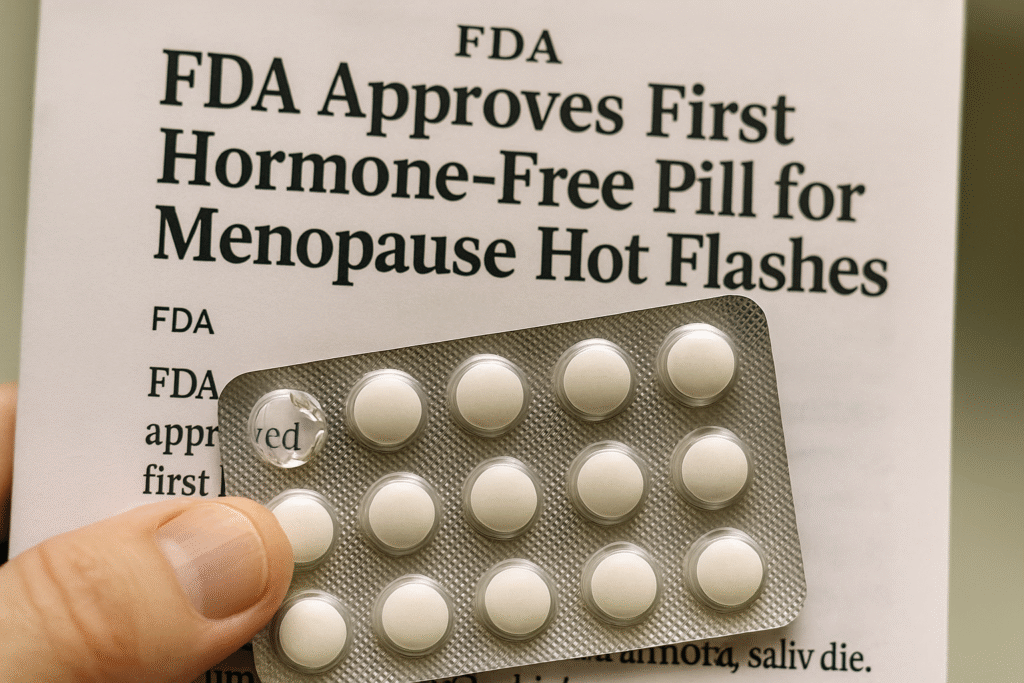
The U.S. Food and Drug Administration has approved a new once-a-day pill that works without hormones to treat moderate to severe hot flashes in menopausal women, drugmaker Bayer announced Friday.
The drug, called elinzanetant, will be marketed under the brand name Lynkuet and is expected to be available in the United States starting in November. It represents a significant development in menopause care, offering an alternative to traditional hormone therapies for women who cannot—or prefer not to—use estrogen-based treatments.
How the Drug Works
Elinzanetant targets the brain chemicals responsible for vasomotor symptoms, the medical term for hot flashes and night sweats. These symptoms affect more than 80% of women during menopause and can significantly disrupt daily life, from sleep quality to professional productivity.
“This FDA approval represents a bold step forward—our first hormone-free treatment for alleviating vasomotor symptoms of menopause,” said Christine Roth, Bayer’s executive vice president of global product strategy and commercialization. “There is a need for more individualized approaches to menopause care, and Lynkuet addresses a significant gap in treatment options.”
Unlike hormone replacement therapy, which supplements estrogen and can be contraindicated for women with certain cancers or cardiovascular conditions, Lynkuet provides relief without affecting hormone levels.
Clinical Trial Results Show Strong Effectiveness
A Phase 3 clinical trial involving 628 postmenopausal women found that participants taking elinzanetant for 12 weeks experienced a more than 73% reduction in the frequency of hot flashes. In contrast, women receiving a placebo saw a 47% reduction.
“The yearlong study not only confirmed the initial findings of rapid and significant reduction in the frequency and severity of hot flashes and night sweats but also provided evidence that these effects were sustained over a year,” said Dr. JoAnn Pinkerton, UVA Health’s director of midlife health. “This offers hope for longer-term relief for women experiencing moderate to severe vasomotor symptoms.”
The most commonly reported side effects were drowsiness, fatigue, and headaches, which were generally mild and manageable.
A Major Step for Non-Hormonal Menopause Care
Hot flashes are characterized by a sudden feeling of intense heat, usually centered around the face, chest, and head. When they occur at night, they are referred to as night sweats. The severity and frequency can vary widely, but severe episodes can disrupt sleep, work, and social life.
“This approval provides healthcare providers with a new treatment option that can be used first-line for moderate to severe hot flashes due to menopause,” Pinkerton said.
Previously, women who could not use hormone replacement therapy (HRT) had limited options for relief. Elinzanetant, along with fezolinetant, another FDA-approved non-hormonal pill from 2023, utilizes a recently discovered brain pathway to control hot flashes. Both drugs target neurokinins, chemicals produced by hyperactive nerves in the hypothalamus—the brain’s internal thermostat—after estrogen levels drop during menopause. Blocking neurokinin receptors reduces the overstimulation that causes vasomotor symptoms.
Expert Opinions and Patient Impact
Experts say this represents a major step in individualized menopause care.
“It’s important that women know they have choices for treating moderate to severe hot flashes, and today’s approval further expands their options,” said Claire Gill, president and founder of the National Menopause Foundation.
For many women, the disruptive nature of hot flashes can affect daily routines, mental health, and overall quality of life. The availability of an effective, non-hormonal treatment like Lynkuet could improve not only physical comfort but also emotional well-being.
Bayer emphasizes that the drug is intended for moderate to severe symptoms and should be prescribed in consultation with a healthcare provider. Small amounts of other lifestyle adjustments, including managing triggers such as hot beverages or stress, may complement the medication’s effects.
Looking Ahead
The approval of elinzanetant marks a growing recognition of menopause as a significant stage in women’s health that deserves targeted treatments. Non-hormonal therapies like Lynkuet and fezolinetant are expected to expand patient options and provide relief for those who previously had limited choices.
“For those dealing with moderate to severe vasomotor symptoms, the treatment options have historically been limited,” Pinkerton added. “Now, with Lynkuet, healthcare providers can offer a scientifically validated, hormone-free alternative that addresses this significant quality-of-life issue.”