
By Harshit
WASHINGTON, DECEMBER 27, 2025 —
In 2025, extreme weather research increasingly moved beyond documentation toward practical application. Scientists focused less on whether extreme events are becoming more frequent and more on how societies can anticipate, measure, and reduce their impacts.
This shift reflects growing confidence in climate science and rising demand from governments, insurers, and emergency planners for actionable insights.
From Observation to Risk Assessment
Earlier research concentrated on identifying long-term trends in temperature, rainfall, and storm intensity. By 2025, scientists increasingly framed extreme weather as a risk management challenge.
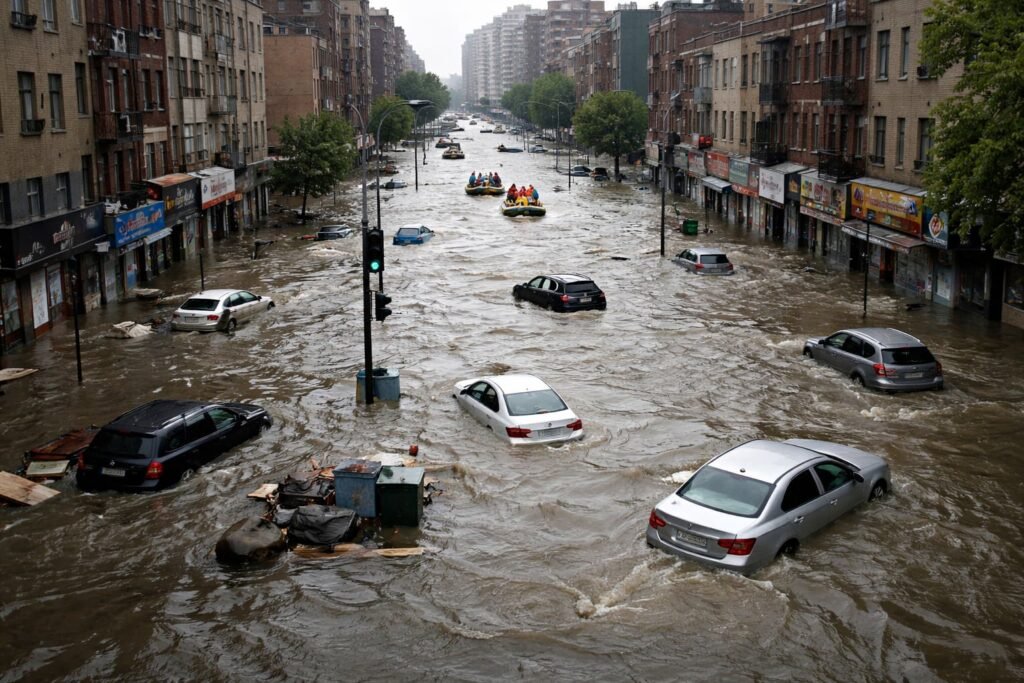
Heat waves, floods, droughts, and storms were analyzed in terms of probability, severity, and exposure. This approach helped communities assess not only what might happen, but how prepared they are to respond.
Data from the National Oceanic and Atmospheric Administration continued to show that certain extreme events—particularly heat-related events and heavy rainfall—are occurring more frequently across parts of the United States.
Advances in Modeling and Data
Improved computing power allowed researchers to run higher-resolution climate models that capture regional variation more accurately. These models helped identify which communities face the greatest risks and which infrastructure systems are most vulnerable.
Satellite data, ground-based sensors, and historical records were increasingly integrated, producing more reliable assessments of evolving weather patterns.
This data-driven approach strengthened confidence in forecasts and supported more targeted preparedness planning.
Linking Science to Public Safety
A defining feature of 2025 was the closer integration of extreme weather research with emergency management. Scientists worked directly with public agencies to improve early warning systems and response protocols.
Heat alert systems, flood forecasting tools, and wildfire risk assessments became more precise, allowing authorities to act earlier and more effectively.
Researchers emphasized that scientific insight alone does not prevent harm, but timely communication and preparedness can significantly reduce losses.
Economic and Infrastructure Implications
Extreme weather research increasingly examined economic consequences. Damage to transportation networks, energy systems, and agriculture carries long-term costs that extend beyond immediate recovery.
Scientists collaborated with economists and engineers to assess infrastructure resilience, informing investment decisions and building standards.
Insurance markets also relied heavily on updated risk assessments, influencing coverage decisions and pricing.
Communicating Uncertainty
Scientists in 2025 placed renewed emphasis on explaining uncertainty clearly. Rather than presenting predictions as certainties, researchers focused on probability ranges and confidence levels.
This transparency helped build public trust and supported better decision-making under uncertainty.
Looking Ahead to 2026
Extreme weather research is expected to continue evolving toward integrated risk management. The goal is not to eliminate extreme events, but to reduce vulnerability and improve resilience.
In that sense, 2025 marked a shift from understanding extremes to learning how to live with them more safely.