
By Harshit, WASHINGTON, Oct. 25, 2025 1 AM EDT
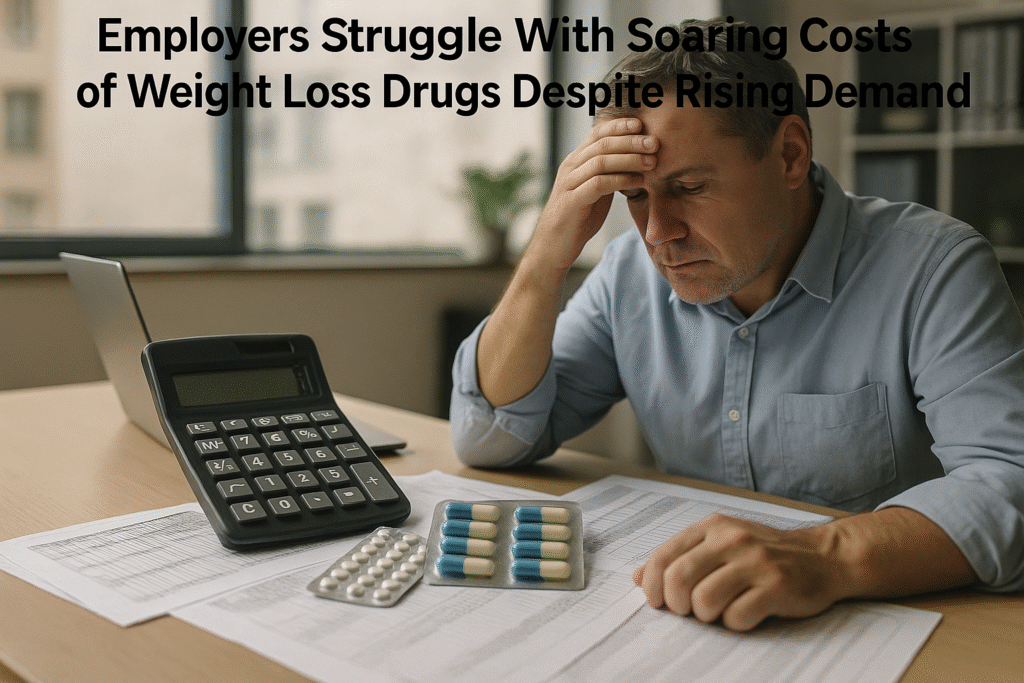
Weight loss medications such as Wegovy and Ozempic are surging in popularity among American workers with employer-sponsored insurance. However, the soaring demand for these drugs, known as GLP-1 agonists, is straining company budgets and forcing many firms to rethink their coverage policies, according to new data from the KFF Employer Health Benefits Survey released Wednesday.
Large Companies Lead in Coverage — But at a Cost
The survey found that 43% of very large employers — those with more than 5,000 employees — now offer coverage for weight loss drugs, up from 28% last year. This sharp increase reflects the growing recognition of obesity treatment as an essential health benefit.
In contrast, only 16% of mid-sized employers (those with 200–999 workers) cover GLP-1 medications, unchanged from 2024. Smaller firms remain hesitant, largely due to the steep costs associated with these drugs.
“Large employers know these new high-priced weight-loss drugs are an important benefit for their workers, but their costs often exceed their expectations,” said Gary Claxton, KFF’s senior vice president. “It’s not a surprise that some are rethinking access to the drugs for weight loss.”
GLP-1 Drugs: Effective but Expensive
GLP-1 medications such as Wegovy, Ozempic, and Mounjaro were initially developed for diabetes but have proven highly effective in helping patients lose weight. The drugs work by mimicking a hormone that regulates appetite and blood sugar levels.
However, the cost is staggering. Wegovy’s list price is around $1,350 per month, before discounts. While insurers routinely cover GLP-1 drugs for diabetes, they are far less likely to do so for weight loss. Employers say they must balance financial realities with the growing demand for access.
More than 36 million Americans with job-based insurance meet the medical criteria for GLP-1 eligibility, defined as a body mass index (BMI) high enough to classify as obese. For many workers, these medications have become a sought-after benefit — and for employers, a potential financial burden.
Usage and Spending Exceed Expectations
Nearly 60% of large firms surveyed by KFF said usage of GLP-1 medications for weight loss was higher than they anticipated. Even more striking, two-thirds of employers reported a “significant impact” on their prescription drug spending.
One employer told KFF that spending on GLP-1 drugs jumped from being the 32nd most costly medication last year to the top expense this year. Another large retailer shared that its annual GLP-1 spending soared from $500,000 to a projected $1.2 million in just one year.
“These are life-changing drugs for patients, but they’re also budget-busting for employers,” Claxton said.
Employers Seek Creative Solutions
To control costs, some companies are tightening eligibility requirements for weight loss coverage. This may include limiting coverage to employees with a higher BMI, mandating participation in weight management programs, or requiring regular reevaluations to remain eligible.
“You have to have a coach, and then you can only stay on it for a certain amount of time before you have to get reevaluated,” one manufacturer told KFF.
Other employers have gone further — dropping coverage for weight loss entirely — while still covering GLP-1 drugs for diabetes and related conditions.
Political Pressure and Public Debate
The high cost of these medications has even reached the political stage. President Donald Trump recently drew attention when he claimed GLP-1 drugs would soon cost around $150 per month, though Centers for Medicare and Medicaid Services (CMS) Administrator Mehmet Oz clarified that negotiations are ongoing and no such pricing has been finalized.
The Biden and Trump administrations have both signaled interest in addressing the cost of GLP-1 drugs, which could reshape coverage trends in the coming years.
Premiums Rise as Costs Ripple Through
The surge in prescription drug costs, driven in part by GLP-1 medications, is also pushing up insurance premiums.
According to KFF:
- The average annual premium for family coverage reached $27,000 in 2025 — a 6% increase from 2024.
- The average premium for individual coverage rose to $9,300, up 5% from the previous year.
Workers now contribute an average of $6,850 toward family coverage, while employers pay the rest. Experts warn that premiums could climb even higher in 2026, driven by hospital prices, tariffs, and expanding GLP-1 coverage.
“There is a quiet alarm bell going off,” said Drew Altman, KFF’s CEO. “Employers have nothing new in their arsenal that can address most of the drivers of their cost increases.”
To offset rising expenses, companies may resort to higher deductibles and cost-sharing, a strategy unpopular among both employers and employees but often used to limit premium hikes.
The Future of GLP-1 Coverage
Experts believe the debate over GLP-1 drug coverage is far from over. As the medications receive approval for more conditions — including cardiovascular disease and sleep apnea — pressure will mount on employers to expand access.
“We’re still writing the story of what GLP-1 coverage looks like in employer plans,” said Matthew Rae, associate director at KFF’s Program on the Health Care Marketplace.
For now, the challenge remains the same: balancing cost containment with employee wellness in an era where the promise of medical innovation comes with a high price tag.