
WASHINGTON, MARCH 30, 2026 —
What You Need To Know
- Scientists have discovered the earliest evidence of Earth’s tectonic plates shifting — dating back 3.25 billion years — pushing back the known start of plate tectonics by hundreds of millions of years
- The discovery, published Saturday in the journal Nature, suggests that the very process that makes Earth habitable — cycling nutrients, regulating temperatures, building continents — began far earlier than previously thought
- For the origin of life on Earth, the implications are profound: life may have had a stable, tectonically active planet to develop on hundreds of millions of years earlier than current models assume — potentially reshaping the entire scientific timeline of how complex life emerged
Beneath your feet, right now, the ground is moving. Not in any way you can feel — but at the rate of a few centimeters per year, the tectonic plates that make up Earth’s crust are grinding past each other, sliding under each other, and pushing against each other in a process that has shaped every mountain range, every ocean basin, and every continent on this planet. It has also, scientists believe, been one of the foundational conditions for life.
Now a team of researchers has found evidence that this process began 3.25 billion years ago — hundreds of millions of years earlier than the previous scientific consensus — rewriting what geologists thought they knew about early Earth and opening a fundamental new question about the origin of life.
What They Found — And Where
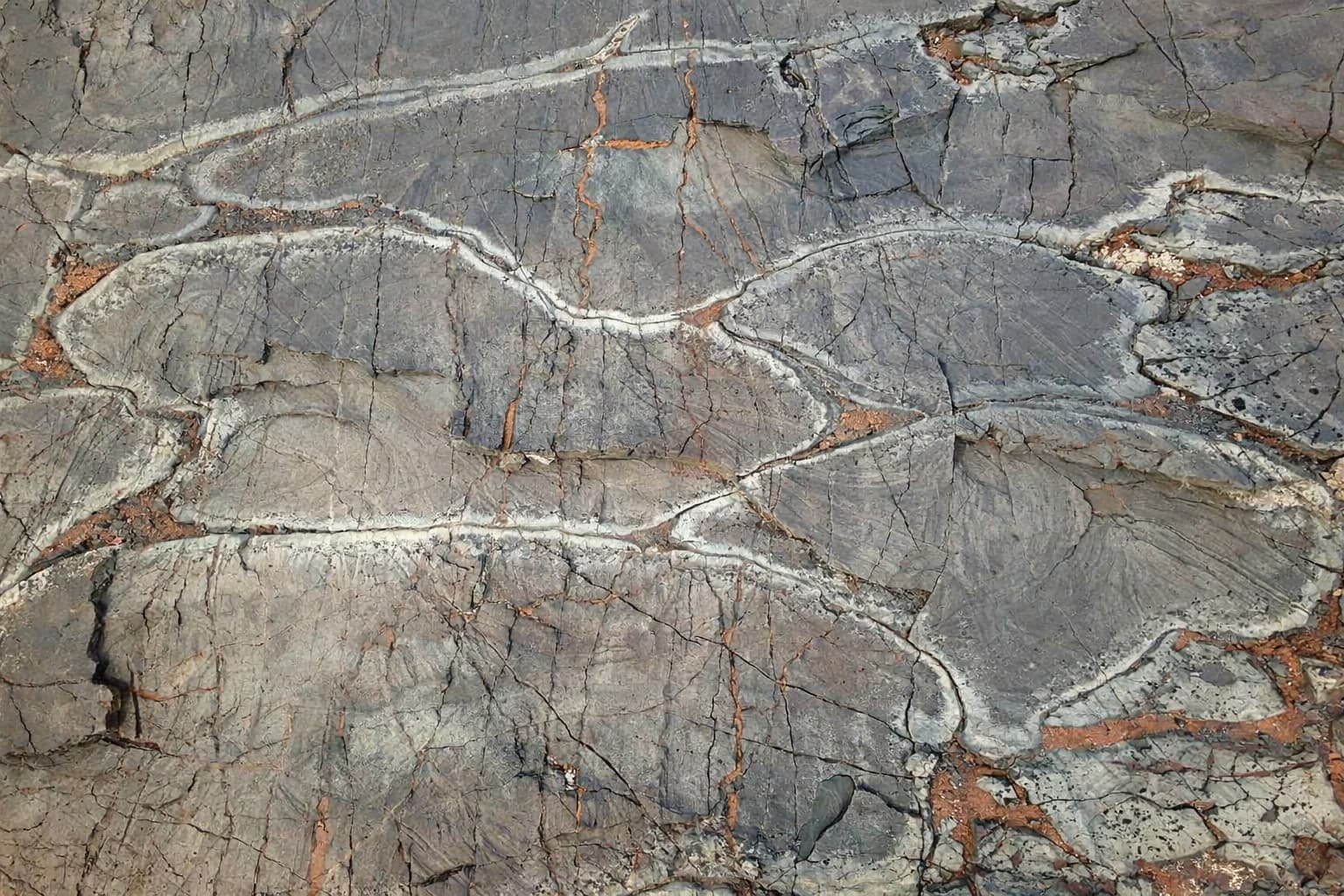
The evidence came from a place with an appropriately ancient name: the Pilbara Craton in Western Australia — one of the oldest and most geologically stable pieces of Earth’s crust on the planet. Rocks in the Pilbara have survived largely unchanged for billions of years, making them a geological archive of early Earth’s conditions.
The research team — led by geoscientists from the University of Toronto, MIT, and the University of Western Australia — analyzed ancient rock formations in the Pilbara using a combination of geochemical analysis, paleomagnetic dating, and structural geology techniques. What they found was a pattern of rock deformation, geochemical signatures, and magnetic orientations consistent with one specific geological process: subduction — the process by which one tectonic plate slides beneath another and is recycled back into the mantle.
Subduction is the engine of plate tectonics. It is the process that drives the movement of continents, generates the volcanic arcs that build mountain ranges, cycles carbon dioxide between the atmosphere and the mantle, and — critically — circulates the nutrients and minerals that life requires from the deep Earth toward the surface. Finding evidence of subduction at 3.25 billion years ago means plate tectonics was active earlier than any previous hard evidence has established.
Why This Changes Everything About Early Earth
The origin of plate tectonics on Earth is one of the most debated questions in geology. For decades, the scientific consensus held that tectonic activity began somewhere between 2.5 and 3 billion years ago — a period called the Archean Eon. Some researchers have argued for an even later start, between 1 and 2 billion years ago. Saturday’s study pushes the confirmed timeline back by hundreds of millions of years and provides the most direct physical evidence yet that subduction was operating at a critical moment in Earth’s early history.
The implications extend far beyond geology. Earth’s habitability — its ability to support life — is not a coincidence. It is an active process. The carbon-silicate cycle, driven by plate tectonics, regulates Earth’s temperature over geological timescales. Without it, Earth would likely be either a frozen ball like Mars or a scorched greenhouse like Venus. The fact that plate tectonics was active 3.25 billion years ago means this regulatory system was operating for hundreds of millions of years before the oldest confirmed evidence of complex multicellular life — which dates to approximately 600 million years ago.
What It Means for the Origin of Life
The earliest microbial life on Earth — single-celled organisms — dates to approximately 3.5 billion years ago in the fossil record. The newly discovered evidence of plate tectonics at 3.25 billion years ago means that early life was not developing on a geologically static planet. It was developing on an actively moving, tectonically alive world — one that was cycling nutrients, moderating temperatures, and creating the chemical gradients that many origin-of-life researchers believe are essential for the emergence and evolution of living systems.
Dr. Katy Evans of Curtin University, one of the study’s co-authors, described the significance carefully. “Finding evidence for subduction this early tells us that the machinery that makes Earth habitable was running much earlier than we knew. That changes the context in which life emerged — and it changes the timeline we use to think about when and how that emergence was possible.”
What This Means for Life Elsewhere
The discovery also reshapes how scientists think about the possibility of life on other planets. One of the reasons Earth is considered an unusually hospitable planet is its active plate tectonics — a feature that Mars, Venus, and most other rocky planets in our solar system lack, or lack in the same form. If plate tectonics began earlier on Earth than previously thought, it narrows the window during which life might plausibly emerge on a tectonically active world — but it also strengthens the argument that tectonic activity and habitability are deeply linked.
The search for life elsewhere in the universe has increasingly focused on planets with signs of geological activity. Saturday’s finding from the Pilbara Craton gives that search a more specific target: not just rocky planets in the habitable zone, but rocky planets with evidence of the specific geological process — subduction — that appears to have been operating on Earth when life first appeared.
The Bigger Picture
3.25 billion years ago, there were no animals on Earth. There were no plants. There were no fungi, no trees, no oceans teeming with fish. There were single-celled organisms clinging to the edges of shallow seas, doing the slow, patient work of chemistry that would eventually produce, billions of years later, everything alive today.
And beneath them, the plates were already moving.