
By Harshit
HAVANA / CARACAS / WASHINGTON, JANUARY 5 —
The Cuban government has confirmed that 32 Cuban nationals were killed during the recent US military operation that led to the capture of Venezuelan leader Nicolás Maduro, sharply escalating regional tensions and drawing renewed scrutiny to Cuba’s long-standing security role in Venezuela.
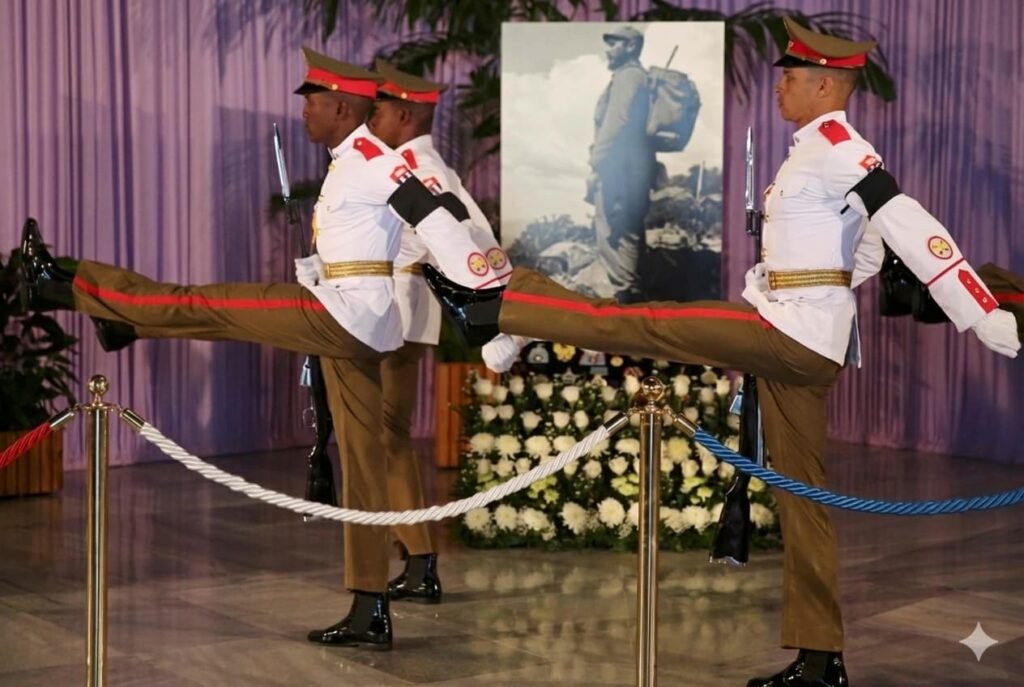
In a brief but forceful statement, Havana said the dead were members of Cuba’s armed forces and intelligence agencies, and announced two days of national mourning. The statement did not detail the precise circumstances of their deployment, but acknowledged that Cuban personnel were operating in Venezuela as part of bilateral security cooperation.
Cuba Confirms Security Role in Venezuela
Cuban President Miguel Díaz-Canel said the fallen personnel had been providing protection to Maduro and his wife, Cilia Flores, “at the request of the Venezuelan government.”
“Our compatriots fulfilled their duty with dignity and heroism,” the Cuban government said. “They fell, after fierce resistance, in direct combat against the attackers or as a result of bombings on the facilities.”
Cuba and Venezuela have been close allies for decades, with Havana providing intelligence and security assistance in exchange for subsidised Venezuelan oil — a relationship that has deepened as both governments have faced heavy US sanctions.
Unclear Overall Death Toll
Venezuela has not officially confirmed how many people were killed during Saturday’s US raid on Maduro’s compound in Caracas.
The New York Times, citing an unnamed Venezuelan official, reported that at least 80 people were killed, with the toll expected to rise. That figure has not been independently verified by the BBC or other international outlets.
US officials have maintained that the operation was a targeted action against what Washington describes as a “narco-terrorist regime,” not a war against Venezuela itself.
Trump Comments Fuel Fears of Wider Confrontation
In the aftermath of the raid, speculation has grown over whether the Trump administration could consider similar action against Cuba, another long-time US adversary.
Speaking to reporters on Sunday, US President Donald Trump downplayed the need for military action against Havana.
“I don’t think we need any action,” Trump said. “Cuba is ready to fall. It’s going down for the count.”
Earlier, US Secretary of State Marco Rubio described Cuba as a “disaster” run by “incompetent, senile men,” adding that Cuban officials would be wise to be concerned after the events in Venezuela.
Longstanding US-Cuba Tensions
US-Cuba relations have been adversarial for more than six decades. In July last year, Trump signed a memorandum tightening restrictions on Cuba, reversing limited easing measures taken under former President Joe Biden.
The White House said the policy aimed to end “economic practices that disproportionately benefit the Cuban government, military, intelligence, or security agencies at the expense of the Cuban people.”
Travel restrictions on US citizens visiting Cuba were also strengthened.
During Trump’s first term, his administration imposed additional sanctions and maintained the US economic embargo, first enacted in 1962. The blockade has been repeatedly condemned by the United Nations, which has voted overwhelmingly for its removal, though Washington has kept it in place.
Regional Anxiety After Caracas Raid
The deaths of Cuban personnel underscore the international dimensions of the US operation in Caracas and raise fears of a broader regional fallout.
Latin American governments have already warned that the raid sets a dangerous precedent for sovereignty and civilian safety. With Maduro now in US custody and Venezuela’s political future uncertain, Cuba’s losses add another layer of volatility to an already fragile geopolitical moment.
As Havana mourns its dead, attention is turning to whether Washington’s campaign against drug trafficking and allied regimes could widen — and how far the Trump administration is prepared to go.