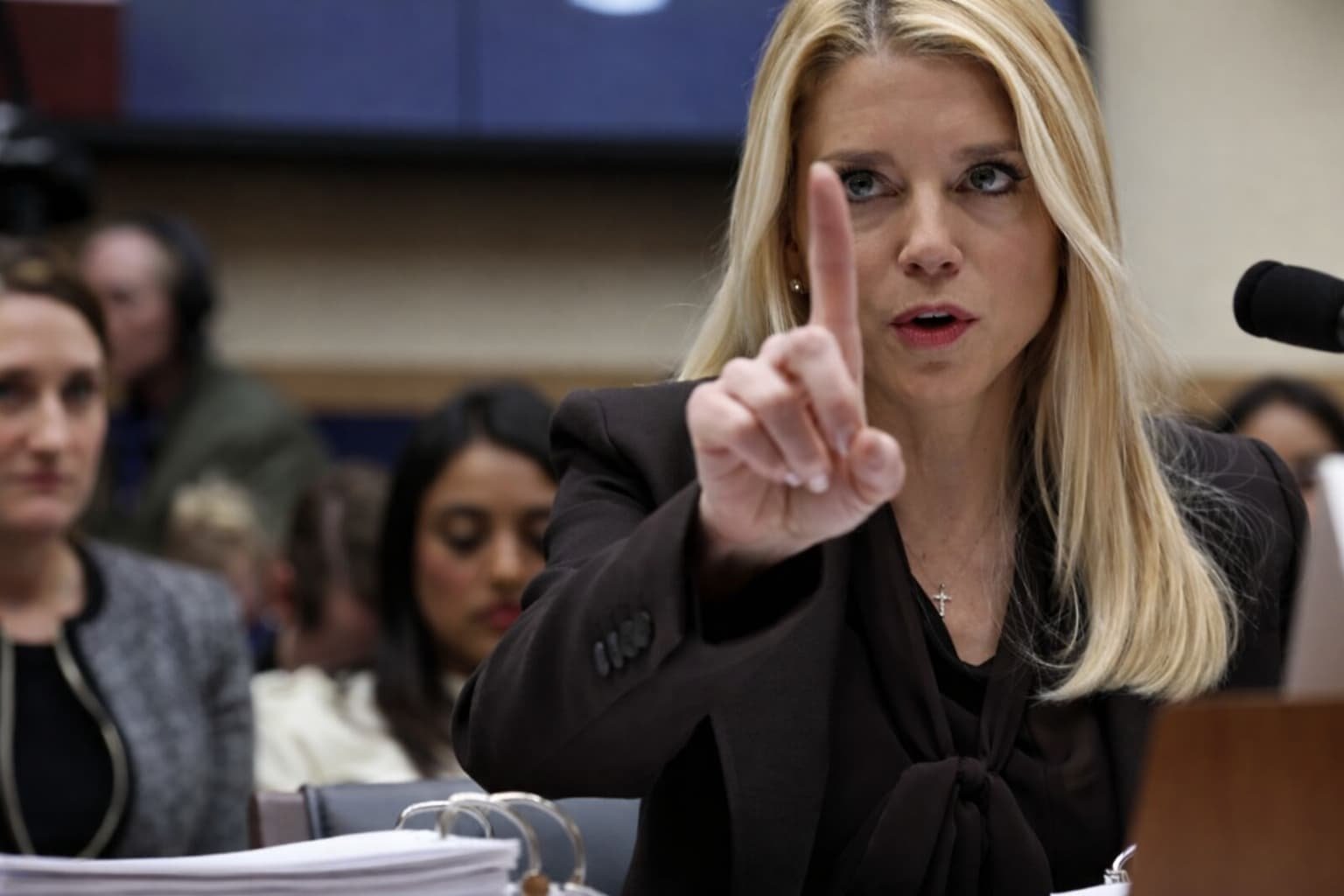

WASHINGTON, MARCH 18, 2026 — The standoff between Capitol Hill and the Justice Department over the Jeffrey Epstein files took a decisive turn this week. House Oversight Committee Chairman James Comer formally subpoenaed Attorney General Pam Bondi on Tuesday, ordering her to appear for a closed-door deposition on April 14 — the latest and most consequential move yet in a congressional investigation that has already put former presidents under oath.
The subpoena did not come from Democrats alone. It follows a bipartisan 24-19 committee vote on March 4, in which five Republicans broke with their own party to demand Bondi’s testimony. The Republicans who crossed the aisle were Rep. Nancy Mace of South Carolina, who introduced the motion, along with Lauren Boebert of Colorado, Tim Burchett of Tennessee, Michael Cloud of Texas, and Scott Perry of Pennsylvania.
For a Republican attorney general to be subpoenaed by a Republican-led committee — with members of her own party casting the deciding votes — is a rare rupture. And it reflects just how badly the Justice Department’s handling of the Epstein files has fractured Washington’s trust.
A Law Passed. Files Were Pulled. Questions Multiplied.
The conflict has its roots in legislation Congress passed last year. The Epstein Files Transparency Act, signed by President Trump, required the Justice Department to publicly release the full investigative files connected to Epstein and his convicted accomplice, Ghislaine Maxwell, within 30 days.
The DOJ released more than 3 million pages of documents in late January. Bondi appeared before the House Judiciary Committee in February and defended the effort, saying hundreds of attorneys had spent thousands of hours combing through the material. But the release quickly unraveled. Tens of thousands of documents that had briefly appeared online were quietly pulled back, with the department citing redaction needs and privacy concerns related to victims.
Critics in both parties called that explanation inadequate. Some of the withheld files contained uncorroborated accusations involving President Trump — a revelation that cut across party lines and intensified the scrutiny on Bondi personally. A CBS News analysis found that only about half of the department’s total files — roughly 3 million of an estimated 6 million pages — have been made public.
Contempt, Impeachment, and a Surveillance Allegation
The temperature in Washington has risen sharply around this investigation. Rep. Thomas Massie of Kentucky, a consistent Trump critic within the GOP, and Rep. Ro Khanna of California have jointly raised the possibility of holding Bondi in inherent contempt of Congress if she refuses to comply with the subpoena. Khanna has also publicly floated the prospect of impeachment proceedings against the attorney general.
Speaker Mike Johnson issued his own rebuke of the administration after reports surfaced that the DOJ had obtained records showing which specific Epstein documents members of Congress had accessed during supervised visits to the department to review unredacted files. Lawmakers from both parties viewed that as an attempt to track and potentially pressure them.
The investigation itself has already reached the highest levels of American public life. The committee conducted sworn depositions last month with former President Bill Clinton and former Secretary of State Hillary Clinton. Bill Clinton told members he had done nothing wrong in his association with Epstein and had seen no signs of criminal behavior. Hillary Clinton said she had no knowledge of Epstein’s crimes and did not recall ever crossing paths with him. Video of both depositions was subsequently released to the public.
DOJ Pushes Back. Lawyers Say the Subpoena Is Unnecessary.
The Justice Department has not gone quietly. A department spokesperson called the subpoena “completely unnecessary” this week, pointing out that Bondi had offered to brief committee members privately and that lawmakers had already been given the opportunity to visit the DOJ and review unredacted files in person.
That offer, however, became its own controversy. The supervised document review sessions — in which members were permitted to take handwritten notes but nothing else — were later used against lawmakers when the DOJ obtained records of who had accessed what. The gesture of transparency became a new source of conflict.
Rep. Robert Garcia of California, the committee’s top Democrat, said the moment had arrived for direct answers under oath. Bondi, he said, would be the highest-ranking sitting official to appear before the panel since the investigation began. His statement was blunt: no more private briefings, no more workarounds, no more delays.
Whether Bondi appears voluntarily on April 14 — or whether the administration attempts to block the deposition on executive privilege grounds — will define the next chapter of an investigation that has already rewritten what Washington knows about the most powerful names connected to Jeffrey Epstein.