
By Harshit
SALT LAKE CITY, Dec. 13 —
The man accused of fatally shooting conservative activist Charlie Kirk appeared in a Utah courtroom Thursday for the first time in person since his arrest, marking a significant early step in a murder case that has drawn national scrutiny, fierce debate, and demands for public transparency.
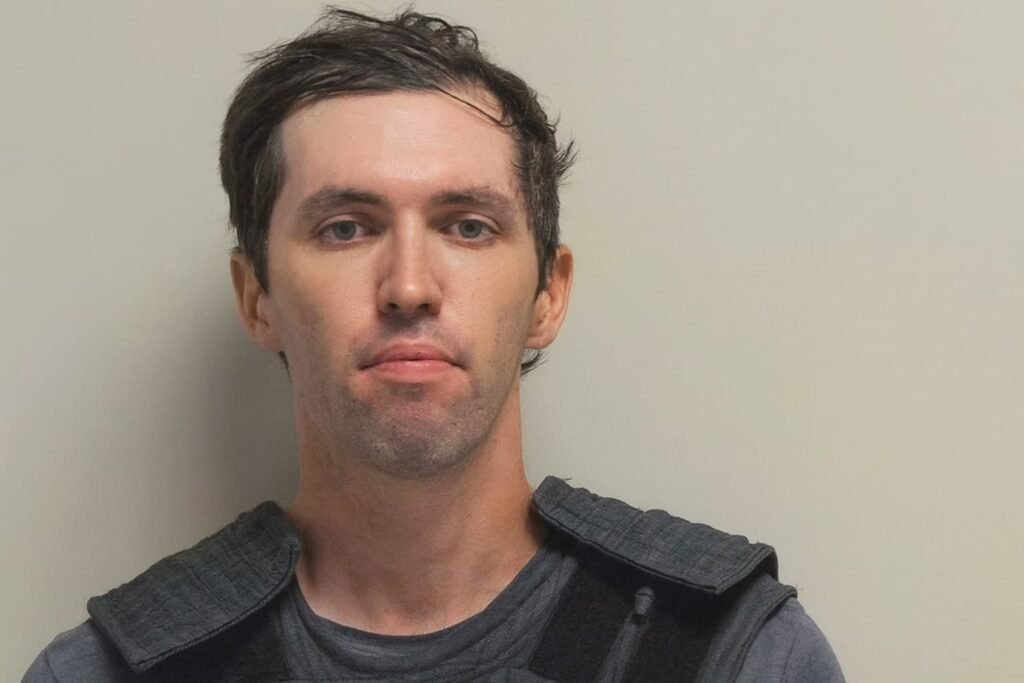
Twenty-two-year-old Tyler Robinson, charged with aggravated murder, felony firearm use, obstruction of justice, witness tampering, and committing a violent crime in the presence of a child, entered the courtroom wearing a blue shirt, striped tie, and khaki pants. He has not yet entered a plea. A three-day preliminary hearing is scheduled to begin on May 18, 2026.
Robinson surrendered to police on September 11 — one day after Kirk was fatally shot during an appearance on the Utah Valley University campus. His earlier hearings occurred by video or audio, making Thursday’s appearance the first time many observers saw the defendant in person.
Court Closes Key Portion of Hearing Over Transparency Dispute
The central focus of Thursday’s hearing was not evidence but access — specifically, whether the public and press would be allowed to review a transcript of a previously closed session that addressed courtroom security procedures, media restrictions, and Robinson’s right to wear civilian clothing instead of jail attire.
An October 24 hearing on those issues was closed to the public, prompting several media organizations to request the transcript. Attorneys for Robinson and the state of Utah have asked for significant redactions, citing security concerns and defendant rights.
To discuss what may be sealed, the judge closed the first segment of Thursday’s hearing for more than two hours. When the courtroom reopened, the judge reprimanded the court-approved camera operator for violating decorum by showing Robinson’s shackles and picking up private attorney-client audio. The camera was relocated after the sanction was issued.
A motion to ban cameras entirely will be heard in January.
Widow Calls for Openness Amid Conspiracy Claims
Charlie Kirk’s widow, Erika Kirk, has been designated as a victim representative, granting her enhanced access to case information. She has repeatedly called for full transparency.
“We deserve to have cameras in there,” she said in a recent interview. “Why not be transparent?”
She has argued that public access is the best counter to online conspiracy theories about the shooting.
Kirk, 31, co-founder of Turning Point USA, built a massive following through contentious debates on college campuses, sharp conservative commentary, and a growing content operation. He was addressing students outdoors at Utah Valley University on September 10 when he was struck by a single sniper round.
Evidence Includes Rifle, DNA and Digital Confessions
Investigators quickly suspected the fatal shot came from an elevated position on a nearby rooftop. Surveillance footage captured the suspect, and the image circulated widely as police sought public assistance.
A charging document outlines DNA evidence linking Robinson to a bolt-action rifle, a towel, a spent casing and three unused cartridges recovered in a wooded area near the scene. The cartridges, prosecutors said, were engraved with phrases referencing memes and video games.
Robinson’s parents recognized him in the surveillance image and brought him to the Washington County Sheriff’s Office the next day, according to investigators.
The charging documents also cite messages Robinson sent to a roommate and a romantic partner — described as a “biological male who was transitioning genders” — in which he appeared to claim responsibility. “I had enough of his hatred,” one text read. “Some hate can’t be negotiated out.”
Robinson’s mother told investigators her son had become “more political” and “more pro-gay and trans-rights oriented” over the past year.
Prosecutors have indicated that they will pursue the death penalty.
National Spotlight Grows as Political Tensions Rise
Kirk’s killing stunned conservative circles and intensified partisan debates over political extremism and violence. His final book, “Stop, in the Name of God,” was released this week, drawing renewed discussion of his public legacy.
Meanwhile, tensions surrounding the court’s handling of the case continue to rise. Civil liberties groups, press organizations and political leaders across the spectrum have urged the court to preserve public access. Defense attorneys, in turn, argue that transparency must be balanced with Robinson’s right to a fair trial.
The next major hearing — on the possible removal of cameras from the courtroom — is set for January. With the preliminary hearing still months away, the legal fight over transparency may shape much of the case’s early trajectory.