Science and Technology

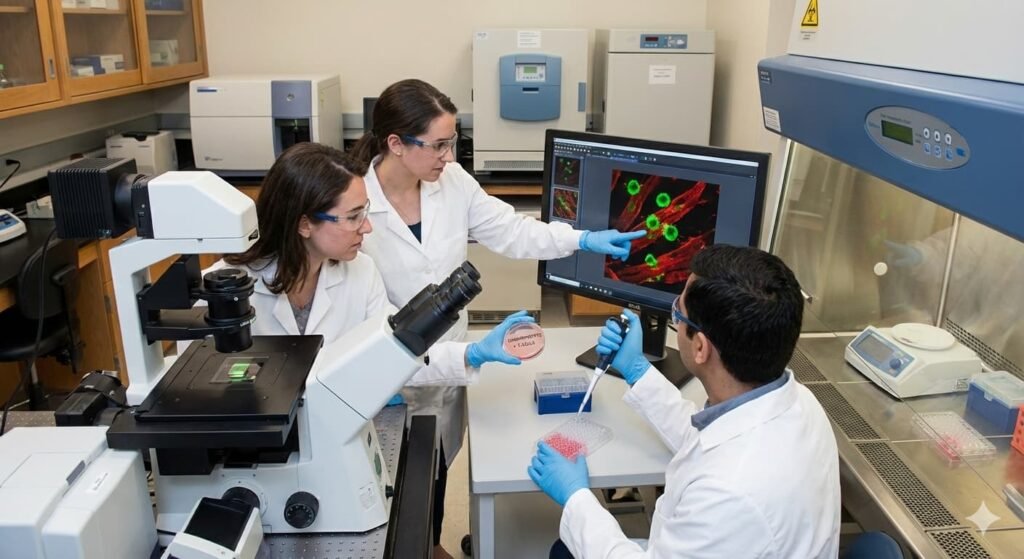
Scientists studying immune cells and heart tissue in a laboratory setting

Why mRNA COVID-19 Vaccines Can Rarely Trigger Heart Inflammation — and Why the Risk Remains Low

By Harshit STANFORD, CALIFORNIA, DECEMBER 28 —mRNA-based COVID-19 vaccines have saved millions of lives worldwide, but a rare side effect—temporary inflammation of the heart muscle—has raised scientific questions and public concern. Now, a new study from Stanford Medicine explains why this reaction can occur in a small subset of people and, critically, why the overall […]


Why mRNA COVID-19 Vaccines Can Rarely Trigger Heart Inflammation — and Why the Risk Remains Low Read More »

Flooded urban area used in climate risk research

Why Extreme Weather Research Became More Action-Oriented in 2025

By Harshit WASHINGTON, DECEMBER 27, 2025 —In 2025, extreme weather research increasingly moved beyond documentation toward practical application. Scientists focused less on whether extreme events are becoming more frequent and more on how societies can anticipate, measure, and reduce their impacts. This shift reflects growing confidence in climate science and rising demand from governments, insurers,

Why Extreme Weather Research Became More Action-Oriented in 2025 Read More »

AI systems integrated into modern office workflows

Why Artificial Intelligence Became Core Business Infrastructure in 2025

By Harshit SAN FRANCISCO, DECEMBER 25, 2025 —In 2025, artificial intelligence completed its transition from experimental technology to core business infrastructure. Rather than pursuing AI for novelty or hype, companies across industries embedded AI tools into daily operations to improve efficiency, consistency, and decision-making. This shift marked a maturation phase for AI adoption, driven by

Why Artificial Intelligence Became Core Business Infrastructure in 2025 Read More »

Scientists analyzing climate and extreme weather data in a research center

Why Climate Science in 2025 Shifted From Prediction to Human Impact

By Harshit WASHINGTON, DECEMBER 26, 2025 —Climate science in 2025 marked a decisive shift away from abstract projections toward a more human-centered understanding of global warming. While earlier decades focused heavily on forecasting temperature increases and long-term environmental change, researchers increasingly concentrated on how climate change is already affecting people, infrastructure, public health, and economic

Why Climate Science in 2025 Shifted From Prediction to Human Impact Read More »

Solar panels and wind turbines generating renewable energy in the United States

Why 2025 Accelerated the Global Shift Toward Renewable Energy

By Harshit WASHINGTON, DECEMBER 25, 2025 —As 2025 comes to an end, energy researchers and policymakers increasingly describe the year as a turning point in the global transition toward renewable power. While fossil fuels continue to play a significant role in the world economy, the pace of investment, deployment, and policy support for clean energy

Why 2025 Accelerated the Global Shift Toward Renewable Energy Read More »

Heatwave affecting a U.S. city illustrating rising extreme weather risks

Why 2025 Became a Turning Point for Climate Science and Extreme Weather Research

By Harshit WASHINGTON, DECEMBER 24, 2025 —As 2025 draws to a close, climate scientists say the year marked a turning point in how extreme weather events are studied, measured, and communicated. While climate change has been a central scientific concern for decades, advances in data collection, modeling, and attribution science have fundamentally reshaped how researchers

Why 2025 Became a Turning Point for Climate Science and Extreme Weather Research Read More »

Abstract illustration representing artificial intelligence and data networks

Why Artificial Intelligence Regulation Is Becoming a Global Priority

By Harshit SAN FRANCISCO, DECEMBER 24, 2025 —Artificial intelligence has transitioned from an experimental technology to a foundational component of global economies. As AI systems increasingly influence healthcare, finance, defense, and public discourse, governments worldwide are accelerating efforts to regulate their development and deployment. The Rapid Expansion of AI Systems Generative AI, autonomous systems, and

Why Artificial Intelligence Regulation Is Becoming a Global Priority Read More »

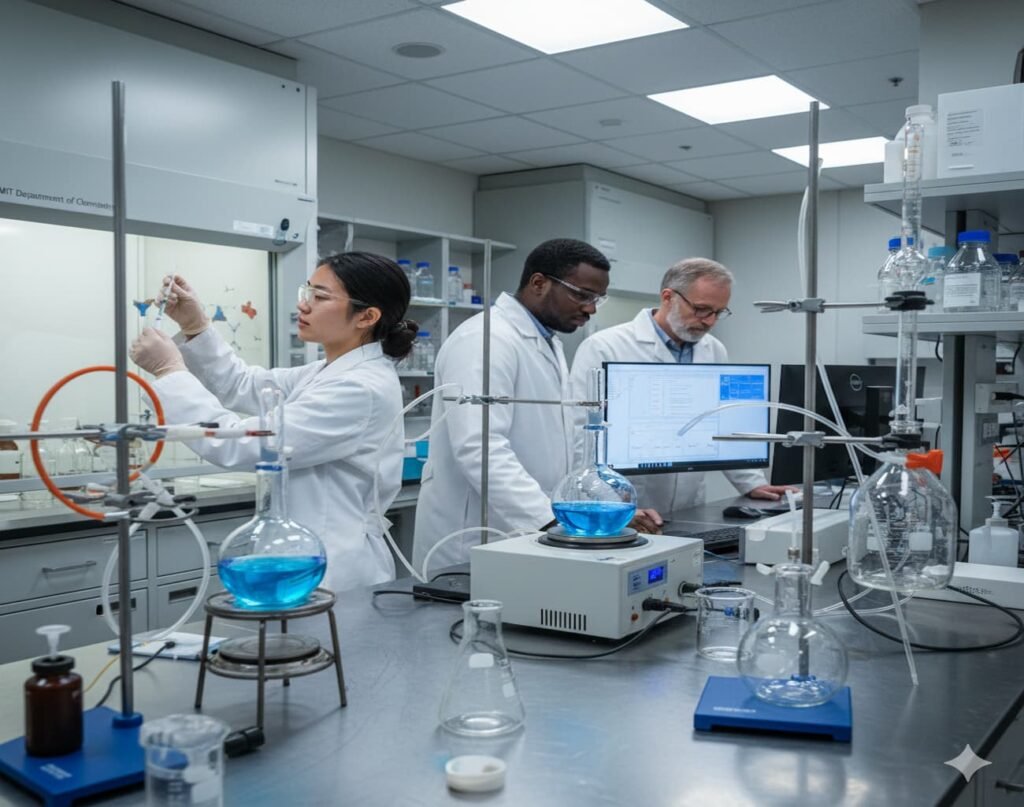
Chemists working in an MIT laboratory during synthesis research

MIT Chemists Crack a 50-Year Puzzle, Opening New Path Against Deadly Childhood Brain Cancer

By HarshitCAMBRIDGE, MASSACHUSETTS, DECEMBER 22, 2025 Chemists at the Massachusetts Institute of Technology have achieved a long-sought milestone in synthetic chemistry: the first successful laboratory synthesis of verticillin A, a complex fungal molecule first identified more than half a century ago. Beyond solving a major chemical challenge, the breakthrough is already yielding promising results against

MIT Chemists Crack a 50-Year Puzzle, Opening New Path Against Deadly Childhood Brain Cancer Read More »

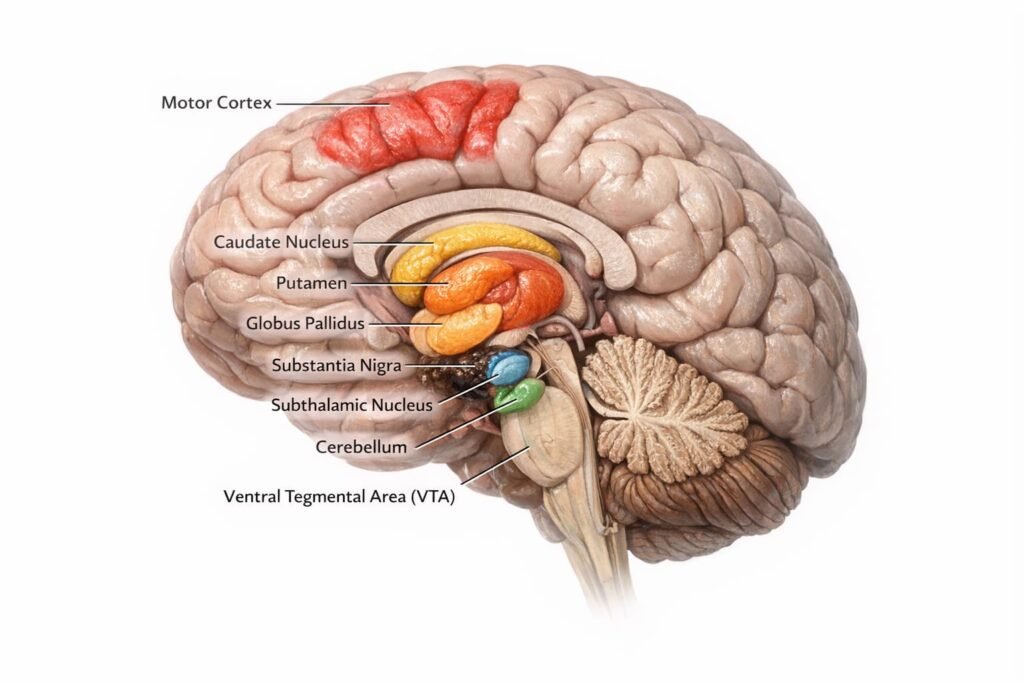
Brain regions involved in motor control and dopamine signaling

Rethinking Dopamine: Study Finds It Enables Movement but Doesn’t Control Speed

By HarshitMONTREAL, DECEMBER 22, 2025 A new study led by researchers at McGill University is challenging one of neuroscience’s long-held assumptions about dopamine and movement. The findings suggest that dopamine does not directly dictate how fast or forcefully movements are executed, but instead provides the baseline conditions that make movement possible at all. Published in

Rethinking Dopamine: Study Finds It Enables Movement but Doesn’t Control Speed Read More »

Samsung Galaxy Z Trifold unfolded into a tablet-like display.

Android Weekly: Galaxy Z Trifold First Impressions, Pixel 10 GPU Boost, and Why Thin Phones Are Struggling

By HarshitNEW YORK, DEC. 20 — The Android ecosystem saw a busy week of developments, spanning experimental foldable hardware, performance upgrades, battery-focused smartphones, and subtle but meaningful software fixes. From early impressions of Samsung’s ambitious tri-fold device to concerns about memory shortages affecting future phones, here is a clear look at the most important Android

Android Weekly: Galaxy Z Trifold First Impressions, Pixel 10 GPU Boost, and Why Thin Phones Are Struggling Read More »