
By Harshit, LONDON, Nov. 4
A deadly knife attack aboard a Cambridgeshire train has reignited national concerns over Britain’s escalating knife crime epidemic, as authorities, lawmakers, and local communities grapple with what officials describe as a “public health emergency in slow motion.”
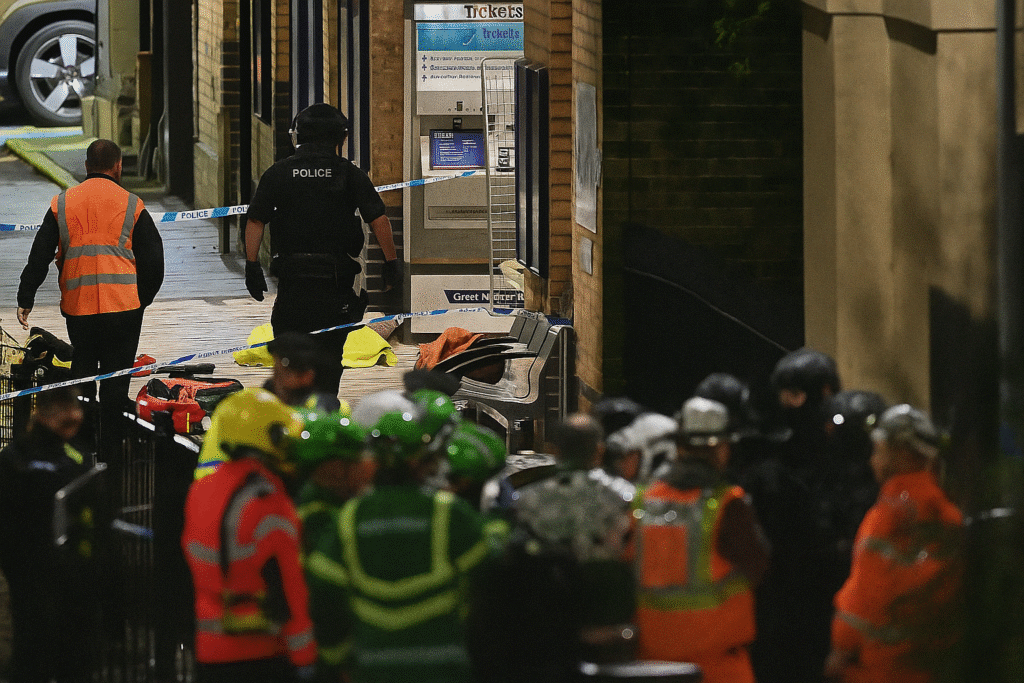
The incident occurred on Friday evening aboard a train traveling between Cambridge and King’s Lynn, when a 33-year-old man allegedly attacked multiple passengers with a knife. One person was pronounced dead at the scene, while two others suffered serious injuries. British Transport Police (BTP) arrested the suspect within minutes of the train being halted at Waterbeach station.
“This was a senseless act of violence that has shaken us all,” said Detective Chief Inspector Sam Lucas of the BTP’s Major Crime Unit. “Our investigation remains active, and we are working to establish the circumstances leading up to the attack. We believe this was an isolated incident.”
Victim Identified, Suspect Charged with Murder
Authorities on Sunday identified the victim as David Holloway, a 45-year-old engineer from Ely. The suspect, Luke Palmer, appeared before Cambridge Magistrates’ Court on Monday charged with murder, two counts of attempted murder, and possession of an offensive weapon.
Prosecutors told the court that Palmer had boarded the train “armed and intent on causing serious harm.” The motive remains unclear, though early reports suggest a verbal altercation may have preceded the attack.
Palmer has been remanded in custody until his next hearing at Cambridge Crown Court later this month. The judge imposed reporting restrictions to protect witnesses, as the prosecution prepares to introduce CCTV footage and eyewitness testimonies.
The fatal stabbing marks the second train-related knife killing in Britain this year, highlighting what experts say is the growing reach of violent crime into public spaces once considered safe.
Knife Crime: A Deepening National Crisis
Knife crime in the U.K. has surged to its highest levels since records began, according to the Office for National Statistics (ONS). Between March 2022 and March 2023, England and Wales recorded more than 50,000 knife-related offenses—a 7% increase year over year.
The Home Office reports that knife-enabled homicides have nearly doubled since 2013, with London, Birmingham, and Manchester accounting for nearly half of all cases. However, rural and commuter regions like Cambridgeshire are now seeing a sharp uptick in stabbings and assaults.
“This is not just an urban issue anymore,” said criminologist Dr. Rachel Donovan of King’s College London. “We’re seeing knife violence spreading along transport corridors and into market towns, largely driven by youth gang disputes, mental health crises, and the availability of cheap weapons online.”
The Metropolitan Police has seized over 10,000 knives in raids this year, yet officers warn that the proliferation of small, easily concealed blades makes prevention difficult.
Government Under Pressure to Act
Following the Cambridgeshire attack, Home Secretary James Cleverly faced renewed pressure to deliver on the government’s long-promised “Serious Violence Reduction Strategy.” In a statement Saturday, Cleverly said the government remains “committed to tackling knife crime through education, enforcement, and community action.”
However, opposition leaders criticized what they called a “patchwork response.” Labour’s Shadow Home Secretary Yvette Cooper called the Cambridgeshire stabbing “a stark reminder that government inaction costs lives.”
“Knife crime has become normalized because there’s no coherent, national prevention framework,” Cooper said. “We need early intervention, not just reactive policing.”
The government has allocated £200 million toward its “Violence Reduction Units” (VRUs), which coordinate local partnerships between police, schools, and health agencies. But experts say these units remain underfunded and unevenly distributed, with only 20 out of 43 police forces currently hosting them.
Communities in Fear, Families in Mourning
In Cambridgeshire, shock and grief permeated the quiet villages surrounding Ely and Waterbeach. Local residents left flowers at the station platform, where Holloway was attacked.
“He was just on his way home from work,” said neighbor Emma Fletcher, fighting back tears. “He took that train every day. You never think something like this could happen here.”
Several community groups have called for tighter security measures aboard trains, including increased police patrols and random bag checks during peak hours. Great Northern Rail, which operates the route, said it is “reviewing all onboard safety protocols” in cooperation with the BTP.
Transport unions, however, warned against reactive over-policing. “Safety must come from prevention and mental health support, not just more officers with bodycams,” said Mick Lynch, General Secretary of the RMT union.
The Roots of Violence
Experts say Britain’s knife problem is complex and multifactorial. Economic precarity, social isolation, and cuts to youth services have all been cited as contributing factors.
A 2023 Home Office study found that areas experiencing the largest funding cuts to youth programs saw a 14% higher increase in knife-related arrests. Many charities say intervention must start earlier—before vulnerable teens turn to weapons for protection or identity.
“Every stabbing is a failure of the system,” said Ben Lindsay, founder of Power the Fight, a London-based anti-violence charity. “We can’t just keep reacting to tragedy. We need to invest in prevention that gives young people hope and alternatives.”
A Country on Edge
The Cambridgeshire tragedy has reignited debate about whether the U.K. should introduce stricter knife ownership laws, similar to Australia’s post-1996 gun reforms. The Home Office is considering a nationwide ban on large hunting knives and zombie blades, which are often sold online.
For now, families across Britain are left to cope with grief and uncertainty. At Ely Cathedral, a candlelight vigil drew hundreds Sunday evening.
As the church bells tolled, local councillor Sarah Houghton summed up the mood: “It’s not just about one man’s death. It’s about a country asking itself how much violence it’s willing to tolerate before something truly changes.”