By Harshit
ATLANTA, NOV. 20 —
Growing concerns over infant safety intensified this week as state officials revealed that ByHeart’s recalled baby formula is still being found on retail shelves across several states, even as laboratory tests confirmed contamination with Clostridium botulinum, the bacterium responsible for life-threatening infant botulism. More than 30 babies across the United States have now been hospitalized in the expanding outbreak.
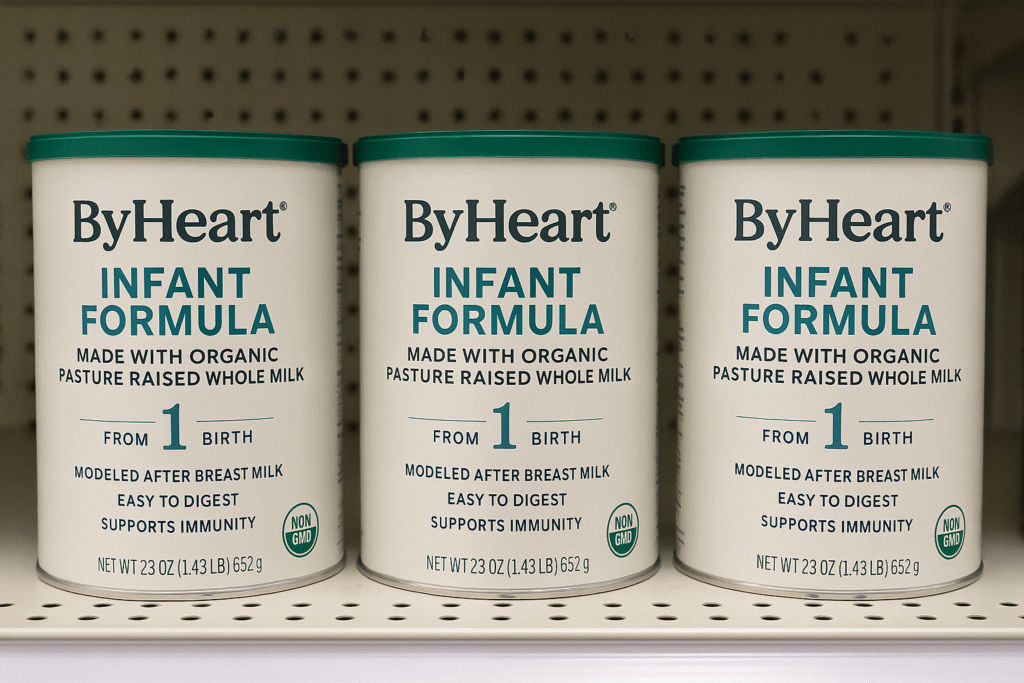
ByHeart — a New York–based formula manufacturer — announced late Wednesday that independent food-safety testing detected C. botulinum in some samples of its Whole Nutrition infant formula. The company did not disclose how many samples tested positive but confirmed that the findings were immediately shared with the U.S. Food and Drug Administration (FDA).
“We are working to investigate the facts, conduct ongoing testing to identify the source, and ensure this does not happen to families again,” the company stated on its website.
The FDA has not yet issued a formal response to the latest findings, and results from federal inspections at ByHeart production facilities in Allerton, Iowa, and Portland, Oregon remain pending.
Retail Checks Reveal Recalled Formula Still on Shelves
Despite a nationwide recall covering all ByHeart cans and single-serve sticks, state investigators continue to find the product lingering in stores:
- Oregon: 9 out of more than 150 stores still had formula on shelves this week.
- Minnesota: 4 stores were found selling recalled formula during 119 checks conducted between Nov. 13–17.
- Arizona: State officials also discovered recalled product available for purchase.
“No affected product should be sold or consumed,” Minnesota officials warned, urging businesses and caregivers to remain vigilant.
Walmart, one of the largest sellers of the formula, said it implemented an immediate sales restriction, removed remaining stock, and notified customers who had purchased the product. ByHeart formula typically retailed for about $42 per can.
More Than 30 Hospitalized Babies Across 15 States
Federal health authorities confirmed Wednesday that at least 31 infants in 15 states have developed suspected or confirmed infant botulism linked to ByHeart formula since August. Cases range from 2 weeks to 6 months old, with the most recent case reported on Nov. 13. All affected infants were hospitalized and received BabyBIG, the antibody treatment used in infant botulism cases. No deaths have been reported.
The affected states include:
Arizona, California, Illinois, Kentucky, Minnesota, North Carolina, New Jersey, Oregon, Pennsylvania, Rhode Island, Texas, Washington, and others still under investigation.
California had previously confirmed the presence of C. botulinum in an open can of ByHeart formula fed to a sick infant.
A Dangerous and Often Silent Disease
Infant botulism occurs when a baby ingests C. botulinum spores, which germinate in the gut and release powerful neurotoxins. Symptoms can take up to 30 days to appear and may include:
- Constipation
- Weak cry or flat facial expression
- Drooping eyelids
- Poor feeding
- Lethargy or “floppiness”
- Difficulty swallowing or breathing
Without early treatment, botulism can progress to paralysis and respiratory failure.
Because ByHeart distributed roughly 200,000 cans of formula per month, federal officials fear many families may still have the product at home.
Consumers are urged to:
- Stop using all ByHeart formula immediately.
- Mark cans “DO NOT USE.”
- Store them for at least one month in case testing is needed if symptoms develop.
Hotline and Ongoing Investigation
California’s Infant Botulism Treatment and Prevention Program — the national authority on infant botulism — has launched a dedicated public hotline after being overwhelmed with calls:
📞 833-398-2022
(Available daily from 7 a.m. to 11 p.m. PST)
The hotline provides guidance to parents, caregivers, and health professionals navigating formula disposal, symptom monitoring, and potential exposure.
Federal and state investigations are ongoing, including batch testing, environmental sampling, and supply-chain tracing. Officials say the contamination source has not yet been identified.