
By Harshit
LOS ANGELES, Nov. 13, 2025 —
Corporate travel in 2025 is rewriting the American business map. The term “business travel hotspots in the US 2025” has taken on new meaning, as companies shift away from traditional destinations like New York and San Francisco toward emerging hubs such as Charlotte, Orlando, Nashville, Denver, and Tampa. This growing list of US business travel hotspots reflects a deeper change in how organizations plan meetings, conferences, and corporate offsites.
According to the Global Business Travel Association (GBTA), overall business travel spending in the United States has returned to 95% of pre-pandemic levels. Yet the real story lies in where that spending is happening. Mid-sized, cost-efficient cities are increasingly competing with — and sometimes surpassing — legacy metros.
The Rise of New Business Travel Hotspots in the US
The 2025 business landscape shows that value, convenience, and employee experience now matter more than prestige. “Companies want flexibility, affordability, and a city that delivers on infrastructure,” said Daniel Suarez, travel analyst at Morning Consult. “That’s why the emerging business travel cities in the United States are gaining momentum.”
Charlotte, Orlando, Nashville, Denver, and Tampa each combine strong connectivity with vibrant local economies, offering a mix of corporate appeal and personal livability that appeals to the hybrid-work generation.
Charlotte: A Reimagined Banking Capital
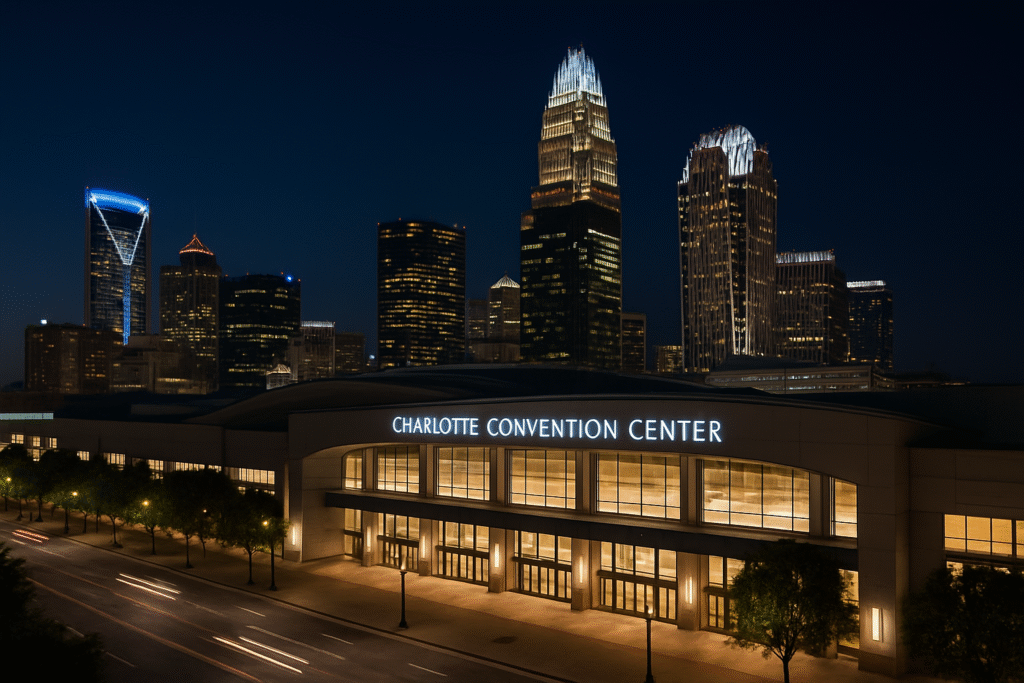
Charlotte, North Carolina — once known primarily for banking — is now positioning itself as a major player in business travel trends 2025. With a renovated convention center, new hotel capacity, and expanded flight routes, the city has become a favorite for East Coast financial and tech conferences.
“Charlotte’s corporate event bookings are up 18% compared to 2023,” said Erin Thomas from Visit Charlotte. “Our city’s balance between affordability and accessibility makes it one of the most promising business travel destinations in the US 2025.”
Orlando: Merging Work and Leisure
Orlando has long been synonymous with tourism, but it’s now doubling as a serious corporate travel hub. The city’s convention infrastructure, extensive hotel base, and direct flight connections have made it ideal for companies planning multi-day conferences and incentive programs.
In 2025, Expedia’s business travel report ranked Orlando among the top business travel hotspots in the US, citing a 31% surge in bookings year over year. “Executives are embracing bleisure — blending business with leisure,” said travel consultant Dana Li. “Orlando offers the best of both worlds.”
Nashville: Creativity Meets Commerce
Nashville’s evolution from music mecca to corporate meeting magnet highlights how lifestyle cities are reshaping travel trends. Tech startups, healthcare corporations, and marketing firms now choose Nashville for company retreats and hybrid events.
“Nashville combines affordability with authenticity,” said Julie Henson, a Dallas-based event organizer. “People remember the experiences here — that’s invaluable for corporate engagement.” New spaces like Fifth + Broadway and the Nashville Yards are built to serve this exact demand.
Denver and Tampa: Strong Contenders
Denver and Tampa represent the western and southeastern wings of this new travel economy.
Denver’s location, high quality of life, and proximity to outdoor recreation make it an ideal setting for leadership workshops and team-building conferences.
Meanwhile, Tampa’s rise stems from Florida’s pro-business policies, modern convention facilities, and its booming financial and logistics sectors. In fact, the U.S. Travel Association reports a 25% increase in Tampa’s corporate travel spending in 2025, a clear indicator that it’s among the most dynamic business travel cities in the US today.
Why the Shift Matters
This nationwide movement toward new US business travel hotspots reflects three major corporate priorities:
- Cost Efficiency – Hotels and venues in emerging cities can be 40–60% cheaper than legacy metros.
- Hybrid Work Compatibility – Smaller, flexible spaces suit companies adopting hybrid travel models.
- Employee-Centric Travel – Companies increasingly choose cities that boost morale, creativity, and experience.
“Business travel in 2025 is about maximizing impact while minimizing cost,” said Suarez. “That’s why the conversation is shifting from where you have to go to where it makes sense to go.”
Economic Impact Across the United States
The expansion of business travel hotspots across the US is generating wide economic benefits. Airlines are adding more direct routes to secondary cities, while hospitality sectors are seeing record investments.
Charlotte’s airport expansion will create over 10,000 new jobs by 2026, and Orlando’s ongoing convention district upgrade adds another 400,000 square feet of meeting space.
Denver and Nashville are both seeing a surge in new hotel openings, while Tampa’s downtown transformation is being guided by corporate demand for year-round event flexibility.
Together, these developments underline a key theme: the decentralization of corporate America’s travel map.
Looking Ahead to 2026 and Beyond
Industry analysts predict that by 2027, nearly half of all U.S. corporate travel spending will occur in these mid-tier or “emerging metro” markets. While megacities will retain their global draw, the future of business travel in the US will be more distributed, balanced, and experiential.
“Companies are no longer tied to legacy destinations,” said Li. “They’re driven by experience, connectivity, and ROI — and that’s why cities like Charlotte, Orlando, and Nashville are thriving.”