
By Harshit
NEW YORK, Nov. 25, 2025
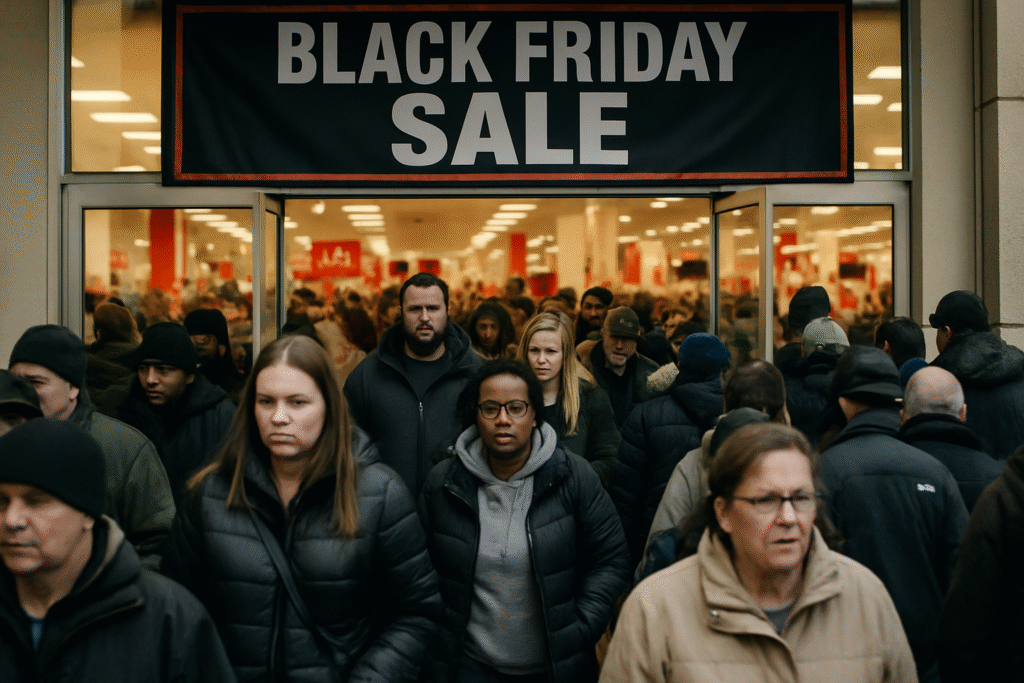
Black Friday, long considered one of the biggest shopping days of the year, is shaping up differently in 2025 as American consumers confront persistent inflation, higher living costs, and the latest round of tariff hikes from President Donald Trump’s administration. New survey data shows shoppers becoming far more cautious, signaling a challenging start to the holiday retail season.
A new Deloitte survey released Monday found that U.S. consumers plan to spend an average of $622 between Nov. 27 and Dec. 1, down 4% from last year. The decline, Deloitte noted, reflects mounting financial pressure on households, where elevated food, housing, and utility costs continue to strain monthly budgets.
Consumers Grow More Cautious Ahead of Holiday Weekend
The Black Friday–Cyber Monday stretch is typically seen as the unofficial kickoff to holiday shopping. But this year, many consumers began buying earlier, hoping to take advantage of sales during October and November—including Amazon Prime Day—and to get ahead of tariff-related price increases.
Stephanie Carls, a retail insights expert at RetailMeNot, said shoppers were being more strategic than ever. “They are using every tool that they can to protect those budgets,” she said, pointing to coupon stacking, cash-back offers, and earlier deal-hunting as dominant trends.
The drive for value is evident. Deloitte found that 38% of consumers plan to buy items only if they are at least 50% off, while 60% have already filled online carts in anticipation of Thanksgiving week deals.
“Value continues to be the centerpiece of the holiday season,” Brian McCarthy, principal and retail strategy leader at Deloitte Consulting, said. With prices still elevated across key categories—including groceries, apparel, and home goods—shoppers are more sensitive to deep discounts and reluctant to splurge.
Rising Debt and Tight Budgets Challenge All Income Groups
Debt burdens and stagnant wage growth relative to inflation are affecting consumers across income levels. Multiple studies show that credit card balances remain historically high, interest rates remain elevated, and more households are struggling to cover monthly expenses.
A LendingTree report found that although 64% of Americans plan to shop on Black Friday, 39% expect to spend less than last year due to higher prices.
Retail analysts say inflation has reshaped consumer behavior more than any other factor this season. Many households are shifting money toward essentials and scaling back discretionary spending—even as holiday promotions ramp up.
Impact of the Government Shutdown and Tariff Hikes
A major headwind this year has been the 43-day federal government shutdown, the longest in U.S. history, which disrupted paychecks for more than a million federal workers. The National Retail Federation (NRF) warned in its holiday sales outlook that income disruptions just before the peak shopping season added new strain to already fragile budgets.
The Trump administration’s recent tariff increases have also raised the price of many imported goods, including electronics, toys, and apparel—categories central to Black Friday shopping. Analysts say consumers entered the season already wary of potential price hikes.
A Clearly Divided Consumer Landscape: The ‘K’-Shaped Economy
While overall economic growth remains solid on paper, households are experiencing the recovery unevenly. This “K-shaped” dynamic—where higher-income Americans thrive while lower-income households struggle—has become more pronounced.
According to Scott Wren, senior global market strategist at Wells Fargo Investment Institute, many middle- and lower-income consumers have seen their purchasing power eroded by five years of elevated inflation. “Their buying power has diminished as the overall price level of goods and services has risen noticeably,” he wrote.
Meanwhile, wealthier households have benefited from equity market gains, home price appreciation, and higher investment income. Yet even among these groups, Deloitte found signs of caution, with many high-income households planning to reduce their Black Friday through Cyber Monday spending this year.
Retailers Prepare for a More Difficult Season
Major retailers are responding with aggressive promotions, flexible payment options, and extended return deadlines as they work to attract shoppers in a colder spending environment. Analysts expect strong competition across electronics, apparel, home goods, and toys.
But with consumers focusing heavily on discounts, retailers face shrinking profit margins. Combined with tariff-related supply chain costs, the 2025 holiday season is shaping up to be one of the most competitive in recent years.