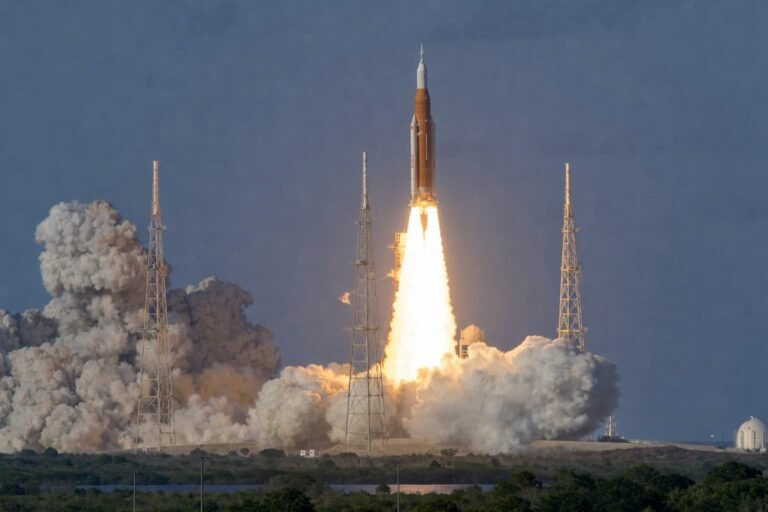

HOUSTON, APRIL 6, 2026 —
Key Takeaways
- At 1:46 PM EDT today, the Artemis II crew surpassed 248,655 miles from Earth — breaking the distance record set by Apollo 13 in April 1970 that has stood for 56 years, becoming the most distant humans in history
- The crew reached their maximum distance of 252,760 miles at approximately 7:02 PM EDT — roughly 4,100 miles farther from Earth than any humans have ever traveled
- During a six-hour lunar flyby, the four astronauts photographed 35 geological features on the Moon’s surface, observed portions of the far side that no human has ever seen with the naked eye, and witnessed a total solar eclipse from behind the Moon
At 1:46 PM Eastern time on Monday, April 6, 2026, four human beings became the most distant from Earth that any member of our species has ever been.
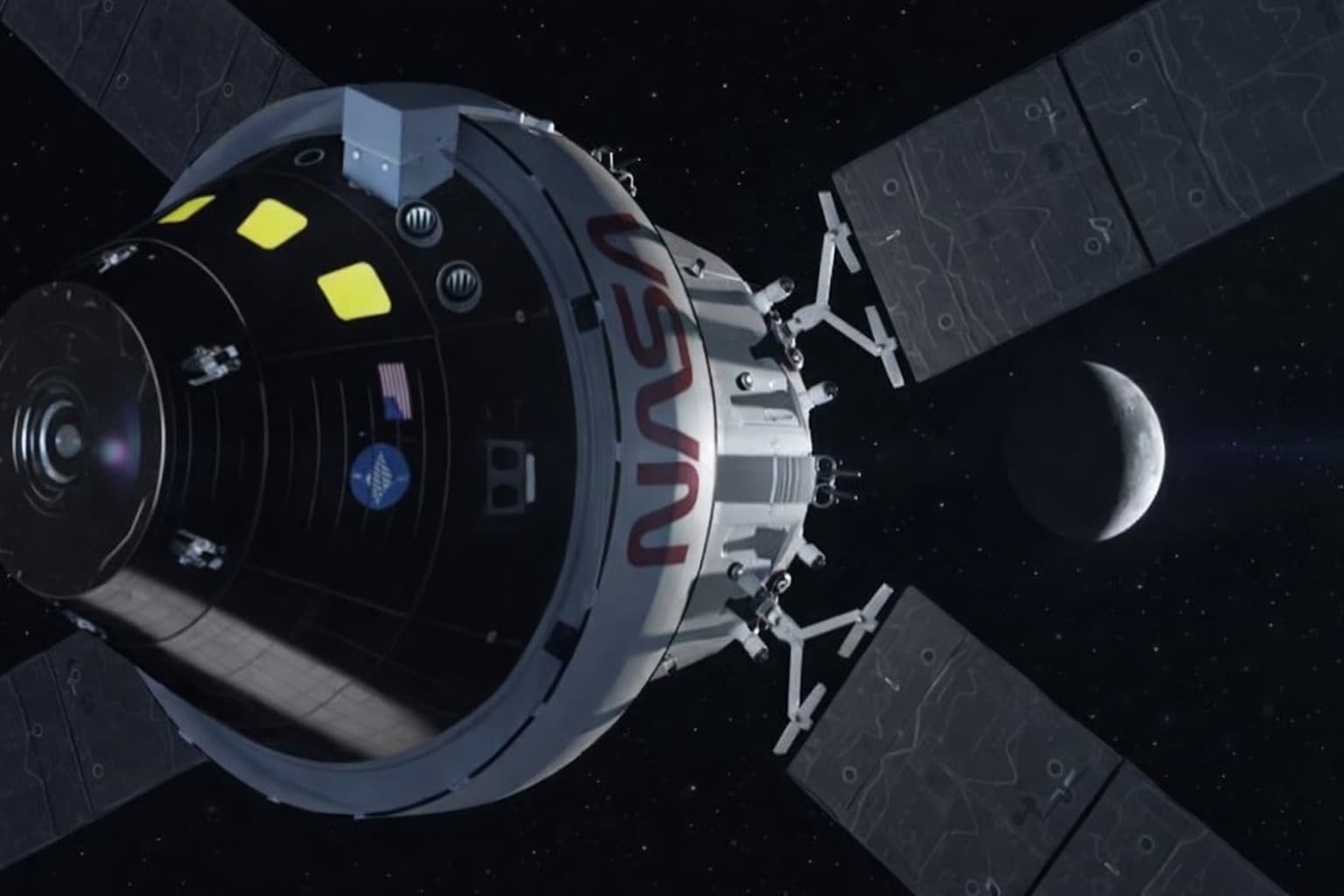
Reid Wiseman, Victor Glover, Christina Koch, and Jeremy Hansen — the crew of NASA’s Artemis II mission — broke the distance record set by the astronauts of Apollo 13 in April 1970, surpassing 248,655 miles from Earth as their Orion spacecraft, named Integrity, swept through its closest approach to the Moon. The record that has stood for 56 years fell on a Monday afternoon, in the middle of spring homebuying season, while four astronauts took photographs of a gray, pockmarked world no human had seen up close since December 1972.
The moment was notable for what it was not: no one landed on the Moon today. Artemis II is a test flight — its purpose is to verify that the Orion capsule’s life support systems, navigation, communications, and manual piloting all work as designed with a human crew aboard. But the distance record is real, and what the crew saw during their six-hour flyby is scientifically significant in ways that will take months to fully process.
What the Flyby Looked Like — A Timeline
The lunar flyby officially began at 2:45 PM EDT when Orion’s main cabin windows swung toward the Moon and the crew was close enough to begin scientific observations. At closest approach — 4,070 miles from the lunar surface — the Moon appeared roughly the size of a basketball held at arm’s length from inside the capsule.
Working in pairs, the astronauts photographed 35 pre-selected geological features that NASA scientists had identified as high priority. Their targets included Orientale Basin — a sprawling impact site with three concentric rings whose outermost edge stretches nearly 600 miles across — and portions of the lunar south pole, where NASA plans to land a crew as early as 2028 on Artemis IV. The astronauts also passed over the landing sites of Apollo 12 and Apollo 14 from 1969 and 1971 — sites their predecessors walked on, now visible only as gray smudges in a gray landscape.
At 6:47 PM EDT, Integrity slipped behind the Moon and communications with Mission Control in Houston went silent. For 40 minutes, the crew was completely cut off from Earth — the first humans to experience that isolation since the Apollo program ended. During that window, at approximately 6:02 PM, the spacecraft made its closest approach to the lunar surface.
Behind the Moon, the crew witnessed something no human has ever seen from this vantage point: a total solar eclipse, as the Moon moved between Orion and the Sun. The solar corona — the Sun’s outermost atmosphere — glowed around the Moon’s dark silhouette for nearly an hour. Mission specialist Christina Koch, who wore eclipse earrings to the press conference the day before the flyby, called the opportunity to observe the corona from deep space a scientific prize.
Communications restored at approximately 7:27 PM EDT as Orion emerged from behind the Moon and began its four-day return journey to Earth.
Artemis II Flyby — Key Milestones
| Time (EDT) | Event |
|---|---|
| 1:46 PM | Apollo 13 distance record broken — 248,655 miles |
| 2:45 PM | Lunar flyby observations begin |
| 6:02 PM | Closest approach — 4,070 miles from lunar surface |
| 6:47 PM | Loss of signal — behind the Moon |
| 7:02 PM | Maximum distance from Earth — 252,760 miles |
| 7:27 PM | Signal restored — crew emerges from far side |
| 9:20 PM | Flyby period ends — heading home |
| April 10 | Splashdown in Pacific off San Diego — 8:07 PM EDT |
What They Saw That No Human Has Ever Seen
The far side of the Moon — the hemisphere that permanently faces away from Earth — has never been seen by human eyes. Robotic probes have photographed it. China’s Chang’e 4 lander touched down there in 2019. But no person has ever looked out a window and seen it directly, with unaided eyes, in real time.
The Artemis II crew did that today. “Definite chunks of the far side that have never been seen” by humans were visible, according to NASA geologist Kelsey Young, who led the lunar science preparation. The angle of sunlight shifted as Orion swung around the Moon, progressively illuminating different terrain and revealing both familiar nearside features and the stranger, more heavily cratered landscape of the far side.
The crew called down observations in real time as they photographed. Those descriptions and images will be downloaded overnight and reviewed by the science team at Johnson Space Center in Houston — beginning a data analysis process that will continue for months.
Why This Matters Beyond the Record
Artemis II is not a scientific mission in the traditional sense. It is primarily an engineering test — verifying that Orion’s systems work reliably in deep space with humans aboard before the program commits to putting people on the lunar surface.
But today established something that engineering specifications cannot fully capture: human beings can reach this distance, survive, observe, and work. The systems held. The crew is healthy. And the data collected during the flyby — on radiation exposure, life support performance, manual control inputs, and geological observation — will directly inform the design of the Artemis III and IV missions that will attempt Moon landings.
Pilot Victor Glover — the first Black astronaut assigned to a lunar mission — reflected on the significance of flying to the Moon during Holy Week. Seeing Earth from this distance, he said, brought home the fact that humanity exists as one on an oasis in “a whole bunch of nothing.”
The crew begins their four-day journey home on Tuesday. Splashdown is scheduled for April 10 in the Pacific Ocean near San Diego. They will then be the most decorated test pilots in the history of human spaceflight — for a mission that, technically, went exactly as planned.