
By Harshit
December 9, 2025 — Christmas 2025 marks a turning point in how technology intersects with the holiday season. Artificial intelligence has moved beyond novelty features and experimental tools to become a core driver of how people shop, personalize gifts, manage logistics, and interact with brands during the busiest retail period of the year.
Rather than operating quietly behind the scenes, AI now actively shapes consumer decisions, optimizes global supply chains in real time, and raises new questions around privacy, fairness, and trust. This holiday season represents the first truly AI-driven Christmas—one where intelligence, automation, and personalization converge at scale.
AI as the Personal Shopper
The most visible transformation is taking place in online shopping. Traditional keyword searches and category browsing are being replaced by conversational, agent-driven commerce.
AI systems such as Google’s Gemini, OpenAI-powered assistants, and retailer-specific agents like Amazon’s Rufus or Walmart’s Sparky now function as highly capable personal shoppers. Instead of manually filtering options, consumers describe what they want in natural language, and AI systems handle discovery, comparison, and decision support.
A shopper can request gift ideas within a specific budget, interest set, and delivery window, and receive curated recommendations that factor in availability, sentiment analysis of reviews, and shipping constraints. This collapses the traditional multi-step shopping journey into a single interaction.
Virtual visualization tools have further reduced friction. AI-powered augmented reality allows shoppers to preview furniture in their living rooms, visualize decorations, or try on clothing digitally. These tools have contributed to lower return rates and greater buyer confidence, addressing one of e-commerce’s long-standing challenges.
Price optimization is increasingly automated as well. AI agents track historical pricing, competitor movement, and inventory levels, alerting consumers to optimal purchase windows—or executing purchases automatically once predefined conditions are met.
Generative AI and Hyper-Personalized Holidays
Beyond retail transactions, generative AI is redefining how people create and share holiday experiences.
Photos, videos, and digital memories are being transformed through AI-powered editing tools that enhance imagery or place families into entirely new festive settings. These systems allow users to create professional-quality content through simple text prompts, turning personal moments into highly shareable digital keepsakes.
Personalized physical gifts have also evolved. AI-generated storybooks featuring children as main characters, customized ornaments and figurines, and algorithmically designed scents or artwork are increasingly accessible beyond luxury markets. What was once bespoke craftsmanship is now scalable personalization.
This shift is redefining value in gift-giving. Emotional relevance and uniqueness are becoming more important than brand recognition or price point, driven largely by AI’s ability to tailor outputs at minimal marginal cost.
The Invisible Engine: AI in Holiday Logistics
Behind the consumer-facing experience, AI plays an even larger role in ensuring Christmas runs smoothly.
Retailers are relying on advanced machine learning models to forecast demand across tens of thousands of products. These systems analyze historical sales data, social media trends, weather forecasts, and regional behavior to position inventory accurately months in advance.
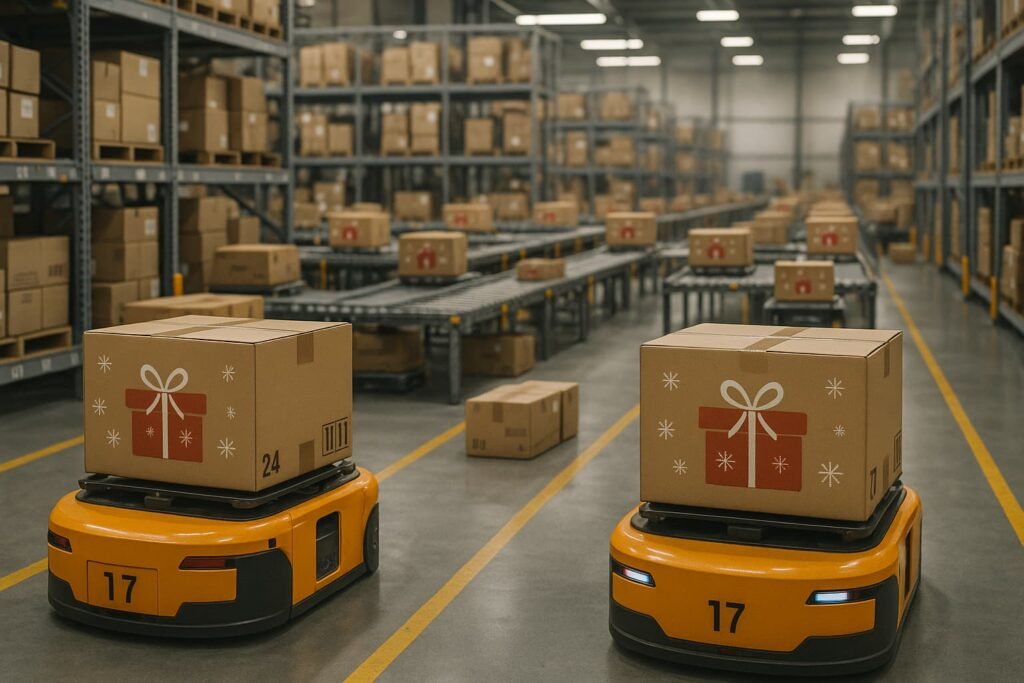
Once the season is underway, AI continuously adjusts fulfillment strategies. Routing algorithms balance warehouse capacity, carrier availability, and delivery deadlines in real time, reducing costs while maintaining promised arrival dates.
Dynamic pricing systems also operate throughout the season, adjusting prices based on demand signals, stock levels, and market competition. While controversial, these systems have become central to maintaining retailer margins amid volatile consumer behavior.
Ethical Concerns and Consumer Trust
As AI becomes deeply embedded in holiday routines, ethical considerations have moved to the forefront.
AI-driven commerce requires access to highly personal data, including purchase history, preferences, and sometimes location or calendar information. Transparency around how this data is used has become essential to maintaining trust, particularly as consumers become more aware of algorithmic decision-making.
Bias remains a critical concern. Recommendation systems trained on historical data risk reinforcing outdated stereotypes or unequal pricing outcomes if not carefully audited. Regulators and consumer advocates are increasingly focused on ensuring AI systems operate fairly and do not manipulate consumer behavior in subtle or coercive ways.
The 2025 holiday season highlights a broader reality: convenience and intelligence must be balanced with accountability. Trust has become a competitive differentiator.
A Defining Moment for the Holiday Season
Christmas 2025 represents a structural shift, not a temporary trend. Artificial intelligence has transitioned from backend optimization to front-stage experience creation, altering how people discover, purchase, and personalize their holidays.
For consumers, AI delivers unprecedented ease, relevance, and creativity. For retailers, it offers resilience, efficiency, and precision at scale. For both, the future depends on how responsibly these systems are governed.
The technology now shapes the season—but the responsibility for ensuring it enhances joy, fairness, and trust remains firmly human.