
By Harshit
SAN FRANCISCO, DEC. 3 —
The convergence of Artificial Intelligence (AI) and hyper-personalized health — often described as P4 Medicine (Predictive, Preventive, Personalized, and Participatory) — is emerging as one of the most important and enduring transformations in the U.S. healthcare landscape. This shift is evergreen because it targets three long-standing national challenges: the rising cost of reactive healthcare, the surge in chronic disease, and America’s growing demand for an extended healthspan — not simply living longer, but living healthier for longer.
This movement represents a structural transformation from population-level treatment toward precision-level optimization, powered by deep data, continuous monitoring, and AI-driven insight.
1. Precision Medicine and Genomics: AI Becomes the Engine of Individualized Care
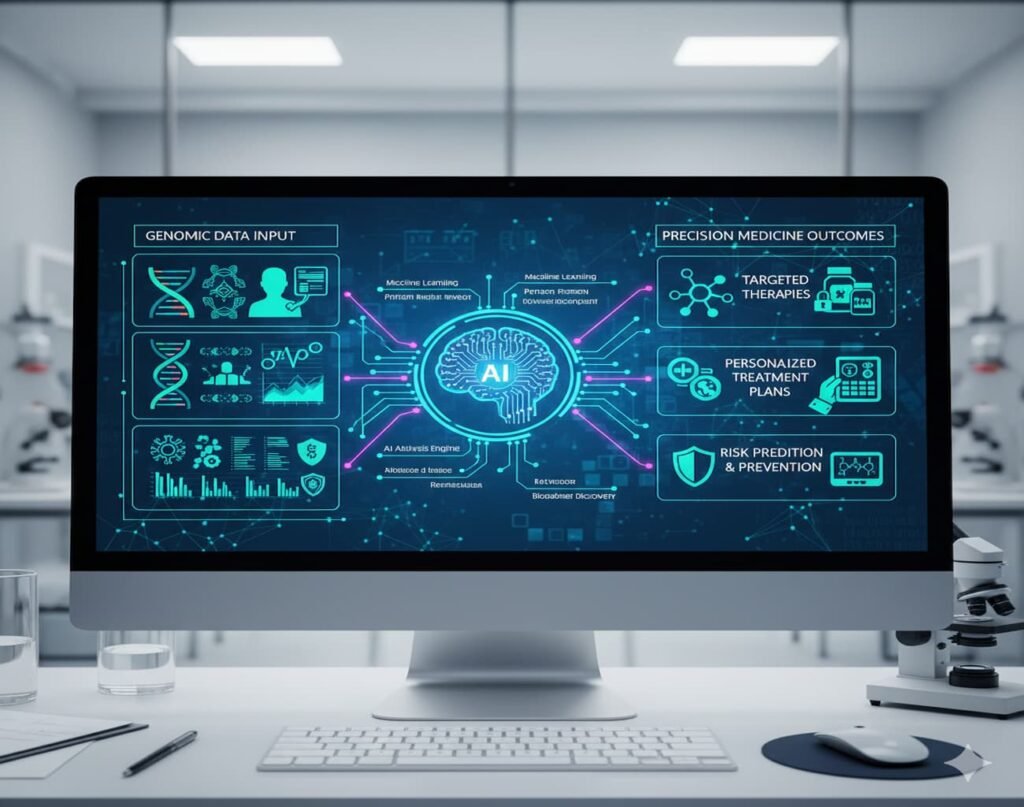
At the core of hyper-personalized medicine is Precision Medicine, a paradigm that relies on individual differences in genes, lifestyle, and environment. But the complexity and scale of the data involved far exceed human processing ability — making AI indispensable.
Genomics and Advanced Diagnostics
AI models can analyze enormous genomic datasets, including Whole Exome Sequencing results or CRISPR-related data, to identify biomarkers associated with disease risk, drug tolerance, or therapeutic response. In oncology, these AI-powered systems are used to match patients with targeted therapies by interpreting the genetic signature of their tumors — a level of specificity that was impossible in traditional cancer care.
Drug Discovery Acceleration
Generative AI algorithms simulate millions of molecular structures in silico, predicting which compounds are most likely to succeed long before any drug reaches the lab. This dramatically reduces the cost and time associated with pharmaceutical R&D — compressing timelines from years to months and eliminating vast numbers of dead-end candidates.
2. Remote Patient Monitoring and IoMT: Continuous Data for Continuous Care
This pillar is where wearable devices, including Continuous Glucose Monitors (CGMs), fit directly into the future of medicine. The Internet of Medical Things (IoMT) connects medical-grade sensors, wearables, and software platforms into a real-time health network.
Continuous Data Flow Beyond the Clinic
Smartwatches, Oura rings, CGMs, and other sensors now generate uninterrupted biometric streams: glucose variability, heart rate variability (HRV), sleep architecture, respiration, body temperature, and more. Healthcare is no longer bound to clinic visits — it now extends into every hour of a patient’s life.
Predictive Analytics — Detecting Illness Before Symptoms Appear
AI analyzes a person’s day-to-day biometric patterns and establishes a personalized physiological baseline. A small deviation — such as a drop in HRV paired with a rise in resting heart rate — can be flagged as a sign of an impending infection or cardiac stress days before symptoms appear. This is genuinely pre-symptomatic medicine: intervening before illness develops rather than reacting after damage occurs.
3. Longevity Science and the Performance-Driven Consumer Health Market
The consumer-facing dimension of this trend lies in the explosive growth of the longevity, wellness, and health-optimization market. Americans are increasingly willing to invest in tools that quantify and lengthen their healthspan.
Biological Age as a New Health Metric
AI models can merge epigenetic signals with clinical biomarkers to compute biological age — a far more actionable number than chronological age. This metric motivates behavior change and provides a measurable target for lifestyle interventions.
Hyper-Personalized Coaching at Scale
AI-driven platforms fuse data from wearables, lab tests, and genetic reports to create individualized recommendations for nutrition, exercise, sleep improvement, and supplementation.
This is biohacking at population scale — not generalized, one-size-fits-all advice, but personalized optimization based on a user’s unique physiology. The CGM is a perfect example: AI analyzes how a specific user responds to an almond croissant versus a protein smoothie, generating dietary guidance tailored solely to that individual.
Why This Trend Is Permanently Evergreen
A National Economic Imperative
The U.S. spends more per person on healthcare than any developed nation — largely on late-stage, reactive care. AI-driven prevention is not optional; it is economically necessary to avoid long-term insolvency.
Aging Population and Chronic Disease Burden
As the U.S. population ages, demand for technologies that extend functional health and reduce dependency on expensive late-stage interventions will permanently increase.
Infinite Data Growth
As sensors like CGMs become cheaper and more common, the volume of health data produced each year will grow exponentially. AI will remain essential to transform this fragmented, massive data ocean into meaningful clinical insight.