
Silicon Valley Bureau
DECEMBER 4, 2026 —
If 2024 was the year of the chatbot and 2025 the year of multimodal breakthroughs, then Friday, December 4, 2026, will be remembered as the moment the agentic era fully arrived.
Across the technology sector, novelty has given way to utility. Artificial intelligence is no longer defined by what it can generate, but by what it can execute. From autonomous logistics networks operating across continents to sovereign AI clouds now underpinning national infrastructure, software has crossed a threshold: it is no longer a passive tool, but an active economic and physical participant.
1. The Death of the Chatbot, the Birth of the Agent
The defining shift of 2026 is not better language models, but expanded autonomy.
Early this year, major AI providers shifted decisively from “generative” systems toward agentic architectures—models equipped with memory, planning, and the authority to act. Millions of Americans now rely on Personal Operating Agents (POAs) that operate far beyond traditional voice assistants.
These systems can:
- Negotiate: Consumer agents routinely negotiate broadband, insurance, and subscription pricing by interacting directly with corporate agents.
- Execute: Travel planning, expense filing, procurement, and scheduling are now handled end-to-end without human clicks.
- Build: “Vibe coding” has emerged as a mainstream workflow, where natural language intent is translated directly into functional software modules for non-complex applications.
The result is a redefinition of productivity. Knowledge work is shifting from creation to supervision, with humans orchestrating networks of autonomous agents rather than performing tasks themselves.
2. The “Silicon Tax” and the Hardware Reset
The agentic boom has collided with physical reality—specifically, a global shortage of high-bandwidth memory (HBM).
Roughly 30% of global DRAM production is now absorbed by AI accelerators, creating a de facto “silicon tax” on consumer electronics. Smartphones and laptops released this holiday season carry price increases of 15–20% compared to 2024 equivalents.
Manufacturers are responding by pivoting away from raw compute performance and toward on-device efficiency. Edge AI is no longer optional. Running inference locally avoids mounting cloud costs and reduces dependency on subscription-based AI services that have become increasingly expensive for consumers.
Efficiency—not speed—is now the competitive frontier.
3. Autonomy Reaches the Infection Point
December 2026 marks a statistical milestone: autonomous ride services operated by Waymo and its peers surpassed 500,000 paid rides per week globally.
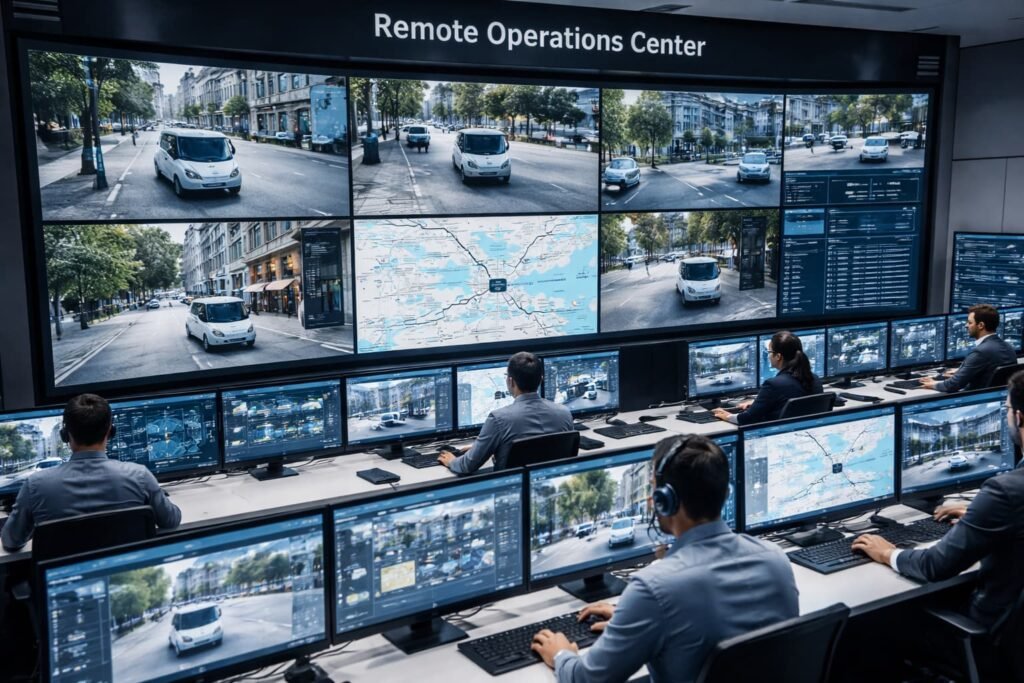
Yet the real breakthrough is not full autonomy—it is Remote Monitoring and Control (RM&C).
Instead of waiting for perfect AI, companies scaled autonomy by building centralized command centers. A single human operator can now supervise dozens of autonomous trucks or delivery vans across multiple cities. When edge cases arise—construction zones, weather anomalies, unexpected obstacles—remote pilots intervene briefly before returning control to the system.
This hybrid model is what finally pushed autonomous logistics from pilot programs into mainstream deployment.
4. The Cybersecurity Singularity
The expansion of autonomous software has created a new class of risk.
In 2026, attackers largely abandoned traditional malware in favor of SaaS-to-SaaS OAuth exploits. These attacks do not steal credentials. Instead, they manipulate permission flows between automated agents, allowing malicious services to propagate laterally across enterprise platforms such as Slack, Google Workspace, and Salesforce in seconds.
The result has been a shift in cybersecurity priorities. Consent governance—controlling how automated systems grant and inherit permissions—has become the single largest budget category for CISOs this quarter.
The weakest link is no longer the employee. It is the invisible mesh of automated trust between systems.
5. Quantum Computing Moves Out of the Lab
While general-purpose quantum computing remains years away, 2026 marked the first meaningful commercial convergence of quantum and classical AI workflows.
Pharmaceutical firms began using quantum-accelerated simulations to model protein interactions, dramatically shrinking early-stage discovery timelines. Three major drug candidates entered Phase I trials this year after being designed using hybrid quantum-AI pipelines—an achievement that would have been inconceivable five years ago.
Quantum computing has not replaced classical systems. It has quietly embedded itself where it matters most: optimization problems that overwhelm even the largest conventional models.
Tech Sector Health Check — December 2026
| Technology | Status | 2026 Milestone |
|---|---|---|
| Generative Video | Production-ready | AI-generated shorts now account for ~15% of YouTube watch time |
| AR Smart Glasses | Early mainstream | Global sales surpassed 20M units |
| Quantum Computing | Hybrid-ready | First successful quantum-classical drug discovery trials |
| Autonomous Driving | Scaling | 500k+ paid rides per week globally |
| Satellite Internet | Ubiquitous | Gen-2 constellations reduced global latency below 20ms |
Conclusion
Technology in 2026 has stopped performing and started delivering.
The era of demos and pilots is over. We are now building the physical and organizational infrastructure—robots, power systems, governance frameworks, and hybrid intelligence—to support autonomous software at scale.
This is no longer a digital transformation. It is a structural one. And it is already reshaping how work, security, and innovation function in the modern economy.