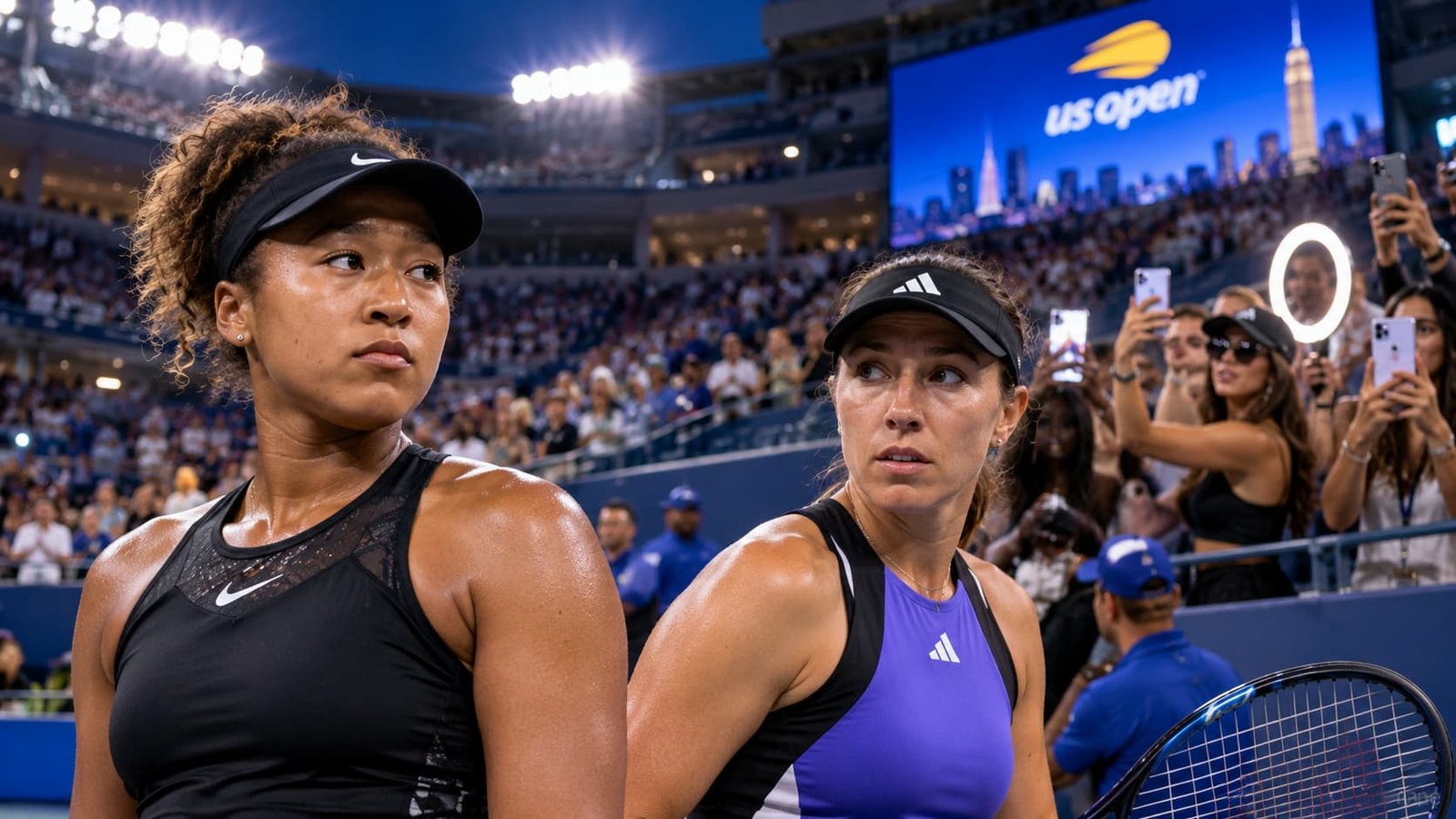

Photo by Aerps.com on Unsplash
Naomi Osaka and Jessica Pegula have called out disruptive influencer behavior at the 2026 US Open, saying content creators filming videos courtside need to “respect the sport.” The remarks came after viral clips showed groups of influencers making noise and shooting content during matches at Flushing Meadows, reigniting a debate over the growing presence of social media creators at marquee sporting events.
Viral Clip Sparks Outrage
One clip that circulated widely showed a group of influencers loudly reciting Kim Kardashian’s catchphrase, “Hey, guys. We’re back. Did you miss us ’cause we missed you,” while filming content during the tournament. The video drew swift criticism online and became a flashpoint for broader complaints about crowd behavior at this year’s Open.
The controversy traces back to Osaka’s Aug. 31 first-round match against Anastasia Zakharova. During the match, a group in a hospitality suite held a photo shoot and turned on a portable ring light while Osaka was serving, prompting a reprimand from the chair umpire. Chair umpire Kader Nouni admonished a separate group of influencers in a suite for recording a video in the middle of a point.
Osaka addressed the disruption in a Sept. 3 press conference, saying the umpire “told everyone to be quiet more than I’ve ever heard an umpire tell a crowd to be quiet.”
Players Demand Respect
“If you come to a sporting event, you have to respect the sport,” Osaka said, adding that it’s “common courtesy to read up on the sport, especially the etiquette.”
Pegula, the 2024 US Open finalist, echoed those concerns. “I do think that it’s tough when you see videos like that… It seems a bit disrespectful,” she said. Following her second-round victory, Pegula told reporters the crowd etiquette issue had “gotten a little maybe too much.”
Their comments reflect a growing tension between the tournament’s efforts to expand its digital footprint and the players’ expectation that matches be treated with the seriousness the sport demands. Tennis, unlike many other major sports, relies on hushed crowds during points, with noise and movement traditionally restricted to changeovers and breaks in play. The presence of influencers actively producing content in real time, complete with ring lights, photo shoots and loud dialogue, has collided directly with that culture.
A Growing Presence at Flushing Meadows
The clash didn’t emerge in a vacuum. The number of content creators accredited to cover the tournament doubled from the previous year, organizers said. Roughly 100 content creators received accreditation for this year’s event, with 20 of them specifically assigned to cover the food and beverage scene at Flushing Meadows.
That expansion mirrors a broader shift across professional sports, as leagues and tournaments court younger audiences through social media personalities rather than relying solely on traditional broadcast coverage. For the US Open, the strategy has brought a wave of new content and attention to the tournament grounds, but this year’s incidents show it also carries risks when creators prioritize their own footage over the on-court action.
Tournament Responds With New Messaging
Organizers have moved to address the backlash. Brendan McIntyre, the US Open’s head of communications, said the tournament has been actively reminding attendees to refrain from any activity that could disrupt the action. That messaging has come through several channels:
- Advance emails sent to ticket holders
- Notifications sent directly to suite holders
- On-site messaging displayed on video boards throughout the grounds
Since Osaka’s opening-round match, there has been increased messaging on screens throughout the venue reminding fans to avoid disruptive behavior, including excessive noise, flash photography and the use of ring lights during play.
Whether the added warnings will curb the behavior remains to be seen as the tournament continues. For now, the debate has placed a spotlight on how far tournaments should go to accommodate digital creators without compromising the in-person experience for players and traditional fans alike.
The episode also underscores a larger question facing major sporting events in the social media era: how to balance the commercial and promotional benefits of influencer content against the expectations of athletes who compete under conditions requiring silence, focus and adherence to decades-old etiquette. Osaka’s and Pegula’s remarks suggest that, at least among top players, patience for content-driven disruptions is wearing thin, even as tournaments lean further into influencer partnerships to broaden their audience.
As the 2026 US Open moves into its later rounds, organizers face a challenge: welcoming record numbers of digital creators while protecting the conditions of quiet and focus that professional tennis has long demanded. Osaka summed up the sentiment shared by several players when she suggested that attending a professional sporting event comes with unwritten rules, ones she believes should be studied and respected before showing up, camera in hand.