
KUWAIT CITY, June 4, 2026 —
Iranian drones and missiles struck the passenger terminal at Kuwait International Airport on Wednesday, killing one person, wounding 63 others including travelers and airport workers, and setting sections of the terminal ablaze — the most direct and visible strike against civilian aviation infrastructure since the Iran war began 95 days ago.
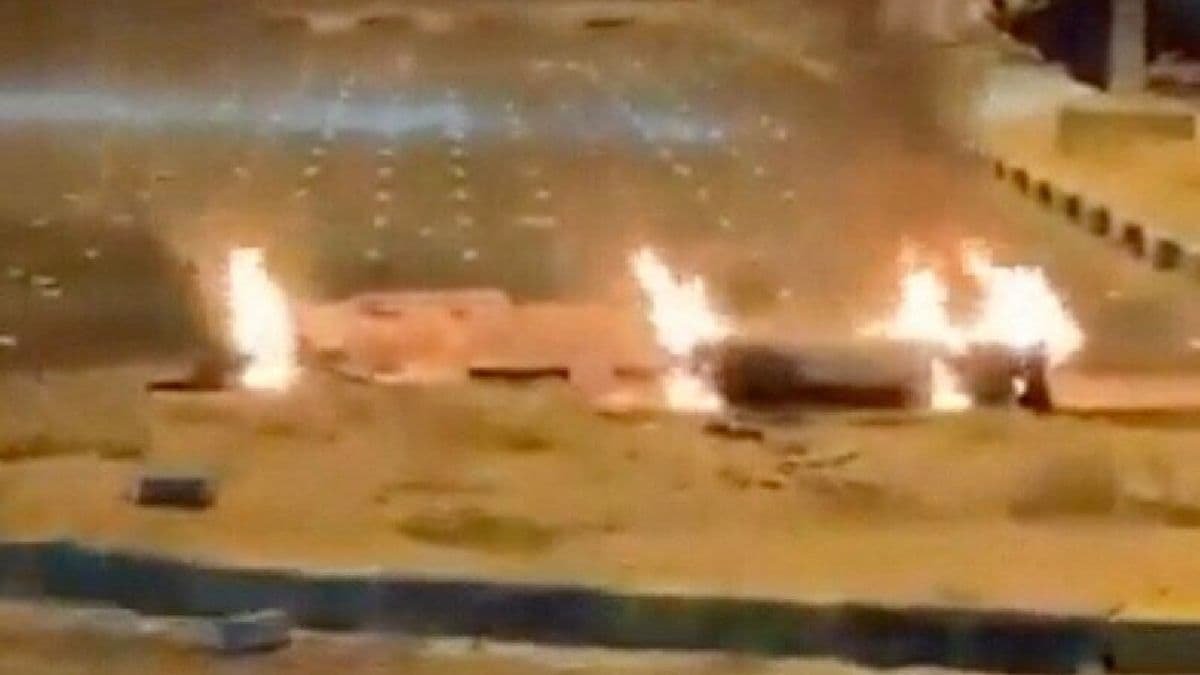
Kuwait briefly shut its main airport. The terminal sustained significant structural damage. Debris was photographed across the departure hall floor while fire burned in the background. The images were on social media before emergency crews had finished responding.
The ceasefire has now cost Kuwait its airport, its refinery, and its illusion of safety.
What Happened Overnight — and Why It Escalated to the Airport
The strike on Kuwait International Airport did not come without context. It came in response.
The United States conducted a strike overnight against an IRGC communications tower on Qeshm Island in southern Iran — the latest in a series of what American military officials call self-defense strikes. Iran’s Islamic Revolutionary Guard Corps announced Wednesday that the Kuwait airport attack was direct retaliation for the Qeshm strike. The IRGC simultaneously announced strikes against a US military base inside Kuwait and against the US Fifth Fleet headquarters in Bahrain — the forward command of all American naval operations in the Persian Gulf and the most significant regional military target Iran has struck since the ceasefire took effect in April.
Kuwait’s Defense Ministry said it detected and attempted to intercept 30 ballistic missiles and drones launched by Iran during the overnight exchange. Thirteen were shot down. The ones that got through reached the terminal.
The airport damage was not caused entirely by direct impact. Kuwait’s Defense Ministry said the destruction to the passenger terminal was caused by a failed Patriot missile intercept — the interceptor struck the terminal rather than the incoming Iranian missile it was meant to stop. That detail — that the terminal’s destruction came from America’s own air defense system, not directly from Iran’s weapons — will complicate the diplomatic narrative in the hours ahead.
Bahrain — the New Target That Changes the War’s Geography
The IRGC’s strike on the US Fifth Fleet headquarters in Bahrain is the single development most likely to produce an American military response beyond the self-defense strikes framework that has defined US action since the ceasefire began. The Fifth Fleet headquarters is not a forward combat position. It is the command structure for all US naval operations across the Indian Ocean, the Persian Gulf, the Red Sea, and adjacent waters. Striking it is not a tactical move. It is a message about what Iran is willing to target.
The US Central Command confirmed the Bahrain strike occurred. No casualties from that strike were reported in initial damage assessments. The Fifth Fleet’s operational systems were not disrupted. But the precedent of Iran targeting the US Navy’s regional command during a ceasefire — alongside a civilian airport in an allied nation — removes most of the remaining diplomatic language available to characterize the current arrangement as anything other than an active war with intermittent pauses.
Trump’s Response — and the Limits of the Ceasefire Language
Trump was asked about the Kuwait airport strike on Wednesday. He said Iran made a very big mistake. He did not announce a specific military response. The White House characterized the overnight Qeshm strike as a self-defense action and said the US reserves the right to defend itself and its allies from further attacks.
The ceasefire framework, which technically remains in effect — Iran suspended talks but has not formally declared the ceasefire void — is functioning as a floor below which neither side wants to fall without cause, rather than as a ceiling above which violence cannot rise. The gap between those two descriptions is where the war is currently living.
Oil prices surged again on Wednesday’s news. Brent crude is now trading well above the $6 gain it posted Monday when Iran suspended talks. The Strait of Hormuz remains closed to commercial shipping. American gas prices show no sign of declining toward the EIA’s projected post-deal range.
| Iran War Escalation — June 3, 2026 | Detail |
|---|---|
| Location of Wednesday’s strike | Kuwait International Airport — Terminal 1 |
| Weapons used | Drones and ballistic missiles |
| Casualties | 1 killed, 63 wounded |
| Terminal status | Damaged — airport briefly shut |
| Terminal destruction cause | Partly failed US Patriot intercept |
| IRGC stated reason | Retaliation for US strike on Qeshm Island communications tower |
| Other targets struck Wednesday | US base in Kuwait, US Fifth Fleet HQ in Bahrain |
| Bahrain strike casualties | None confirmed initially |
| US overnight action | Self-defense strike on IRGC communications tower, Qeshm Island |
| Missiles and drones intercepted (Kuwait) | 13 of 30 detected |
| Ceasefire status | Technically in effect — functionally collapsed |
| Strait of Hormuz | Still closed to commercial shipping |
| Oil price direction | Rising sharply |
The Gulf Countries That Considered Themselves Safe Are Safe No Longer
The PBS NewsHour described Wednesday’s strike as reinforcing the risks to residents and travelers in Gulf countries that had considered themselves relative havens before the war. That framing is precisely correct and understates the shift. Kuwait’s airport has now been struck multiple times since February. Bahrain’s US military headquarters has now been hit. The UAE’s nuclear plant perimeter was struck in May. Saudi Arabia has been targeted.
The geography of the Iran war is expanding even as diplomats work to contain it. Each new target — civilian airport, nuclear plant perimeter, regional military headquarters — moves the conflict further from a bilateral US-Iran confrontation and closer to a regional war that draws Gulf allies into a combat role they did not consent to when the first American bombs fell on Tehran in February.
Iran suspended peace talks Monday because it said Israel’s Lebanon offensive violated the ceasefire. The US struck Qeshm overnight. Iran struck Kuwait’s airport and Bahrain’s Fifth Fleet. The talks remain suspended. There is no mediator session scheduled. There is no announced ceasefire extension.
The airport is on fire. The ceasefire is a name.