
WASHINGTON, June 2, 2026 —
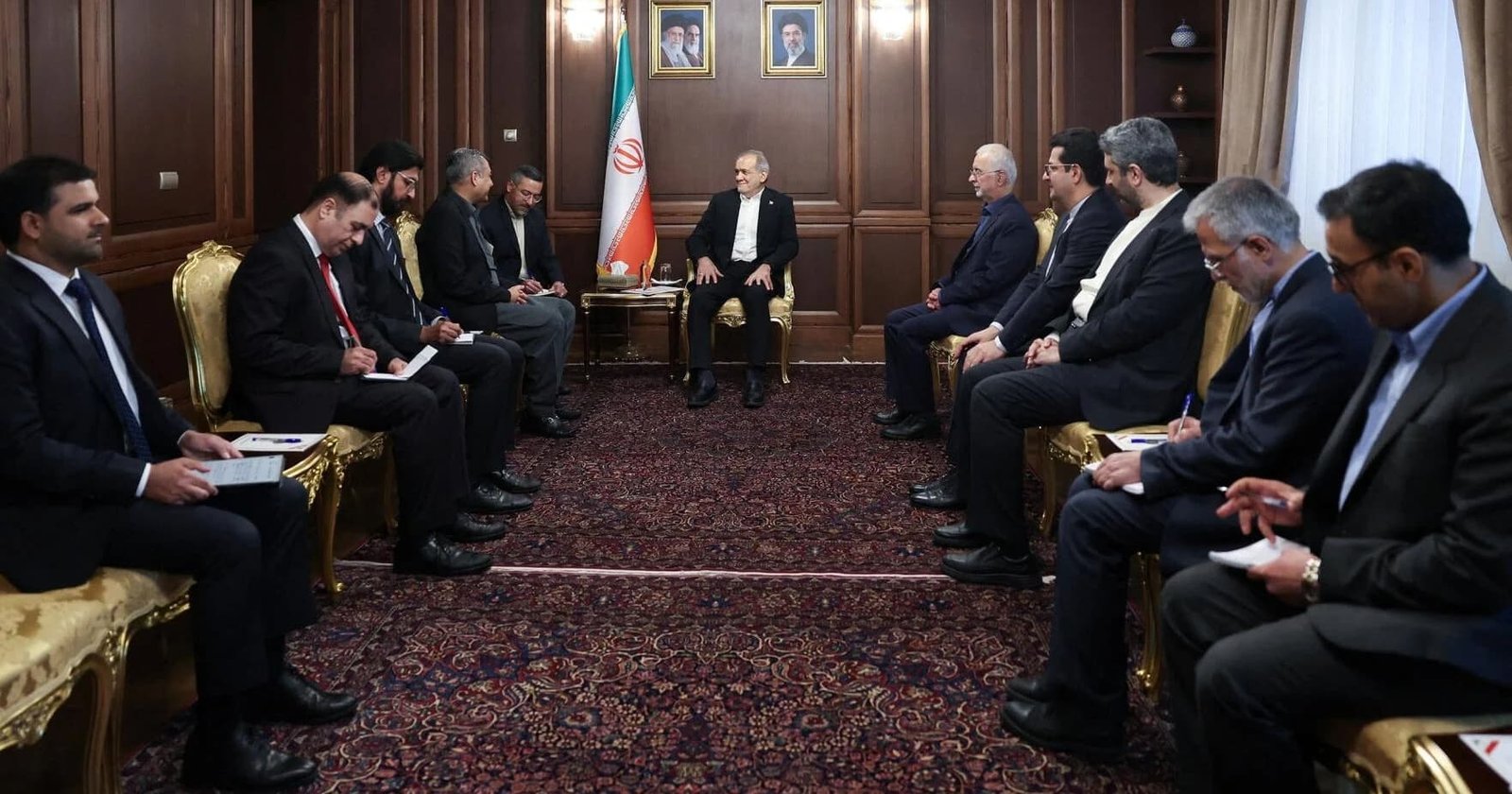
Three months after American and Israeli forces struck Iran’s nuclear facilities, ninety-four days after the Strait of Hormuz closed to commercial shipping, and fifty-five days after Pakistan arranged a conditional two-week ceasefire that has been extended multiple times without producing a formal peace agreement, the United States and Iran are still talking. The ceasefire is still technically in effect. The Strait is still closed. And the gap between what both sides say they need and what negotiators are producing remains the central fact of the conflict.
Here is a precise account of where every major issue stands.
The Strait of Hormuz — Open in Theory, Contested in Practice
The reopening of the Strait of Hormuz is the economic issue driving the entire negotiation. The closure has removed approximately 20% of global liquid petroleum from daily world supply for over three months. American gas prices peaked at $4.63 per gallon and remain near $4.55. The United States, the Gulf states, China, and Iran itself all have profound economic interests in restoring commercial navigation.
The framework both sides have been working from calls for the Strait to reopen without tolls — a direct rejection of Iran’s earlier demand for transit fees. Iran’s Islamic Revolutionary Guard Corps fired warning shots at four vessels in the past two weeks that attempted to pass without what Tehran described as prior coordination or authorization. The United States and its allies dispute Iran’s claimed authority to impose coordination requirements. Every vessel that is fired upon in the Strait is simultaneously a ceasefire violation, an economic incident, and a diplomatic signal.
The core dispute is not whether the Strait reopens. Both sides have agreed it must. The dispute is the governance framework that applies after reopening — who controls access, under what conditions, with what enforcement authority. Iran wants to maintain greater influence over passage than existed before the war. The United States has sanctioned the Iranian agency that administers the Strait and threatened additional sanctions on any country that cooperates with Iran’s transit fee or coordination requirements. That standoff has not been resolved in any document both sides have signed.
The Nuclear Program — The Gap That Has Resisted Every Framework
Iran’s nuclear program is the issue that has ended every prior round of negotiations between Washington and Tehran for the past decade. It is ending this one too, at least so far.
Iran enriched uranium to 60% purity before the war — significantly beyond the 3.67% limit of the 2015 nuclear deal and approaching the 90% threshold for weapons-grade material. By September 2024, the IAEA estimated Iran had accumulated enough highly enriched uranium that, if enriched further to 90%, would theoretically be sufficient for four nuclear explosive devices. The war destroyed significant portions of Iran’s nuclear infrastructure — the Natanz and Fordow facilities were struck by Israeli and American forces. But Iran’s nuclear knowledge, its centrifuge manufacturing capacity, and its enriched uranium stockpile were not fully eliminated.
Trump has stated repeatedly that Iran must permanently forgo nuclear weapons and cooperate with the IAEA and the United States in eliminating its highly enriched uranium stockpile. Iran has stated publicly that nuclear issues are not being discussed in the current ceasefire talks. Russia offered in February to take Iran’s enriched uranium as part of any political settlement — a proposal that the United States and Israel have not formally endorsed but have not formally rejected.
The House of Commons Library, citing ongoing negotiations monitoring, confirmed as of this week that nuclear and ballistic missile programs remain among the central issues under active discussion. The gap between active discussion and agreement is the gap that has not closed.
Sanctions, Reconstruction, and the Long-Term Framework
Beyond the immediate Strait and nuclear questions, negotiators are simultaneously discussing three additional issue clusters that make this negotiation more complex than any prior Iran diplomatic round.
Sanctions relief is Iran’s primary economic demand. The United States imposed a naval blockade on Iran after the initial ceasefire talks failed, cutting off Iran’s oil export revenue entirely. Iran’s economy, already damaged by years of prior sanctions and now compounded by war damage and blockade, is operating under extreme duress. Iran’s delegation in every negotiating session has made clear that without a defined path to sanctions relief, no agreement on any other issue can hold.
Reconstruction funding — Iran’s demand that the countries that bombed its infrastructure contribute to rebuilding it — has not been accepted as a formal negotiating position by the United States. Gulf states have privately indicated willingness to participate in a reconstruction framework as part of a comprehensive settlement, but no formal mechanism exists.
The long-term peace framework — whether the current talks produce a temporary ceasefire extension or a durable settlement that addresses all outstanding issues — remains the meta-question underlying every specific negotiation. Pakistan, Qatar, and China have each proposed frameworks. None has been accepted by all parties.
| Iran War Negotiation Status — June 2, 2026 | Detail |
|---|---|
| Ceasefire in effect since | April 8, 2026 |
| Ceasefire status | Extended multiple times — no formal MOU signed |
| Strait of Hormuz commercial status | Closed to commercial shipping |
| IRGC warning shots this period | Fired at 4+ vessels attempting transit |
| Nuclear talks status | Ongoing — Iran says not the focus; US says essential |
| Iran HEU stockpile | Pre-war: sufficient for ~4 devices if enriched to 90% |
| Nuclear facilities destroyed | Natanz, Fordow — partial damage confirmed |
| US position on uranium | Must be surrendered or destroyed |
| Iran position on uranium | Not on the table in current talks |
| Russia offer | Take Iran’s enriched uranium as part of settlement |
| Ballistic missiles | Under discussion |
| Sanctions relief | Iran’s primary demand — not yet agreed |
| Reconstruction | Iran demand — not formally accepted by US |
| Active mediators | Pakistan, Qatar, Oman |
| US gas price (June 2) | ~$4.55/gallon |
| Days since Strait closure | 94 |
What Has to Move for This to End
The negotiation has a logic that is not difficult to describe, even if it has proven impossible to execute. Iran needs sanctions relief and economic normalization. The United States needs nuclear guarantees and a Strait reopening without Iranian governance claims. The Gulf states need the Strait open and the IRGC’s military posture reduced. Israel needs the nuclear program eliminated and Iran’s proxy networks severed.
No single deal satisfies all four sets of requirements simultaneously. Every framework proposed has sacrificed one party’s core demand to satisfy another’s. The June deadline — which Trump set publicly in multiple social media posts — has passed without a signed agreement. The ceasefire extended to buy time for negotiations that have not yet produced the document both sides can accept.
The talking continues. The Strait stays closed. The gas price stays at $4.55. And the military, as Secretary Hegseth has reminded multiple times, remains fully capable of resuming operations at a moment’s notice.