
NEW YORK, May 19, 2026 —
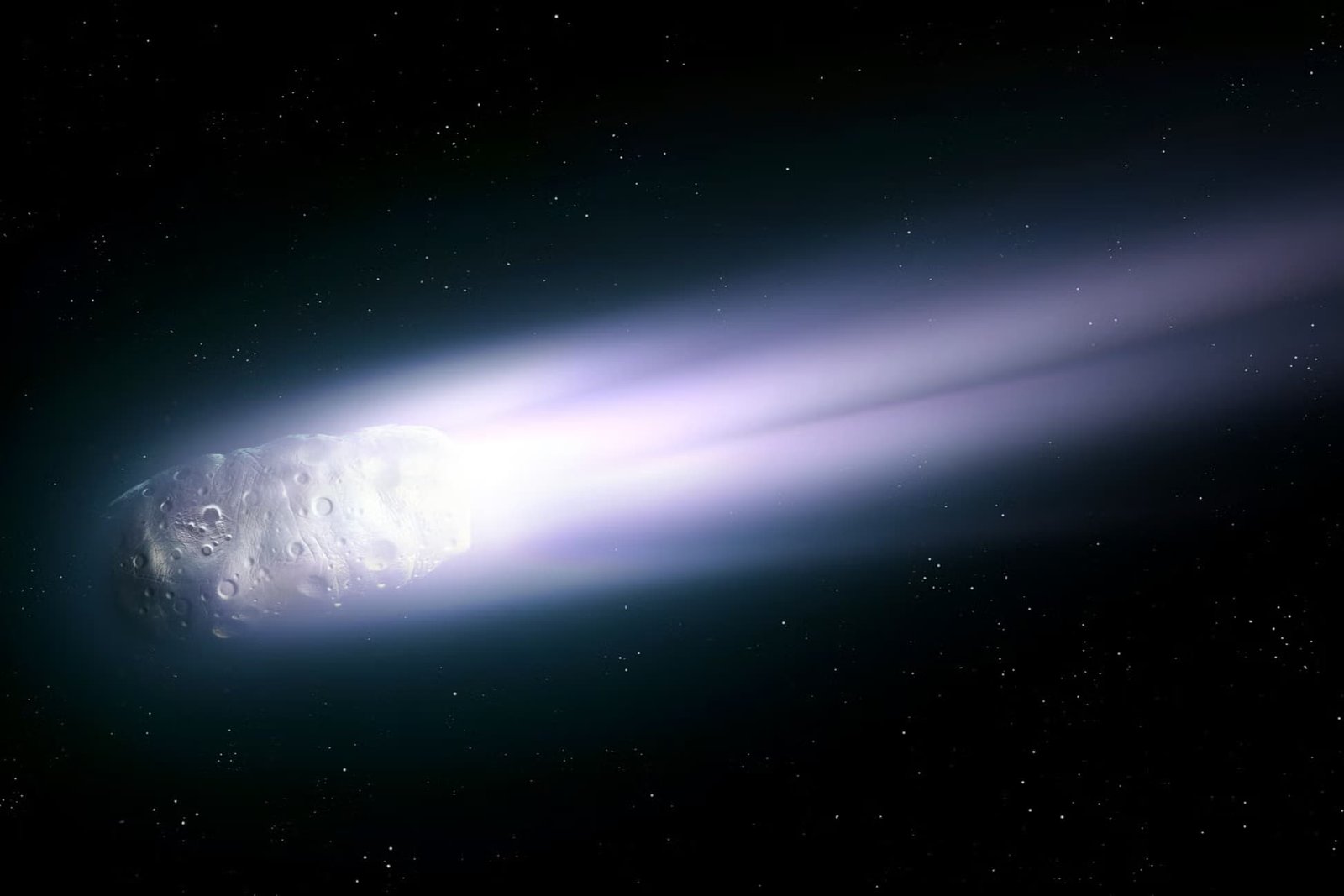
At 6 p.m. Eastern time on Monday, a rock the size of a blue whale — somewhere between 50 and 115 feet across, traveling at 29,000 miles per hour — passed Earth at a distance of approximately 57,000 miles. That is less than one-quarter of the distance between Earth and the Moon.
The internet, predictably, had thoughts.
Asteroid 2026 JH2 was discovered on May 10 by astronomers at the Mount Lemmon Observatory near Tucson, Arizona. Nine days before it made one of the closest approaches to Earth by any asteroid in the modern tracking era, it did not exist in any scientific database. Nobody knew it was coming. Then it flew past closer than geostationary satellites orbit above your head, and millions of people stayed up Monday night to watch a live telescope feed of a rock they had never heard of make them feel briefly, existentially small.
How Close 57,000 Miles Actually Is
The Moon is, on average, 238,855 miles from Earth. Asteroid 2026 JH2 passed at 57,000 miles. To put that figure in terms that mean something: the ring of geostationary satellites that deliver much of the world’s television and telecommunications signals orbit at approximately 22,236 miles above the equator. The asteroid passed roughly two and a half times farther out than those satellites. It was, in astronomical terms, a near-miss. In practical terms, it was a flyby that posed zero risk to Earth — but generated maximum anxiety online.
The asteroid is classified as an Apollo-type near-Earth object, meaning its orbit around the Sun crosses Earth’s orbital path. It completes one orbit every 3.7 years, swinging out as far as Jupiter before looping back through the inner solar system. This is not its first pass near Earth. It is simply the first pass close enough, and the first pass since tracking technology was sophisticated enough, to be detected and confirmed. The Mount Lemmon Survey — one of NASA’s primary near-Earth object detection programs — spotted it nine days before closest approach. That is not a long warning window.
Why Scientists Are Excited About a Rock That Almost Nobody Can See
To be clear: 2026 JH2 cannot be seen with the naked eye. At its peak brightness, it reached magnitude 11.5 — visible through a small telescope, but invisible to any human standing outside and looking up. The Virtual Telescope Project, run by astronomer Gianluca Masi, livestreamed the closest approach beginning at 2:45 p.m. Eastern on Monday. More than 400,000 people watched in real time. The comment sections of every major live science account on social media filled with some variation of the same question: should we be worried?
NASA’s answer is unambiguous. No. Scientists at the Jet Propulsion Laboratory confirmed there is no impact risk. Current calculations show the trajectory poses no threat to Earth at any point in the foreseeable future. If an object of this size — on the smaller end of the 50-to-115-foot estimated range — did enter the atmosphere, most of it would likely burn up before reaching the ground. Asteroids smaller than about 82 feet in diameter typically disintegrate in the upper atmosphere and cause little or no surface damage.
The scientific value of the flyby is real regardless of the lack of danger. Close approaches give researchers the opportunity to refine their understanding of an asteroid’s orbit, measure its rotation and composition, and feed data into long-term planetary defense planning that depends on accurate orbital models. The closer the approach, the more data the pass generates.
| Asteroid 2026 JH2 — Key Facts | Detail |
|---|---|
| Discovery date | May 10, 2026 (Mount Lemmon Survey, Arizona) |
| Days between discovery and flyby | 9 days |
| Closest approach | May 18, 2026, approx. 6 p.m. ET |
| Distance at closest approach | ~57,000 miles (91,000 km) |
| Moon’s average distance from Earth | 238,855 miles |
| JH2 as fraction of lunar distance | ~24% |
| Estimated size | 50–115 feet (16–35 meters) |
| Speed at closest approach | ~29,000 mph (47,000 km/h) |
| Orbital type | Apollo-class near-Earth object |
| Orbital period | ~3.7 years |
| Impact risk | Zero — confirmed by NASA JPL |
| Peak brightness | Magnitude 11.5 (small telescope required) |
| Virtual Telescope Project viewers | 400,000+ live |
The nine-day gap between discovery and closest approach is what unsettled people most — and for good reason. Planetary defense experts have long been clear that the single biggest vulnerability in Earth’s asteroid protection system is not the ability to deflect a known threat. It is the ability to detect an unknown one with enough lead time to act. NASA’s DART mission in 2022 demonstrated that humanity can redirect an asteroid if given adequate warning. What 2026 JH2 demonstrated Monday night is that adequate warning is not guaranteed.
The asteroid is gone now — zipping back out toward Jupiter on its 3.7-year circuit. By this time next year, it will be 400 million miles away. But the conversation it sparked about planetary detection gaps, warning timelines, and whether nine days is enough time to do anything even if it were — that conversation, unlike the asteroid, is not going anywhere.