
ATLANTA / NEW YORK, May 6, 2026 —
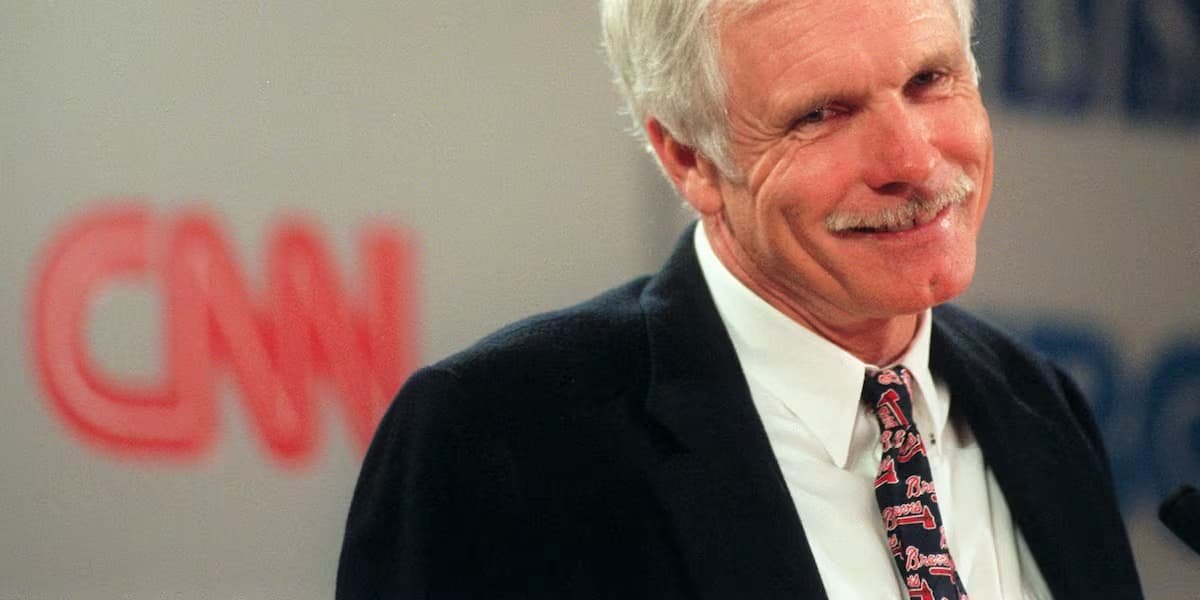
Ted Turner died Wednesday morning at 87, surrounded by his family at his home in Georgia, according to a statement from Turner Enterprises. He was the founder of CNN, the creator of TBS, TNT, Turner Classic Movies, and the Cartoon Network, the former owner of the Atlanta Braves, a one-billion-dollar donor to the United Nations, an America’s Cup champion, a bison rancher, a restaurateur, and — by his own consistent self-description — a do-gooder who never stopped being surprised by how much he got done.
He launched CNN on June 1, 1980, at a converted Jewish country club in Atlanta, with $100 million, a newsroom full of people whom the major networks had dismissed or overlooked, and a conviction that people would watch news 24 hours a day if someone would simply show it to them. Almost nobody believed him. He was right.
The Idea That Changed Everything
In 1980, television news meant the nightly broadcast. It meant Walter Cronkite at 6:30 PM and then nothing until the next evening. The concept of news as a constant, available at any moment, covering any story wherever it broke, was not simply unproven — it was considered absurd.
Turner did not find the idea absurd. He had built a small Atlanta UHF station into a national cable presence by the late 1970s, distributing his signal via satellite to cable systems across the country when most broadcasters had not thought to try it. He applied the same logic to news. If people wanted entertainment any time they turned on a television, why wouldn’t they want news the same way?
“We won’t be signing off until the world ends,” he told the crowd at CNN’s launch on June 1, 1980. “We’ll be on, and we will cover it live, and that will be our last event.”
It was one of the most accurate predictions in the history of media.
What He Built — and How He Built It
| Turner Creation | Year | What It Became |
|---|---|---|
| CNN | 1980 | World’s first 24-hour news network |
| TBS | 1976 (national) | First cable superstation |
| TNT | 1988 | Major entertainment cable network |
| Turner Classic Movies | 1994 | Premier film preservation channel |
| Cartoon Network | 1992 | Major children’s entertainment network |
| Headline News (HLN) | 1982 | First all-headline news format |
| Goodwill Games | 1986 | Cold War sports diplomacy |
| UN Foundation | 1998 | $1 billion personal donation |
Turner built his empire through a combination of genuine vision and genuine stubbornness. When he wanted to buy MGM’s film library — and with it, the rights to more than 4,000 movies — he paid $1.5 billion for a studio he largely didn’t want in order to get the films he did. Critics called it reckless. He used the library to launch Turner Classic Movies, which became the most significant film preservation effort in cable history and which cinephiles regard as one of the most culturally valuable channels ever created.
He also colorized black-and-white films from that library, which those same cinephiles regarded as one of the most culturally destructive decisions in cable history. He eventually backed down on the colorization. The classics remain. Both things are true, which is a reasonably accurate summary of Ted Turner’s career.
Captain Outrageous — the Man Behind the Media Empire
Turner collected nicknames the way he collected businesses. “The Mouth of the South” for his Georgia drawl and his inability to leave a thought unexpressed. “Captain Outrageous” for his willingness to say things in public that everyone else was thinking privately or not thinking at all. “Captain America” for winning the America’s Cup in 1977 aboard Courageous, a victory that he celebrated with the kind of excess that only someone who genuinely did not care what anyone thought of him could sustain.
He married Jane Fonda in 1991 in what former President Jimmy Carter called one of the nicest romances he had ever witnessed. They divorced in 2001. She left because she could no longer take a back seat to his larger-than-life personality. He was reportedly angry about her conversion to Christianity. The truth, she has said, was more complicated. It usually is with people who generate that much heat.
He gave $1 billion to the United Nations in 1997 — a single personal donation that represented approximately one-third of his net worth at the time and that stunned a philanthropy world accustomed to commitments of considerably smaller scale. He founded the Nuclear Threat Initiative to reduce the global stockpile of nuclear weapons. He owned the largest private bison herd in the world and opened Ted’s Montana Grill to find a use for the meat.
He was, by nearly all accounts, more fun to know than to work for, and more fun to work for than to compete against.
What CNN’s Journalists Said Wednesday
Wolf Blitzer announced Turner’s death on CNN’s air Wednesday morning with the words: “We’re all here doing this because of Ted.”
His co-anchor Pamela Brown said: “He was the original.”
Christiane Amanpour said: “He made us all proud, he made us all hopeful, and he made us all strive for his vision of a better world.”
CNN chairman and CEO Mark Thompson said in a written statement: “He was a visionary, a trailblazer, a rabble-rouser, a do-gooder — and he thought there would be a market for it. Ted was an intensely involved and committed leader, intrepid, fearless and always willing to back a hunch and trust his own judgement. He was and always will be the presiding spirit of CNN. Ted is the giant on whose shoulders we stand.”
Rupert Murdoch — Turner’s fiercest rival and the man Turner once threatened to fight with his fists in Las Vegas — released a statement praising Turner’s vision for 24-hour cable news and calling him “a great American and friend.”
In the end, even his enemies could not help but admire him. That is the kind of life that earns a real obituary rather than a press release.