
WASHINGTON, APRIL 21, 2026 —
Key Takeaways
- Goldman Sachs has raised its recession probability to 30% over the next 12 months — up from under 15% before the war began — driven by the oil price surge, a labor market that was already fragile, and inflation that has climbed back above 3% after two years of progress toward the Fed’s target.
- The IMF cut its 2026 global growth forecast to 3.1% — and that relatively optimistic projection assumes the conflict is short-lived and oil averages $82 per barrel across the year. Brent crude is currently near $90 and the ceasefire expired today.
- The US economy’s single most important vulnerability is not inflation or interest rates — it is the job market’s fragility going into the shock. The economy added only 116,000 jobs in all of 2025, the worst outside of a recession since 2002, leaving no buffer against the demand destruction that sustained high energy prices produce.
Before February 28, the consensus forecast for the US economy in 2026 was cautiously optimistic. The Federal Reserve was expected to cut rates once or twice. Inflation was grinding toward 2%. Job growth was modest but steady. The S&P 500 had just set a record in January.
Fifty-two days of war changed the calculation on every one of those variables. The question now is not whether the Iran war damaged the US economy — it clearly did — but whether that damage is temporary and reversible, or whether it triggered a chain of events that will end in recession regardless of what happens in Islamabad today.
How the Damage Accumulated
The mechanism of harm is not complicated. When the Strait of Hormuz effectively closed, 20% of the world’s daily oil supply was disrupted. The largest supply disruption in the history of the global oil market, the International Energy Agency called it. Oil prices spiked from $75 a barrel to a peak of $119, a 59% surge in roughly three weeks. That price spike moved through the economy in overlapping waves.
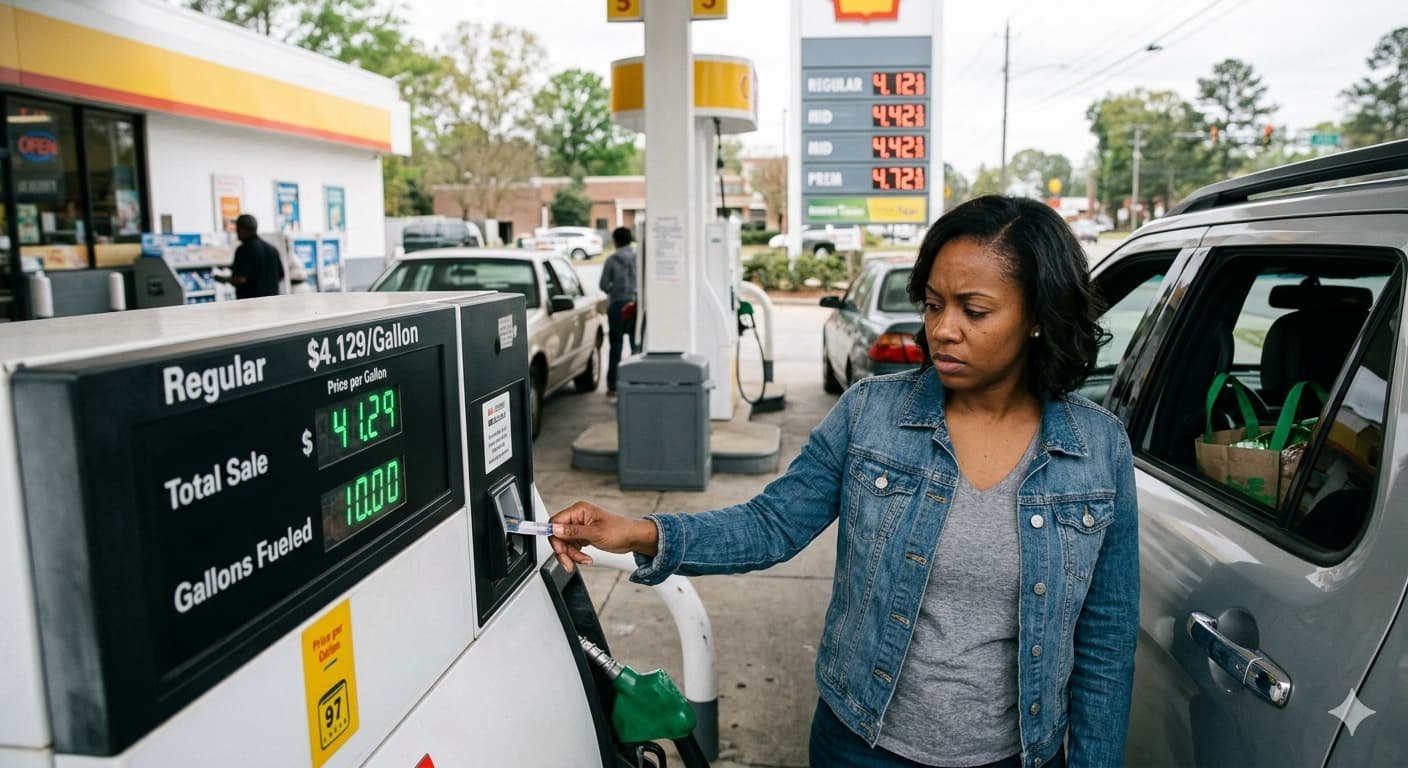
Energy costs hit households immediately. Gas prices climbed from around $3 per gallon before the war to $4.12 nationally, adding roughly $80 to $120 per month to the average American family’s fuel budget. Diesel prices — the lifeblood of trucking, agriculture, and industrial production — climbed similarly, adding surcharges to the cost of delivering virtually everything Americans buy.
Inflation reversed its improving trajectory. The March CPI rose 3.3% annually — the highest in nearly two years — with energy accounting for the majority of the acceleration. Core inflation, which excludes energy and food, held at 2.6%, suggesting the underlying economy had not yet absorbed a full passthrough of energy costs. But economists universally agree: if oil stays above $90 through the summer, core inflation follows upward with a 6 to 9 month lag.
The labor market was already in a vulnerable position before the first bomb fell. The economy added just 116,000 jobs in all of 2025, the weakest performance outside a recession since 2002, and had lost jobs in five of the nine months before the war began. The March 2026 jobs report looked stronger than expected — 178,000 jobs added — but Goldman Sachs analysts noted that much of the gain was attributable to favorable weather, the end of labor strikes, and statistical noise rather than genuine acceleration. Goldman now projects unemployment rising from 4.3% to 4.6% by the end of 2026.
| Economic Damage From Iran War — Scorecard | Before War | Current |
|---|---|---|
| Brent crude oil | $75/barrel | ~$90/barrel |
| US gas prices (national avg.) | ~$3.00/gallon | $4.12/gallon |
| Annual CPI inflation | 2.6% | 3.3% |
| Goldman Sachs GDP forecast 2026 | 2.5% | 2.0% |
| Goldman Sachs recession probability | ~15% | 30% |
| Fed funds rate | 3.5%–3.75% | 3.5%–3.75% (on hold) |
| 30-year mortgage rate | ~6.1% (expected) | 6.30% |
The Fork in the Road — Deal or No Deal
The Iran war’s economic damage has a clean binary outcome. If a peace framework is signed — or a ceasefire is extended with genuine prospects for one — oil prices will normalize over 2 to 4 months as the Strait reopens, shipping insurance falls, and energy traders reprice the risk premium out of crude. The Goldman Sachs GDP forecast returns toward the original 2.5% trajectory. The Federal Reserve cuts rates in the second half of the year as inflation falls back below 3%. Mortgage rates dip toward 6%. The recession scenario that has consumed financial analysts for seven weeks fades from the front page.
If no deal materializes and full-scale bombardment resumes, the scenario changes dramatically. Oxford Economics modeled a prolonged Strait closure and projected global inflation hitting 7.7% — close to the 2022 peak — while global GDP growth slows to 1.4%, with the US and most major advanced economies sliding into recession. In that scenario, the Federal Reserve faces its worst nightmare: rising unemployment and rising inflation simultaneously, the classic stagflation trap that produces no good monetary policy response. Cut rates and inflation accelerates. Hold rates and unemployment climbs. Raise rates and recession deepens.
“It’s going to gouge out some of the growth, but we’ll weather through it” if the conflict ends soon, said JPMorgan Asset Management’s chief global strategist. The qualifier is the entire sentence. The word “soon” expired with the ceasefire tonight.
What the Fed Does Next
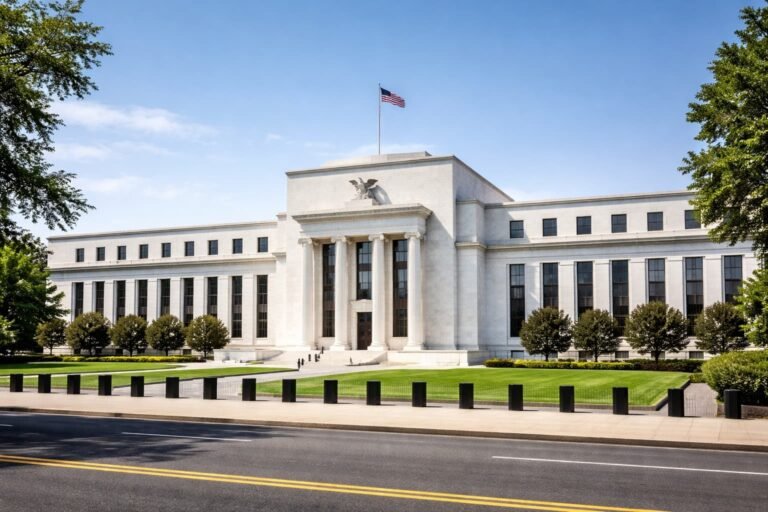
The Federal Reserve held rates at 3.5% to 3.75% at its March meeting, the second consecutive hold. Chairman Jerome Powell acknowledged “an energy shock of some size and duration” without specifying what the Fed would do about it. His term expires May 15.
Kevin Warsh, Trump’s nominee as the next Fed chair, has not commented publicly on monetary policy since oil prices spiked. Markets are pricing one rate cut in the second half of 2026 — but that pricing assumes the Iran war is resolved and inflation begins falling. If the war resumes and oil spikes back toward $119, the market’s rate cut expectation disappears entirely and is replaced by flat-to-higher rate forecasts.
The next FOMC meeting is May 6–7. Whatever happens in Islamabad today will be the most important input to that meeting.
For American Households — What This Actually Means
The abstract economic language of recession probabilities and GDP forecasts lands differently when translated into household-level reality. A 30% recession probability does not mean recession is likely. It means the outcome that was very unlikely six weeks ago — an actual economic contraction — is now genuinely possible and worth preparing for.
Households that carry high levels of variable-rate debt — credit cards averaging 21% to 22% APR, adjustable-rate mortgages, auto loans — face the highest exposure if the economy weakens and job losses accelerate. The recession playbook for individual households is straightforward even if not easy: reduce variable-rate debt as aggressively as the budget allows, build 3 to 6 months of emergency savings before the economic signal becomes clear, and avoid large discretionary purchases financed with debt until the energy picture stabilizes.
The ceasefire expired tonight. The most important economic data point of the year will come from a hotel meeting room in Islamabad.