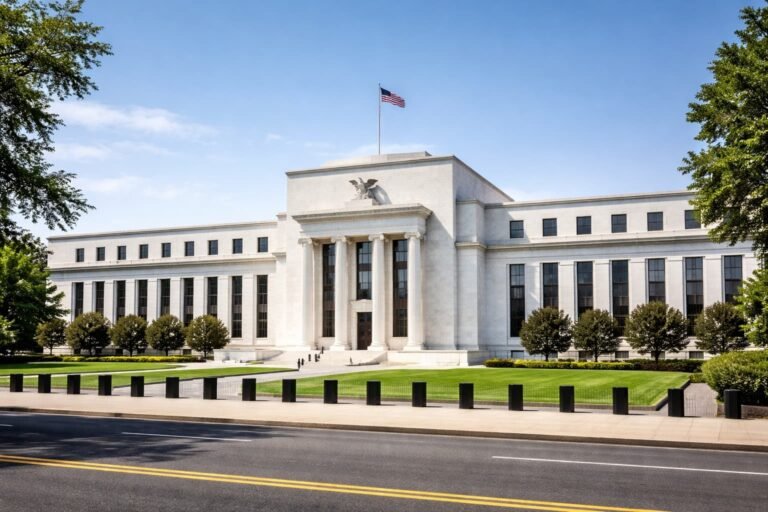

WASHINGTON, APRIL 6, 2026 —
Key Takeaways
- The average 30-year fixed mortgage rate jumped to 6.46% this week — the highest level since September 2025 — driven by Iran war oil price inflation and the Federal Reserve’s signal that rate cuts are off the table for now
- At 6.46%, the monthly payment on a $400,000 mortgage is approximately $2,514 — compared to $2,387 at 5.75% six months ago, a difference of $127 per month or $45,720 over the life of the loan
- Housing economists warn the rate spike is hitting at the worst possible time: spring homebuying season — when the most transactions occur — is now underway, and inventory remains near historic lows in most U.S. metros
The American housing market was already struggling before the Iran war. Home prices remained elevated after the pandemic-era surge. Inventory in most cities was still well below historical norms. Affordability, by almost every measure, was the worst it had been in decades.
Then gas prices hit $4 per gallon. Oil jumped above $105 per barrel. And the Federal Reserve — which had been cautiously signaling potential rate cuts in 2026 — made clear that surging energy inflation made cutting rates impossible. This week, that calculus showed up directly in the mortgage market: the average 30-year fixed rate rose to 6.46% — the highest since last September — leaving millions of Americans who were waiting for lower rates to buy or refinance in a more difficult position than they were six months ago.
What 6.46% Actually Costs You
Mortgage rates are quoted as annual percentages, but the damage shows up in monthly payments that compound over 30 years. The difference between a 5.75% rate — where rates sat last fall — and today’s 6.46% is not dramatic on paper. In practice, on a real loan, it is significant.
Monthly Payment Comparison — $400,000 Mortgage
| Rate | Monthly Payment | Total Interest Paid | Difference vs. 5.75% |
|---|---|---|---|
| 5.75% | $2,334 | $440,224 | Baseline |
| 6.00% | $2,398 | $463,280 | +$64/mo — +$23,056 total |
| 6.25% | $2,463 | $486,609 | +$129/mo — +$46,385 total |
| 6.46% | $2,514 | $505,027 | +$180/mo — +$64,803 total |
At a $300,000 loan, the monthly payment at 6.46% is approximately $1,886 — versus $1,751 at 5.75%. The difference is $135 per month — or $48,600 across the life of the loan.
For a first-time buyer in a market where home prices already require stretching, that gap is often the difference between qualifying and not qualifying.
Why Rates Went Up — The Iran War Connection
The Federal Reserve does not set mortgage rates directly. Mortgage rates track the 10-year Treasury yield, which moves based on inflation expectations, economic growth forecasts, and Federal Reserve policy signals.
Before the Iran war began on February 28, the Fed had signaled cautious optimism about cutting its benchmark rate in 2026. The March jobs report — which came in stronger than expected at 178,000 — was good news for workers but removed urgency for the Fed to cut. More significantly, Iran’s closure of the Strait of Hormuz has pushed oil above $105 per barrel and driven energy inflation that is now filtering into prices across the entire economy.
Fed officials have been explicit. Chicago Fed President Austan Goolsbee said this week that the Iran war risks fueling inflation, which would make it “harder for the central bank to ease interest rates.” Before the war, he was confident the Fed could cut rates in 2026. That confidence is gone. Markets are now pricing in a 31% probability of zero rate cuts in 2026 — up from near-zero probability at the start of the year.
When the probability of rate cuts falls, Treasury yields rise. When Treasury yields rise, mortgage rates follow.
What This Means for the Spring Homebuying Market
Spring is historically the busiest homebuying season. More homes list in March through June than in any other period, and more transactions close. For the millions of Americans who spent winter waiting for rates to improve before making a move, this week’s jump is discouraging news.
Inventory remains the other half of the problem. In most major U.S. metro areas, the number of homes for sale is still significantly below pre-pandemic levels — meaning buyers are competing for a smaller pool of listings even as their purchasing power has declined.
For sellers, the calculus is different. Anyone who locked in a 3% mortgage during 2020 or 2021 has little incentive to sell and give up that rate — a phenomenon economists call the “lock-in effect” that has reduced supply for three consecutive years.
The net result: a market that is expensive to buy into, thin on supply, and now facing higher borrowing costs just as the buying season peaks.
Should You Buy, Wait, or Refinance Now?
If you are buying: At 6.46%, buying is still rational if you plan to stay in the home for at least 5 to 7 years, you can afford the payment comfortably without stretching, and you are buying in a market with underlying demand. Waiting for rates to fall is a gamble — rates could fall, or prices could rise further while you wait, erasing any savings.
If you are refinancing: The break-even calculation matters. If your current rate is 7% or higher, refinancing to 6.46% may still produce meaningful savings. If your current rate is below 6%, wait.
If you are a first-time buyer: Explore FHA loans (which often carry slightly lower rates), down payment assistance programs in your state, and whether your employer offers any homeownership benefits. The Department of Housing and Urban Development’s website lists state-by-state programs that many buyers do not know exist.