
WASHINGTON, MARCH 29, 2026 —
One month ago today, the United States and Israel launched Operation Epic Fury against Iran. The bombs that fell on February 28 were supposed to destroy Iran’s nuclear program, eliminate its missile arsenal, and end its proxy network across the Middle East within four to six weeks. Thirty days later, the nuclear program has been struck but not destroyed. The missiles keep coming. And the proxy network just got bigger.
Iran-backed Houthi rebels in Yemen fired their first ballistic missile at Israel on Saturday — formally entering the war on Iran’s side for the first time since the conflict began. The IDF intercepted the projectile. But the message was unmistakable: a conflict that started as a U.S.-Israeli air campaign against Iran has now expanded to include Hezbollah in Lebanon, Iranian proxy militias across Iraq and Syria, and now the Houthis — the same group that paralyzed Red Sea shipping for over a year during the Israel-Hamas war and sank two commercial vessels in the process.
The Saudi Base Attack — America’s Worst Single-Day Casualties
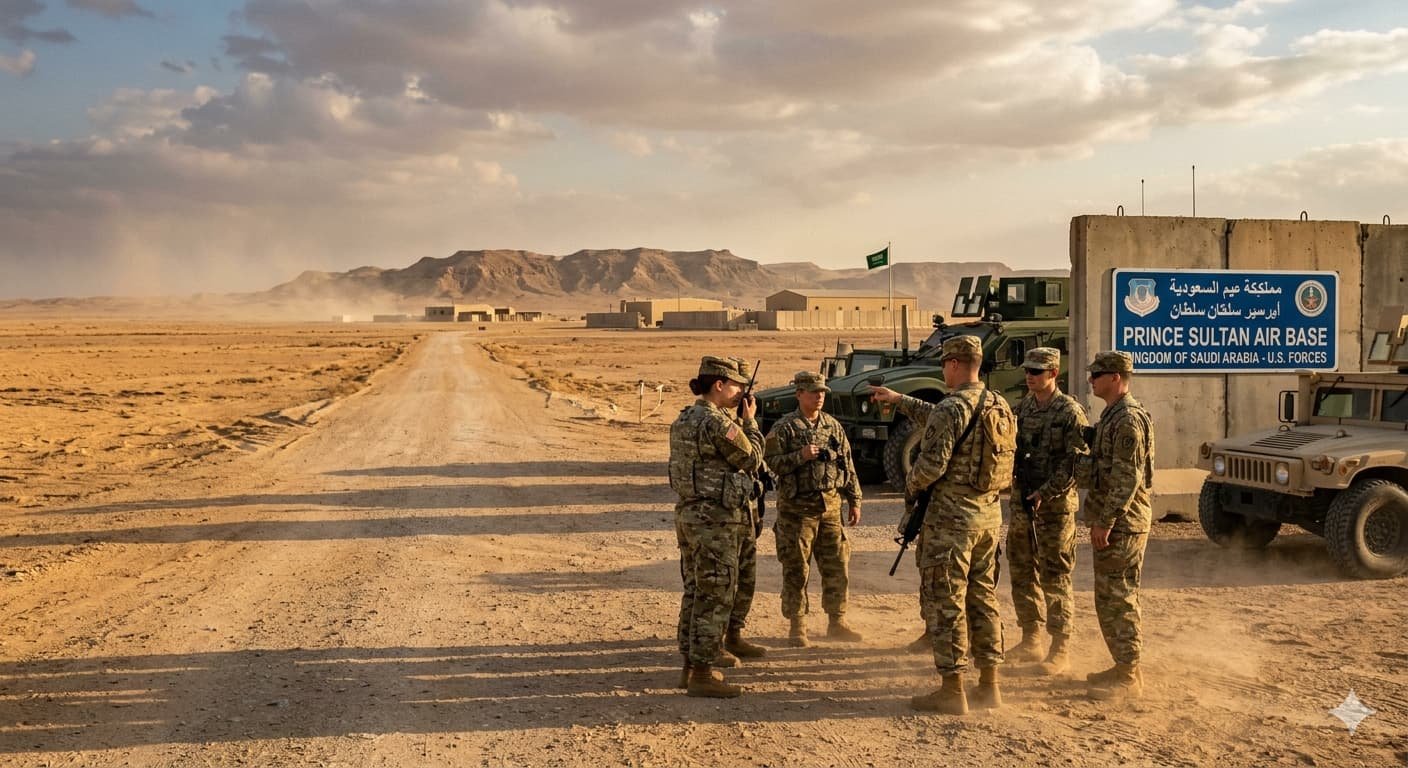
The worst day for American forces in the entire conflict came Friday, when Iran fired six ballistic missiles and 29 drones at Saudi Arabia’s Prince Sultan Air Base — located 60 miles outside Riyadh — wounding at least 15 U.S. service members, five of them seriously. Two aircraft tankers were destroyed and three others damaged, according to Iranian state media, which released Chinese satellite photographs showing burning aircraft on the tarmac.
The Prince Sultan base had already been attacked twice earlier in the week, with a separate strike wounding 14 U.S. troops. Combined with Friday’s casualties, more than two dozen Americans were wounded at that single installation in a single week. Over the full 30 days of the war, more than 300 U.S. service members have been wounded. At least 13 have been killed. The toll grows daily.
The One-Month Scorecard
A month of Operation Epic Fury has produced results that depend almost entirely on which side of the ledger you examine:
| Category | U.S./Israel Claim | Reality on the Ground |
|---|---|---|
| Iranian missile attacks | Dropped dramatically | Still ongoing daily |
| Iran nuclear program | Heavy water reactor struck | Not eliminated |
| Strait of Hormuz | Being contested | Effectively still closed |
| Iranian missile factories | Struck repeatedly | Still producing |
| Hezbollah | 800 operatives killed | Still fighting in Lebanon |
| Houthis | Previously stayed out | Now entered the war |
| U.S. casualties | 13 killed | 300+ wounded |
| Regional stability | Improving | Three new fronts opened |
| Oil prices | Was $72 Feb 28 | Still above $100 |
| Global death toll | — | 3,000+ killed |
Secretary of State Marco Rubio, speaking to reporters at a G7 foreign ministers meeting, maintained that the operation was “ahead of schedule” and could end “in a matter of weeks.” He described the war’s objective as destroying Iran’s ability to make missiles and drones and preventing it from ever building a nuclear weapon. Vice President Vance, leading the diplomatic track, said the war would continue “a little while longer.”
Israel Strikes Iran’s Nuclear Facilities
The most significant military development of the war’s one-month mark came Friday, when Israel struck what it described as Iran’s heavy water reactor — a facility directly connected to uranium enrichment that Israeli officials have described as one of the conflict’s primary targets. Iran confirmed that nuclear facilities had been attacked and vowed to retaliate. The strike on Prince Sultan base, which came hours later, was Iran’s answer.
Iran’s nuclear facilities have now been struck multiple times during the conflict — but U.S. and Israeli officials have stopped short of claiming Iran’s nuclear program has been permanently eliminated. The distinction matters enormously for any eventual peace agreement: Iran’s willingness to formally abandon nuclear ambitions remains the central demand of the U.S. 15-point plan that Tehran has publicly rejected.
The Houthi Dimension — A New Chokepoint Opens
The Houthis’ entry into the war carries a specific danger that extends beyond Israeli air defense. During the Israel-Hamas war, Houthi rebels attacked more than 100 commercial vessels in the Red Sea and Bab el-Mandeb Strait — the waterway at the southern tip of the Arabian Peninsula through which approximately 12% of the world’s trade passes before entering the Suez Canal.
The Strait of Hormuz, Iran’s primary chokepoint, handles the world’s oil. The Bab el-Mandeb, the Houthis’ primary chokepoint, handles global container shipping and trade. With Saudi Arabia currently routing its oil exports through the Bab el-Mandeb because the Hormuz is effectively closed, Houthi attacks on that waterway would simultaneously strike oil exports and global trade — a combination that analysts at the International Crisis Group warned Saturday could have an impact not limited to the energy market.
Pakistan Calls a Regional Summit — Sunday
The clearest diplomatic signal of the weekend came from Pakistan, which confirmed Saturday that regional powers are scheduled to meet Sunday to discuss a path to ending the fighting. The meeting reflects a growing international consensus — shared by China, India, the European Union, and Gulf Arab states — that the war’s economic consequences are becoming intolerable and that an external framework for ending it may be necessary if U.S.-Iran bilateral talks remain stalled.
Pakistan has been serving as the intermediary through which the U.S. 15-point plan was delivered to Tehran. Its decision to convene a summit suggests Islamabad believes the bilateral channel is not, by itself, sufficient.
Thirty days. Three thousand dead. Three hundred Americans wounded. One month in, the war that was supposed to be over by now is wider, deeper, and more dangerous than it was when it started.