
WASHINGTON, MARCH 28, 2026 —
What You Need To Know
- The Department of Homeland Security confirmed Friday that TSA officers will begin receiving paychecks as early as Monday, March 30 — ending six weeks of missed and delayed pay that left tens of thousands of federal workers in financial crisis
- The resolution came through two simultaneous actions: Trump signed an executive order directing DHS Secretary Markwayne Mullin to resume TSA payroll immediately, and the Senate passed a funding bill for most of DHS overnight
- The House rejected the Senate bill Friday — but Trump’s executive order is expected to ensure pay reaches workers regardless, setting up a constitutional fight over spending authority that is far from resolved
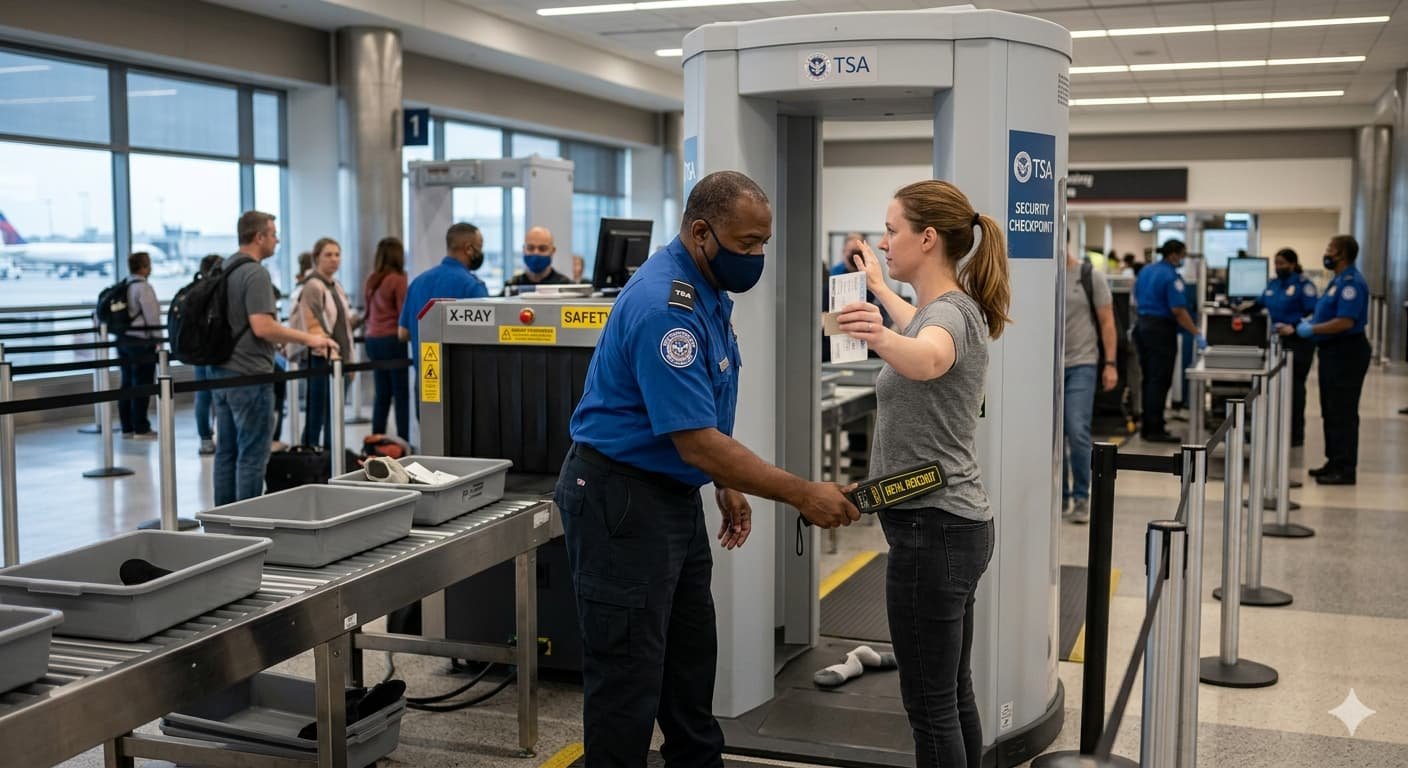
Six weeks. That is how long 46,000 Transportation Security Administration officers worked without reliable pay while screening millions of Americans at airports across the country. While spring break travelers faced two-hour security lines and missed flights, while TSA agents lost cars and received eviction notices, while callout rates at some airports exceeded 50% — Congress deadlocked, negotiated, and deadlocked again.
On Friday, it ended. Partially, contingently, and with a constitutional question still hanging in the air — but for TSA workers who checked their bank accounts Friday night and found something there for the first time in six weeks, the mechanism mattered less than the outcome.
How the Resolution Came Together
The path to Monday’s paychecks ran through two parallel tracks that converged Friday morning. The first was executive action. Trump signed an order directing newly confirmed DHS Secretary Markwayne Mullin to immediately resume paying TSA employees — invoking emergency authority that constitutional lawyers are still debating whether the president actually has, since federal payroll is constitutionally a congressional appropriation function. The White House acknowledged the legal uncertainty but said the humanitarian urgency justified the action.
The second track was legislative. The Senate voted overnight to pass a funding bill covering most of DHS — including TSA payroll — after weeks of stalemate between Democrats demanding immigration enforcement guardrails and Republicans insisting on full agency funding without conditions.
The House complicated things immediately. House Republicans voted Friday to reject the Senate bill, saying instead they would pass a measure to fully fund the agency for eight weeks. Senate Democrats indicated they would reject that plan. The result is that the legislative resolution remains unresolved — but Trump’s executive order appears sufficient, for now, to ensure TSA workers receive Monday’s paychecks regardless of what Congress does next.
The Human Cost — By the Numbers
The statistics accumulated during six weeks of the shutdown tell a story that goes well beyond airport inconvenience:
| Impact Category | Number | Source |
|---|---|---|
| TSA officers working without pay | 46,000 | DHS |
| Days worked without timely pay in FY2026 | 87+ | TSA testimony |
| Estimated unpaid wages | ~$1 billion | Congressional estimate |
| TSA officers who quit during shutdown | 500+ | Agency data |
| Single-day callout rate peak (Houston Hobby) | 55% | TSA data |
| Average airport security wait time peak | 2+ hours | TSA data |
| Flights missed due to TSA delays | Thousands | Airport data |
A DHS spokesperson put the human reality plainly in a Friday statement: “TSA officers are now losing their homes and cars, struggling to put food on the table, and are experiencing all-around financial catastrophe because of this extended shutdown — the third they’ve experienced in just six months.”
The Constitutional Question That Isn’t Going Away
Trump’s executive order directing TSA pay represents an extraordinary exercise of presidential authority — and one that legal experts say is on uncertain constitutional ground. The Appropriations Clause of the Constitution gives Congress, not the president, the power to direct federal spending. If Congress has not appropriated money for TSA payroll through a valid funding law, the legal basis for the president ordering it paid is contested.
The White House’s position is that national security and humanitarian necessity justify the action. The ACLU and several constitutional law scholars have already signaled they are watching the order closely for potential legal challenge. The question of whether a president can unilaterally spend money Congress has not authorized — and whether courts will allow it — could shape executive power far beyond this airport shutdown.
What Comes Next
TSA workers will receive paychecks Monday. That is the immediate, practical, human resolution that matters most to the 46,000 people who earned it. Beyond Monday, the funding standoff that caused the crisis remains unresolved. The House and Senate are still apart on DHS appropriations. Congress is heading into a two-week Easter recess. And the partial government shutdown — technically still in effect for portions of DHS not covered by Friday’s Senate bill — has not been fully ended.
The 500 TSA officers who quit during the shutdown will not return because of Monday’s paycheck. The airport security capacity they represented — each one requiring four to six months to replace and certify — is gone. The spring break travel season that exposed every fragility in the system is still underway. And the constitutional precedent set by Trump’s executive order will outlast every one of those details.