TrumpRx Launches as White House Bets on Direct-to-Consumer Drug Discounts
By Harshit
WASHINGTON, FEBRUARY 10, 2026 —
The Trump administration on Thursday launched TrumpRx, a long-anticipated direct-to-consumer prescription drug platform that officials say could help lower costs for Americans willing to pay cash and bypass insurance.
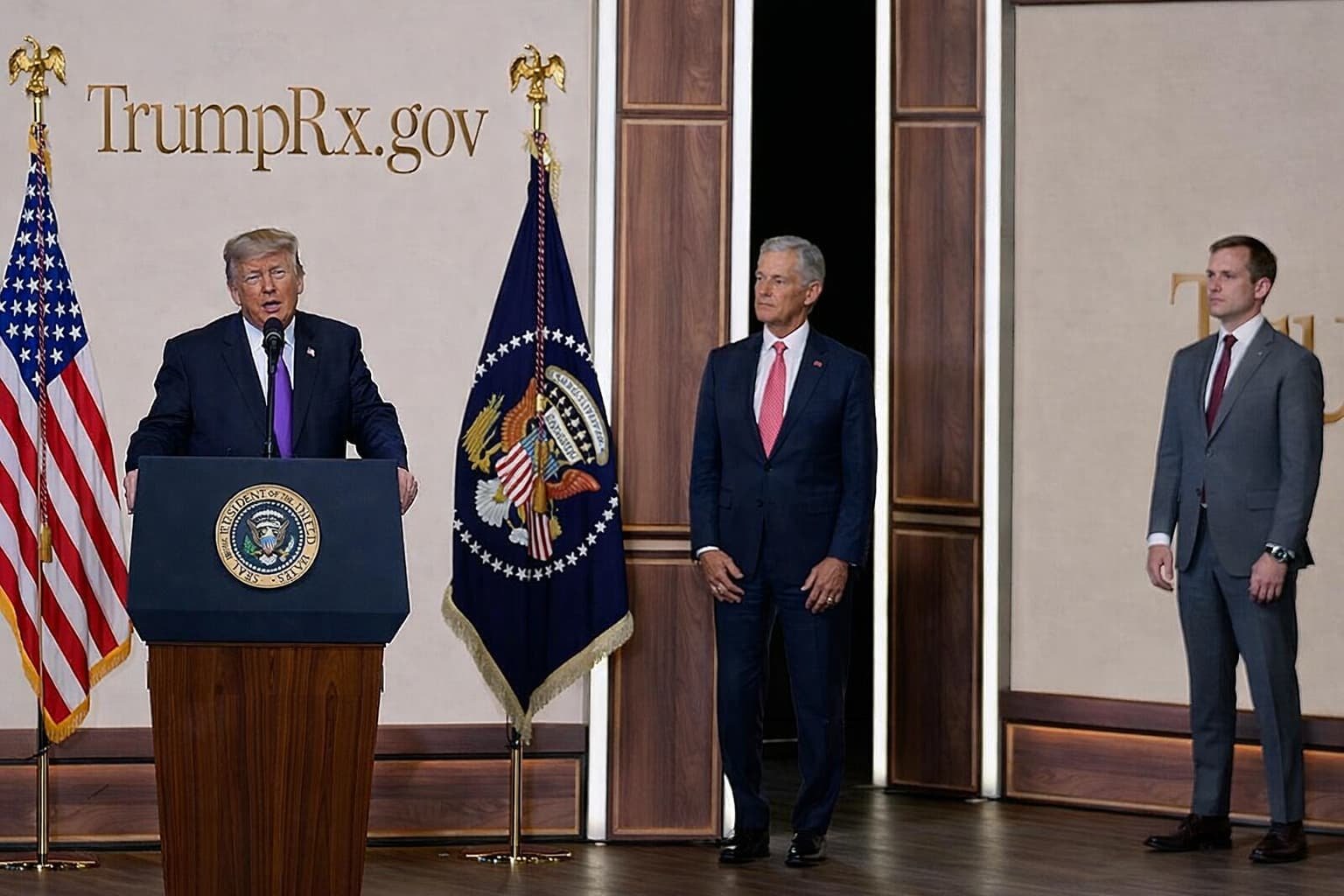
Unveiled at a White House event, the revamped TrumpRx.gov website is a central pillar of President Donald Trump’s effort to tackle prescription drug prices, one of the most persistent affordability concerns for U.S. households. The portal connects patients directly with participating drugmakers offering discounts on a limited set of medications, including high-profile obesity drugs.
“You’re going to see numbers that you’re not going to believe,” Trump said, touting the price reductions available through the site.
Still, health policy experts caution that while TrumpRx may help some patients—particularly the uninsured or those with high deductibles—it is unlikely to dramatically lower drug costs for most Americans in the near term.
How TrumpRx Works
TrumpRx functions as a clearinghouse rather than a pharmacy. Users can browse or search a list of available medications and are then directed to one of two options: a coupon to use at a participating pharmacy or a link to a manufacturer’s existing direct-to-consumer site to purchase the drug outright.
The site explicitly advises insured consumers to check their insurance copays first, warning that coverage may be cheaper than the cash price offered through TrumpRx.
As of launch day, 43 medications were listed, with officials saying more will be added. At least 16 drugmakers have signed agreements with the administration to participate.
What’s on Offer — and at What Price

Among the most closely watched listings are obesity drugs, which are often excluded from insurance coverage:
- Eli Lilly’s Zepbound: starting at $299 per month
- Novo Nordisk’s Wegovy pill: as low as $149 per month
- AstraZeneca’s Bevespi inhaler: $51
- Pfizer’s Xeljanz, used for rheumatoid arthritis and other conditions: $1,518.30
Discounts range from 33% to 93%, though they are calculated off manufacturers’ list prices, which do not always reflect what insured patients actually pay. Some drugs announced earlier as part of the initiative—such as Merck’s diabetes drug Januvia at $100—were not yet visible on the site.
In some cases, similar prices already exist elsewhere. For example, GoodRx lists Pfizer’s Duavee for roughly the same cash price offered through TrumpRx.
Who Benefits — and Who May Not
Supporters argue the platform could expand access for uninsured patients or those with high-deductible plans, especially for medications like weight-loss drugs that insurers frequently decline to cover.
But experts say most insured Americans may still pay less by going through their health plans, particularly after meeting deductibles.
“TrumpRx might support access and affordability for a very small number of people,” said Rena Conti, an associate professor at Boston University’s Questrom School of Business.
Joey Mattingly, an associate professor at the University of Utah College of Pharmacy, said the value proposition will depend heavily on a patient’s insurance design. High-deductible plans could make TrumpRx appealing early in the year, but consumers will need to carefully compare costs.
A key unanswered question is whether cash payments made through TrumpRx will count toward insurance deductibles and out-of-pocket maximums.
Early Signals From Insurers
That issue may already be evolving. This week, Express Scripts—a major pharmacy benefit manager owned by Cigna—reached a settlement with the Federal Trade Commission over allegations related to insulin pricing. As part of the agreement, Express Scripts said it would count payments its members make through TrumpRx toward deductibles and out-of-pocket limits, contingent on certain regulatory or legislative changes.
If widely adopted, such policies could significantly increase the portal’s appeal to insured patients.
Sticker Shock Still a Risk
Even with steep discounts, many brand-name drugs remain expensive.
“Once a price goes above about $100 a month, a lot of people stop filling their drugs,” said Stacie Dusetzina, a health policy professor at Vanderbilt University Medical Center, speaking at a recent KFF briefing.
She also questioned TrumpRx’s claim of offering “the world’s lowest prices,” noting that international price comparisons have shown some drugs—such as Novo Nordisk’s Ozempic—selling for under $100 in several countries.
Obesity Drugs Stand Apart
Obesity medications may be the clearest use case for TrumpRx. Cash-pay channels for these drugs were already growing before the portal’s launch.
Novo Nordisk reported that about 30% of Wegovy prescriptions now come through its self-pay platform, NovoCare, and roughly 90% of prescriptions for the new Wegovy pill are filled through that channel. Eli Lilly said Zepbound self-pay vials account for a third of new patients starting brand-name obesity therapy.
“The number of people engaging with our U.S. direct-to-patient platform, LillyDirect, increased to over 1 million patients in 2025,” CEO Dave Ricks said during the company’s latest earnings call.
By contrast, analysts expect less enthusiasm for cash-paying models for drugs typically covered by insurance, such as blood thinners or chronic disease medications.
“I don’t think people are as excited to pay for those out of pocket,” said Evan Seigerman, a pharmaceutical analyst at BMO Capital Markets.
A Political and Policy Bet
TrumpRx is part of a broader drug-pricing strategy that also includes the administration’s “Most Favored Nation” approach, which aims to push drugmakers to offer U.S. prices comparable to those in other wealthy countries and to provide discounted drugs to Medicaid.
The president has increasingly framed the initiative as central to easing cost-of-living pressures ahead of November’s midterm elections.
Whether TrumpRx meaningfully reshapes the prescription drug market—or remains a niche option for select patients—will depend on how many drugs are added, how insurers respond, and whether consumers see real savings over time.