
By Harshit
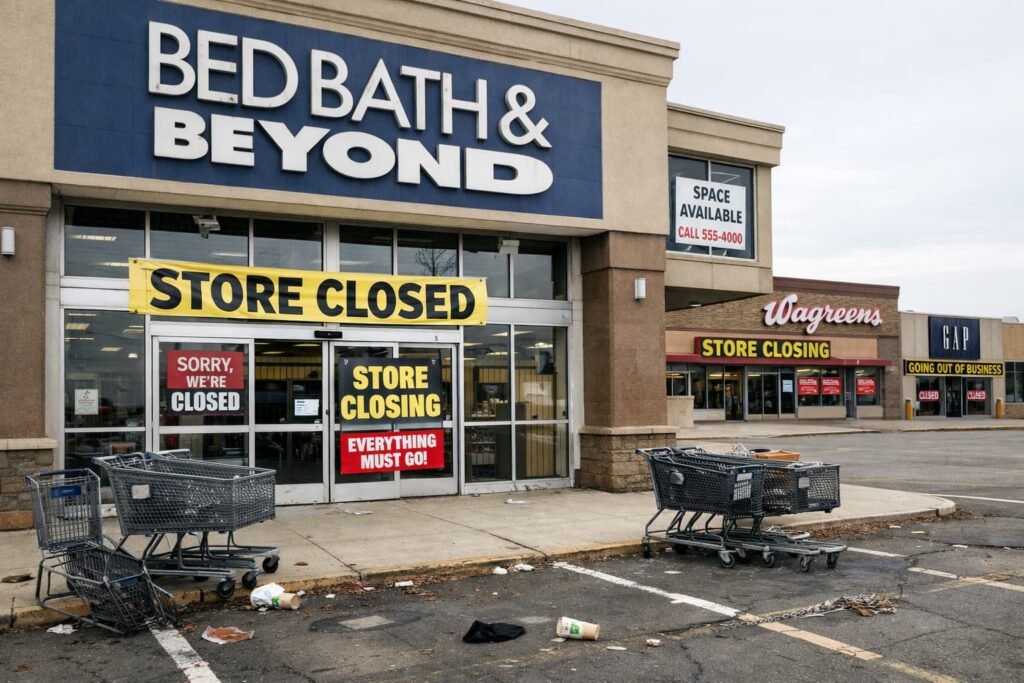
CHICAGO, JANUARY 20 — Walk through shopping districts across the United States in early 2026, and the contradiction is hard to miss. Consumers are still spending, unemployment remains low, and the economy has avoided a sharp downturn. Yet retail store closures are accelerating, with national chains and regional brands quietly shrinking their physical footprints.
This is not a collapse of retail demand. It is a fundamental shift in how U.S. retail businesses operate, allocate capital, and measure success.
Store Closures Are Strategic, Not Desperate
Unlike the wave of bankruptcies that defined earlier retail downturns, today’s closures are largely strategic. Many retailers remain profitable overall but are choosing to exit underperforming locations.
High rents, rising labor costs, and uneven foot traffic have made marginal stores economically unjustifiable. Rather than subsidize weak locations, companies are concentrating resources on fewer, more productive stores—or redirecting investment toward digital channels.
In 2026, retail is no longer about presence everywhere. It is about presence where margins exist.
The Cost Structure Has Changed

Operating a physical store in the U.S. is more expensive than it was five years ago. Commercial rents have adjusted upward in prime areas, utilities remain costly, and wages—especially for experienced retail staff—have risen.
At the same time, retailers face persistent inventory and logistics costs driven by global supply chain realignments. These pressures reduce tolerance for low-performing stores that once survived on thin margins.
The result is a leaner approach to brick-and-mortar operations.
E-Commerce Has Become the Default, Not the Alternative
Online sales growth is no longer explosive, but it is deeply entrenched. For many retailers, e-commerce now accounts for a majority of revenue growth, even when stores remain an important brand touchpoint.
Consumers increasingly use physical stores to browse, return items, or access services, while completing purchases online. This hybrid behavior reduces the sales productivity of traditional stores, making fewer locations necessary to support the same level of revenue.
Retailers are adapting by shrinking store networks while enhancing fulfillment, pickup, and last-mile delivery capabilities.
Mall Traffic Is Uneven and Polarized

Shopping malls illustrate the shift clearly. High-end and destination malls continue to perform relatively well, supported by dining, entertainment, and premium brands. Mid-tier and older malls, however, are losing tenants and foot traffic.
Retailers are responding by exiting weaker malls and focusing on street-level stores, outlet centers, or mixed-use developments that offer better economics.
This polarization explains why store closures are rising even as overall retail sales remain stable.
Labor Dynamics Are Forcing Hard Choices
Retail labor shortages have eased compared to earlier years, but staffing remains a challenge. Turnover is high, training costs are significant, and scheduling flexibility has become a key employee expectation.
Many retailers have concluded that operating fewer stores with better-trained staff produces higher returns than maintaining a broad network with constant hiring churn.
Technology—such as automated checkout, inventory tracking, and centralized customer service—has made this consolidation possible.
Investors Reward Efficiency Over Expansion
Publicly traded retailers face pressure from investors to demonstrate discipline rather than growth for its own sake. Store closures are often viewed positively when they improve margins and free up capital.
Wall Street increasingly rewards retailers that:
- Optimize store counts
- Improve inventory turnover
- Focus on profitable customer segments
This incentive structure reinforces consolidation across the industry.
What This Means for Local Communities
While closures may strengthen corporate balance sheets, they have real consequences for local economies. Job losses, reduced foot traffic, and declining mall occupancy can affect surrounding businesses.
Some communities are responding by repurposing vacant retail space for healthcare, logistics, housing, or education—signaling a broader transformation of commercial real estate.
Retail Is Shrinking to Survive
The U.S. retail industry is not dying. It is resizing. Store closures in 2026 reflect a business environment where efficiency, flexibility, and profitability matter more than physical reach.
Retailers that adapt to this reality are positioning themselves for long-term survival. Those that cling to outdated expansion models risk being left behind.