
By Harshit
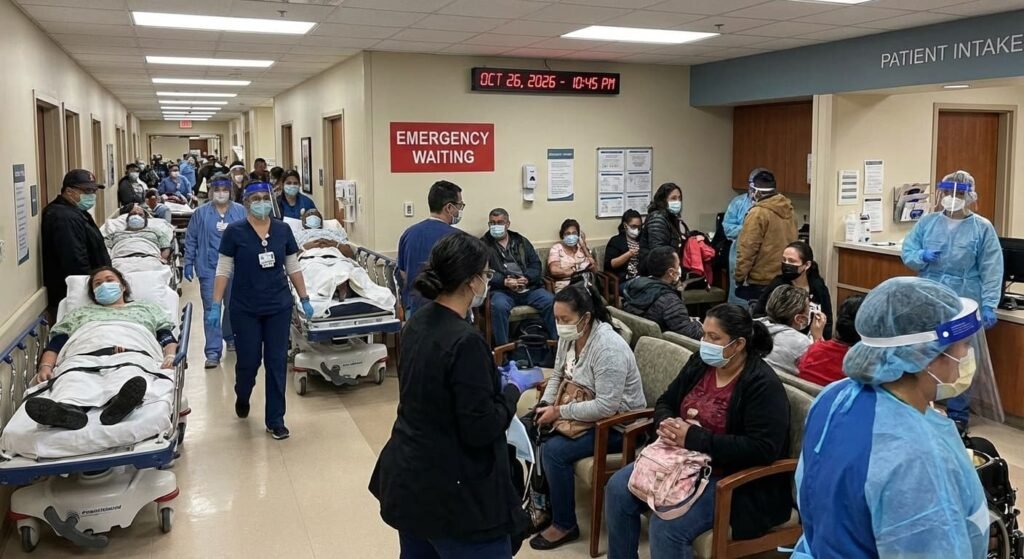
LOS ANGELES, JANUARY 20 — Over the past decade, the United States has expanded access to healthcare through insurance coverage, telemedicine, urgent care clinics, and retail health services. Yet in 2026, hospital emergency rooms across the country are reporting a troubling trend: patient volumes are rising, wait times are lengthening, and overcrowding is becoming more frequent.
The increase is not being driven by a single crisis. Instead, it reflects a series of structural pressures that continue to push Americans toward emergency care—even when alternatives exist.
Emergency Rooms as the System’s Pressure Valve
Emergency departments have long served as the healthcare system’s safety net. By law, they must treat patients regardless of insurance status or ability to pay. In 2026, this role has expanded further as gaps in the broader system persist.
For many Americans, emergency rooms remain the most reliable point of access when primary care is unavailable, delayed, or unaffordable. As other parts of the healthcare system strain under staffing shortages and rising demand, emergency departments absorb the overflow.
Primary Care Access Remains Uneven

Although preventive and primary care have gained attention in recent years, access remains inconsistent—particularly in rural areas and underserved urban communities. Physician shortages, limited appointment availability, and short visit times make it difficult for patients to address health issues early.
When symptoms worsen or become urgent, patients often have little choice but to seek emergency care. This pattern is especially common among older adults and individuals managing chronic conditions.
Insurance Complexity Drives Emergency Use
Insurance coverage does not always translate into usable access. High deductibles, narrow provider networks, and confusing coverage rules continue to discourage patients from seeking timely care.
Many Americans delay treatment until conditions escalate, at which point emergency rooms become the default option. In some cases, patients choose emergency care because cost transparency is clearer than navigating coverage limitations elsewhere.
Mental Health Pressures Add to the Burden
Emergency departments are increasingly serving as front-line mental health providers. In 2026, hospitals report rising numbers of patients experiencing acute mental health crises, substance use complications, and stress-related conditions.
Limited availability of outpatient mental health services leaves emergency rooms as the only immediate option. This not only strains staff but also extends wait times for all patients.
Staffing Shortages Intensify the Problem
Emergency room congestion is not solely a patient-volume issue—it is also a workforce issue. Hospitals continue to face shortages of nurses, technicians, and support staff. Even when beds are available, staffing constraints limit how many patients can be treated efficiently.
Burnout among emergency healthcare workers has further reduced capacity, creating a cycle where increased demand worsens working conditions and accelerates attrition.
Urgent Care Helps—but Has Limits

The expansion of urgent care clinics has eased pressure in some areas, but these facilities are not equipped to handle complex or high-risk cases. Patients with severe symptoms, multiple conditions, or uncertain diagnoses are often referred directly to emergency departments.
As a result, urgent care has shifted some demand—but not eliminated the reliance on emergency rooms.
The Cost Implications
Emergency care is among the most expensive forms of treatment. Rising emergency room usage contributes significantly to overall healthcare spending, higher insurance premiums, and increased out-of-pocket costs.
For hospitals, emergency departments often operate at thin margins, particularly when treating uninsured or underinsured patients. This financial strain limits investment in long-term solutions.
What This Means for the Healthcare System
The rise in emergency room visits highlights a deeper challenge: access alone is not enough. Without sufficient primary care capacity, mental health services, and care coordination, emergency departments will continue to shoulder the system’s heaviest burdens.
Policymakers and healthcare providers increasingly recognize that reducing emergency room congestion requires upstream investment—not just operational fixes.
A Symptom of Structural Stress
Emergency room overcrowding is not an isolated failure. It is a symptom of broader stress across the U.S. healthcare system. Until access, affordability, and workforce issues are addressed together, emergency departments will remain the default destination for too many Americans.