
By Harshit
WASHINGTON, JANUARY 8, 2026 —
The United States has released updated national dietary guidelines that largely echo longstanding nutrition advice while incorporating new elements aligned with Health and Human Services Secretary Robert F. Kennedy Jr.’s “Make America Healthy Again” (MAHA) agenda. The guidance, issued jointly Wednesday by the U.S. Department of Health and Human Services and the U.S. Department of Agriculture, urges Americans to prioritize protein and whole foods, reduce added sugars, and sharply limit ultraprocessed foods.
“My message is clear: Eat real food,” Kennedy said during a White House briefing announcing the update.
The 2025–2030 Dietary Guidelines for Americans are significantly shorter than the nearly 150-page version released in 2020. While the core recommendations span only a few pages, officials said they are supported by hundreds of pages of scientific analysis and justification that will be published separately.
A Shift in Visuals — and Messaging
One of the most noticeable changes is how the guidelines are presented. The familiar MyPlate graphic has been replaced with an inverted food pyramid, placing meats, cheese, vegetables, and other whole foods at the widest section on top, flipping decades of visual messaging about the American diet.
Officials said the updated guidance is designed to be simpler and more actionable, with a clear focus on preventing and slowing the progression of chronic diseases such as obesity, diabetes, and cardiovascular illness — a central pillar of the MAHA initiative.
When adding fats to meals, the guidelines advise Americans to “prioritize oils with essential fatty acids, such as olive oil,” while also listing butter and beef tallow as acceptable options — a point that reflects Kennedy’s long-standing skepticism of low-fat dietary dogma.
Protein Takes Center Stage
The most significant numerical change in the guidelines is protein intake. For the first time, recommendations are explicitly tied to body weight rather than calorie percentage.
The new guidance suggests 1.2 to 1.6 grams of protein per kilogram of body weight per day, equivalent to roughly 82 to 109 grams of protein for a 150-pound adult. This represents a higher intake than previous federal guidance and reflects growing emphasis on muscle preservation, metabolic health, and aging.
The guidelines also favor full-fat dairy with no added sugars, recommending three servings per day for individuals consuming a 2,000-calorie diet — a departure from decades of advice promoting low-fat or fat-free dairy.
Ultraprocessed Foods and Sugar in the Spotlight
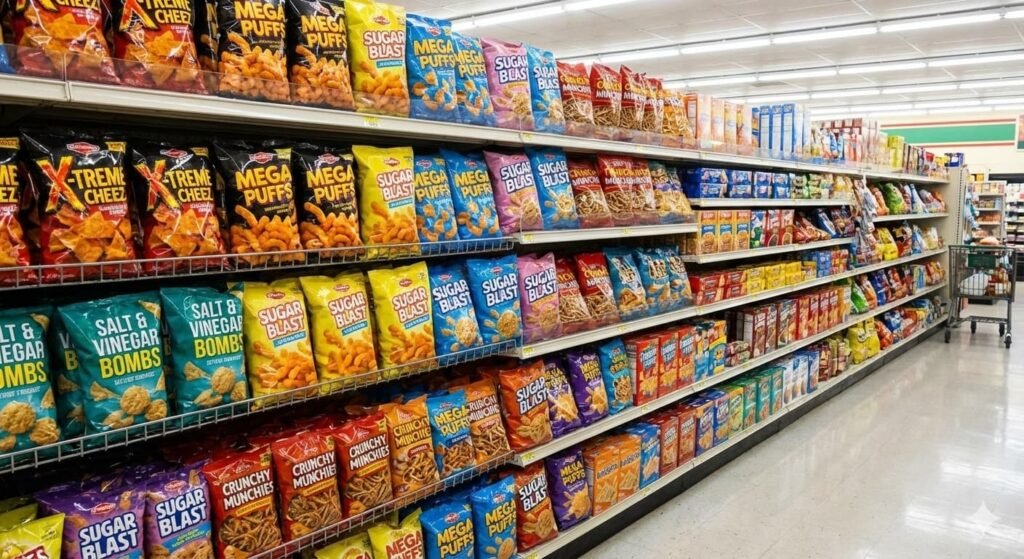
Ultraprocessed foods are singled out more directly than in past versions of the guidelines.
“Avoid highly processed packaged, prepared, ready-to-eat, or other foods that are salty or sweet, such as chips, cookies, and candy,” the guidance states. Americans are encouraged instead to choose nutrient-dense foods and home-prepared meals, and to select healthier options when dining out.
Added sugars are discouraged across all age groups and should be avoided entirely during infancy and early childhood through age 10, according to the new recommendations.
Vegetable intake is set at three servings per day, with two servings of fruit, and two to four servings of fiber-rich whole grains for a typical 2,000-calorie diet. The guidance emphasizes whole foods in their original form but acknowledges that frozen, dried, or canned fruits and vegetables with minimal added sugar can also be healthy options.
Alcohol Guidance Softened, Not Endorsed
The updated guidelines retain the message that “less alcohol is better for health,” but remove the previous numerical limits that capped men at two drinks per day and women at one.
“Alcohol is a social lubricant that brings people together,” said Mehmet Oz, administrator of the Centers for Medicare & Medicaid Services. “In the best-case scenario, I don’t think you should drink alcohol — but in small amounts, it can play a social role.”
Praise — and Pushback — From Health Groups
The updated guidelines drew early praise from several major medical organizations.
The American Medical Association applauded the focus on highly processed foods, sugar-sweetened beverages, and excess sodium, calling the guidance “clear direction patients and physicians can use to improve health.”
The American Heart Association also welcomed the emphasis on fruits, vegetables, and whole grains, but raised concerns about protein sourcing and fat recommendations.
The association warned that increased red meat consumption and liberal use of salt seasonings could push Americans beyond safe limits for sodium and saturated fat, key drivers of cardiovascular disease. It urged consumers to prioritize plant-based proteins, seafood, and lean meats until more research clarifies optimal protein intake.
Implications for Schools and Federal Food Programs
The dietary guidelines influence what is served in schools and how federal nutrition programs such as WIC and SNAP operate. Local health departments also rely heavily on the guidance.
The School Nutrition Association cautioned that further limits on ultraprocessed foods could strain already underfunded meal programs. More than 90% of school meal directors report needing additional staff, training, equipment, and funding to prepare meals from scratch, according to the association.
“School nutrition programs are where the vision of the Dietary Guidelines becomes reality for 30 million children each day,” said association president Stephanie Dillard, urging Congress to increase funding.
Changes to school meals will not be immediate. The USDA must first translate the guidelines into formal meal standards and then give schools time to implement them.
Ongoing Debate Over Fat, Meat and Equity
Nutrition experts remain divided over the shift toward full-fat dairy and the risk that the guidelines could be interpreted as endorsing high intakes of red meat.
Dr. Walter Willett, a professor at Harvard T.H. Chan School of Public Health, warned that such interpretations could undermine both human and planetary health.
Others emphasized nuance. Dr. David Seres of Columbia University Medical Center said the public should focus less on labels and more on food quality.
“People should eat food that looks as close as possible to how it looked when it came from the earth, the plant, or the sea,” he said.
Registered dietitian Bethany Doerfler of Northwestern Medicine noted that while full-fat dairy may not be as harmful as once thought, it can significantly increase daily calorie intake, potentially worsening obesity risk.
How the Guidelines Are Made — and Why It Matters
Federal dietary guidelines are updated every five years based on evolving scientific evidence. Traditionally, an independent scientific advisory committee reviews research over several years before making recommendations to HHS and USDA.
Kennedy has criticized that process as outdated and has promised reforms to future guideline development, including changes to advisory committee structure — a move that has alarmed some public health experts who fear politicization of nutrition science.
A New Tone, Familiar Questions
The 2025–2030 dietary guidelines mark a clear shift in tone: simpler language, stronger messaging against ultraprocessed foods, and a renewed emphasis on protein and whole foods. But they also revive long-running debates about fat, meat, and the balance between clarity and nuance.
As Americans, schools, and federal programs begin to interpret and apply the guidance, its real impact will depend less on graphics and slogans — and more on whether healthy food becomes accessible and affordable for everyone.