
By Harshit
NORTH ATLANTIC OCEAN, JANUARY 7 —
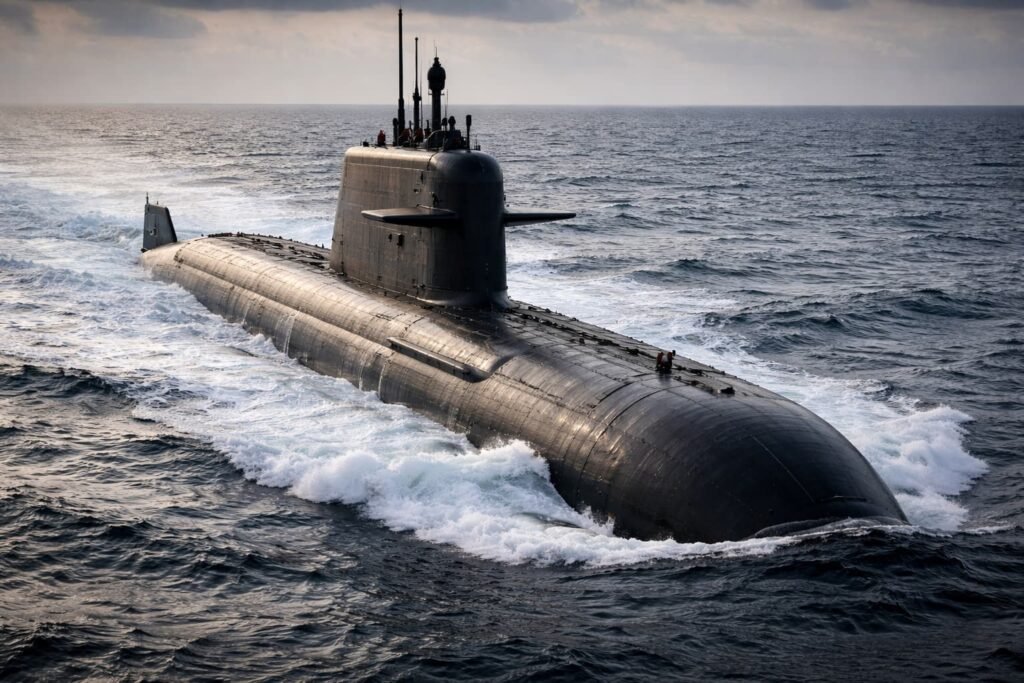
Russia has reportedly deployed a submarine and several naval vessels to escort an oil tanker across the North Atlantic, as the ship remains under close surveillance by US forces amid allegations that it violated American sanctions.
Two US officials told CBS News that Russian naval assets are accompanying the tanker — formerly known as Bella 1 and now sailing under the name Marinera — as it transits international waters between Iceland and the British Isles. The vessel has been accused by Washington of transporting Iranian oil in breach of US sanctions, though it is currently believed to be empty.
The episode marks a sharp escalation in maritime tensions following Donald Trump’s announcement last month that the United States would enforce a “blockade” on sanctioned oil tankers entering or leaving Venezuela — a policy Caracas condemned as outright theft.
Tanker Reflagged to Russia Amid Pursuit
The Marinera has undergone several changes in recent weeks. Previously flagged to Guyana, the tanker has reportedly been re-registered under the Russian flag, a move maritime experts say may be aimed at complicating US enforcement actions. Russian authorities confirmed the ship is now sailing under their registry.
“At present, our vessel is sailing in the international waters of the North Atlantic under the state flag of the Russian Federation and in full compliance with international maritime law,” Russia’s foreign ministry said, adding that it was “monitoring with concern” what it described as disproportionate US and NATO military attention.
Automatic Identification System (AIS) data from the ship-tracking platform MarineTraffic places the tanker roughly 300 kilometres south of Iceland as of Tuesday morning. Previous tracking data shows the vessel travelled north along the western coast of the United Kingdom over the past two days.
US Seizure Attempt and Military Posturing
The US Coast Guard previously attempted to board the tanker in the Caribbean last month, when it was believed to be heading toward Venezuela. Officials said they held a legal warrant to seize the vessel over alleged sanctions violations. After that encounter, the tanker abruptly changed course toward Europe.
The ship’s movement north has coincided with heightened US military activity, including the arrival of around ten US military transport aircraft and several helicopters in the region. Footage analysed by BBC Verify from Russian state media appears to show a US Coast Guard Legend-class cutter operating nearby.
On Tuesday, the US military’s Southern Command posted on social media that it “remains ready to support US government agency partners in standing against sanctioned vessels and actors transiting through this region.”
Legal Grey Zones at Sea
Maritime law experts say the tanker’s reflagging could present legal challenges for Washington. Under international law, vessels are subject to the jurisdiction and protection of the country whose flag they fly.
Dimitris Ampatzidis, senior risk and compliance analyst at maritime intelligence firm Kpler, said enforcement decisions are not determined by a ship’s name or flag alone. “US action is driven by the vessel’s underlying identity, ownership networks and sanctions history — not painted markings,” he explained.
Michelle Bockmann, a maritime analyst at Windward, noted that switching to a Russian registry may remove one key enforcement pathway. “Under the UN Convention on the Law of the Sea, stateless vessels can be boarded. By reflagging to Russia, the vessel no longer falls under that provision,” she said, adding that mid-voyage reflagging is highly unusual and typically associated with so-called “dark fleet” tankers.
A Growing Pattern After Maduro Arrest
The unfolding maritime standoff comes just days after the US arrested Venezuelan leader Nicolás Maduro in Caracas during a dramatic military operation that stunned the international community.
Since that arrest, BBC Verify has identified at least three US-sanctioned tankers — including the Marinera — that have switched to a Russian registry. In total, at least 19 sanctioned tankers have reportedly changed flags following the US seizure of another vessel, the Skipper, last month.
Analysts say the trend suggests a coordinated effort by sanctioned shipping networks to shield vessels under Moscow’s legal and military umbrella, increasing the risk of a direct confrontation at sea.
Stand-off Looms
US officials told CBS News that Washington would prefer to seize the Marinera rather than sink it, though any such operation would carry significant diplomatic and military risk given Russia’s visible involvement.
For now, the UK Ministry of Defence has declined to comment on the activities of other nations’ militaries, and there is no indication that the tanker has violated British territorial waters.
As the Marinera continues its Atlantic crossing under armed escort, the episode underscores how sanctions enforcement, maritime law and great-power rivalry are colliding on the world’s busiest shipping lanes.