
By Harshit
WASHINGTON / CARACAS, JANUARY 5 —
US President Donald Trump has issued a stark warning to Venezuela’s incoming leader Delcy Rodríguez, saying she could “pay a very big price, probably bigger than Maduro” if she fails to meet Washington’s demands, as the dramatic fallout from the arrest of former president Nicolás Maduro continues to reverberate across the region.
Trump’s comments, made in an interview with The Atlantic, came ahead of Maduro’s expected court appearance in New York on Monday, where he faces US charges related to drug trafficking and weapons offences — allegations he has repeatedly denied.
Trump Signals Pressure on New Venezuelan Leadership
Speaking to the magazine on Sunday, Trump said the United States was watching Rodríguez closely as she prepares to be sworn in as president in Caracas.
“If she doesn’t do what’s right, she is going to pay a very big price, probably bigger than Maduro,” Trump said, adding that for Venezuela, “regime change — anything you want to call it — is better than what you have right now. It can’t get any worse.”
Despite the rhetoric, Maduro’s political allies remain in control of key institutions, including the military and the Supreme Court, both of which have backed Rodríguez’s ascent to power.
Rodríguez Offers Cooperation with Washington
At her first cabinet meeting on Sunday, Rodríguez struck a conciliatory tone, signaling openness to engagement with the United States.
“We invite the US government to collaborate with us on an agenda of cooperation orientated towards shared development within the framework of international law,” she said.
Rodríguez, who previously served as Maduro’s vice president, is scheduled to be sworn in at 08:00 local time (12:00 GMT) on Monday.
Maduro Arrest and US Military Operation Spark Outcry
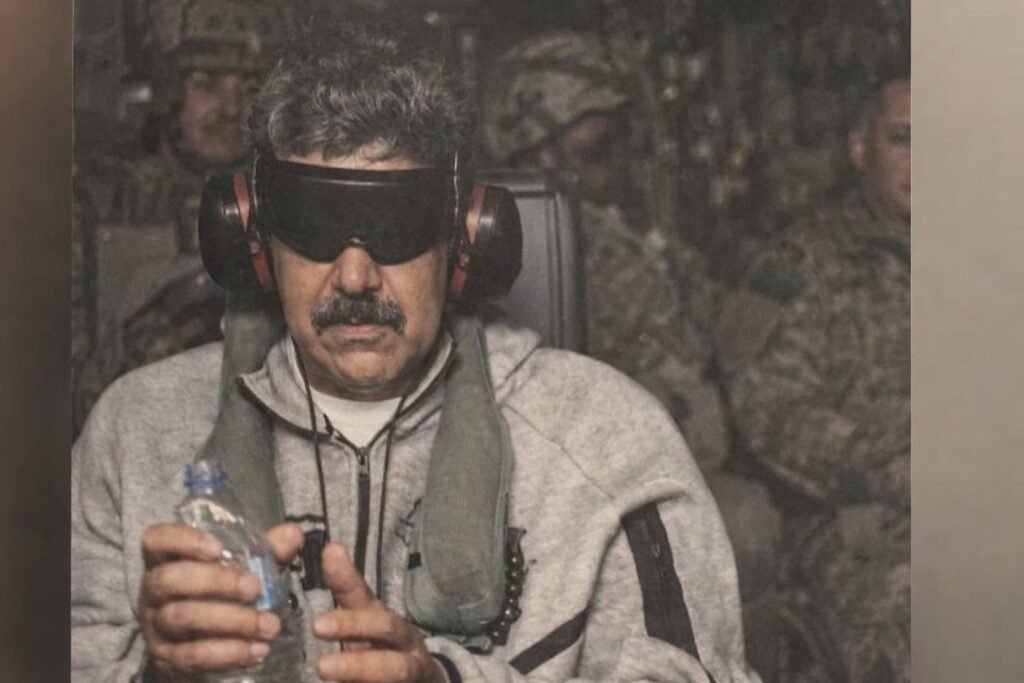
Maduro and his wife, Cilia Flores, were captured during a dramatic US operation early Saturday and flown to the United States. Trump later posted an image of Maduro aboard the USS Iwo Jima, blindfolded and wearing headphones, following his arrest.
US officials have described the operation as a law enforcement action, not an act of war. Secretary of State Marco Rubio said the US was “at war against drug trafficking organisations — not Venezuela.”
However, some Democratic lawmakers sharply disagreed. House Minority Leader Hakeem Jeffries called the operation “an act of war,” citing reports that it involved elite forces, aircraft and naval assets without congressional approval.
Senate Minority Leader Chuck Schumer questioned the legality of the action, warning that “you don’t treat lawlessness with other lawlessness.”
Regional and International Reaction
A group of countries including Brazil, Chile, Colombia, Mexico, Uruguay and Spain issued a joint statement condemning the US operation, calling it “an extremely dangerous precedent for peace and regional security.”
Cuba, a longstanding ally of Maduro, said 32 Cuban fighters were killed during the US assault and announced two days of national mourning.
Venezuela’s Defence Minister claimed members of Maduro’s security team, soldiers and civilians were killed, though US officials insist no American troops were harmed.
Oil, Sanctions and Future Leverage
Trump said the US would effectively “run” Venezuela until a “safe and proper” transition was achieved and suggested American oil companies would move in to repair infrastructure and restart production.
Rubio said Washington retained “multiple levers of leverage,” including a continued quarantine on Venezuelan oil exports, and stressed that future US actions would depend on decisions taken by the new leadership in Caracas.
Mounting Stakes Ahead of Court Appearance
Maduro, who has ruled Venezuela since 2013 and is widely accused of repressing dissent and illegitimately winning the 2024 election, is expected to appear in a New York court on Monday.
He has denied being a cartel leader and accused the US of using its “war on drugs” as a pretext for regime change and access to Venezuela’s vast oil reserves.
As Rodríguez takes office under intense international scrutiny, the coming days are likely to determine whether Venezuela moves toward negotiation — or deeper confrontation with Washington.